



More Than Just a Simple Stretch
Cat-Cow, known in Sanskrit as Marjaryasana-Bitilasana, is a foundational yoga sequence that flows between two complementary poses. It involves moving from a rounded spine (Cat) to an arched spine (Cow) while on your hands and knees. This dynamic movement
is celebrated for its ability to gently awaken the body, improve spinal mobility, and synchronize breath with movement, making it a staple in yoga classes for all levels. Its primary purpose is to warm up the spine, creating space between the vertebrae and preparing the body for more complex postures. By flowing between flexion and extension, it lubricates the spinal joints and eases stiffness from prolonged sitting.
Why Neck Alignment Is Crucial
In our screen-focused world, many people suffer from 'tech neck', a posture characterized by a forward-jutting head and rounded shoulders. This habit puts significant strain on the cervical spine. The Cat-Cow pose is an excellent counter-movement, but only when performed correctly. A common mistake is to either let the head hang heavily in Cat Pose or crank the neck back aggressively in Cow Pose. Both errors can compress the vertebrae and strain neck muscles, negating the pose's benefits. The goal is to treat the neck as a natural extension of the spine. By maintaining a neutral or properly aligned neck, you ensure the stretch is distributed evenly along the entire spinal column, from the tailbone to the crown of the head, which helps to relieve tension rather than create it.
A Step-by-Step Guide to Cat-Cow
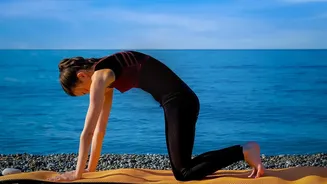
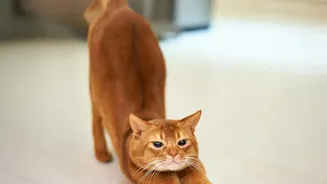
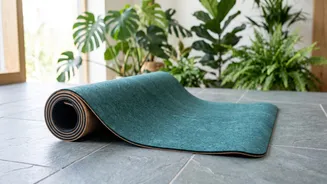
To begin, position yourself on a yoga mat in a 'tabletop' position on all fours. Ensure your wrists are directly under your shoulders and your knees are directly under your hips, creating 90-degree angles. Spread your fingers wide to distribute weight evenly and protect your wrists. Your spine should be in a neutral position, with your back flat and your gaze directed toward the floor just in front of your hands. For Cow Pose (Bitilasana), inhale as you drop your belly toward the mat. Lift your chest and sitting bones toward the ceiling, broadening your collarbones. Draw your shoulders away from your ears and allow your gaze to move forward or slightly upward without crunching your neck. For Cat Pose (Marjaryasana), exhale as you press firmly into your hands and round your spine toward the ceiling, like an angry cat. Tuck your tailbone and draw your navel in toward your spine. Release your head toward the floor, bringing your chin gently toward your chest. Flow between these two poses for 5-10 breaths, letting your breath guide the pace of your movement.
Mastering Neutral Neck Movement
The key to protecting your neck is mindfulness. In Cow Pose, instead of looking up at the ceiling, which can cause compression, keep the back of your neck long and simply gaze forward. Think about lifting your chest forward and up, rather than just lifting your chin. In Cat Pose, the movement should be a passive release. Avoid forcefully pulling your chin to your chest. Instead, allow the head to drop naturally as your spine rounds. The feeling should be one of lengthening the back of the neck. This controlled approach prevents hyperextension and ensures the stretch remains therapeutic, especially for those with existing neck tension or stiffness.
Unlocking the Full Benefits
When you integrate proper neck movement, Cat-Cow becomes a powerful tool for postural awareness and tension relief. It increases flexibility not just in the back, but also in the neck and shoulders. The gentle, rhythmic motion improves circulation to the discs in your spine, promoting overall spinal health. Furthermore, the coordinated breathing calms the nervous system, reducing stress and enhancing the mind-body connection. The gentle compression and expansion of the abdomen also stimulates digestive organs. By paying attention to this small but critical detail, you transform a simple stretch into a holistic practice that counters the effects of a sedentary lifestyle and improves your overall sense of well-being.