



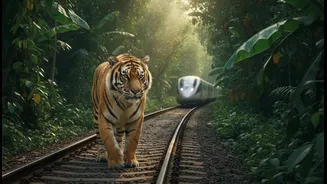


A New Express Lane to Nature
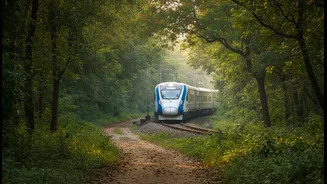
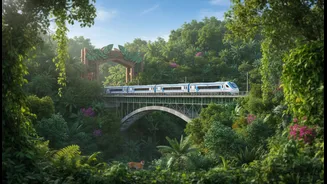
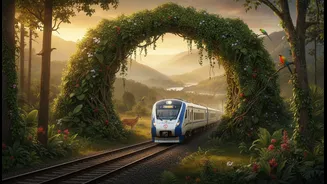
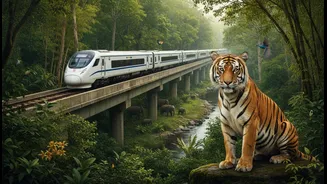
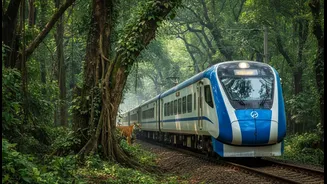
The promise is alluring: board a state-of-the-art train in a bustling metropolis and, in a matter of hours, find yourself on the doorstep of India’s most celebrated wildlife sanctuaries. The expanding Vande Bharat network now connects major cities to
railway stations near several premier national parks. For instance, wildlife enthusiasts can take a high-speed train to Mysuru, which is just a two-hour drive from Bandipur National Park, part of the Nilgiri Biosphere Reserve. Similarly, the Sabarmati–Veraval Vande Bharat makes Gujarat's Gir National Park, the only home of the Asiatic lion, more accessible than ever. Other key destinations now linked by this convenient rail access include Ranthambore in Rajasthan, Jim Corbett in Uttarakhand, and even Kaziranga in Assam, via a train to Guwahati followed by a road journey. This development is celebrated for making wildlife holidays easier and more accessible for domestic travellers, potentially reducing reliance on flights.
Tourism Boost or Ecological Burden?
The economic argument for these new routes is compelling. Enhanced connectivity is expected to boost tourism, providing a much-needed economic injection for local communities that depend on wildlife-related travel. For destinations like Ranthambore, Gir, and Corbett, which are already popular, the ease of Vande Bharat travel could lead to a significant increase in visitor numbers. However, this raises a critical question: how much is too much? Overtourism is a major concern for conservationists. A sudden influx of visitors can place immense strain on a national park's limited resources, from the number of safari vehicles and guides to accommodation and waste management. The very wilderness that attracts tourists can be degraded by the noise, traffic, and infrastructure required to support them. The challenge lies in balancing the economic benefits of increased tourism with the urgent need to protect these sensitive habitats from being loved to death.
The Unseen Impact of a Speeding Train
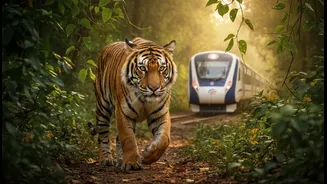
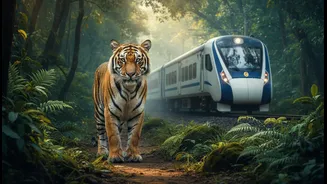
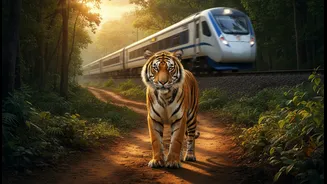
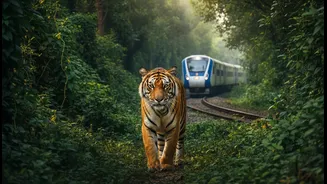
Beyond the destination parks, the railway lines themselves pose a significant threat. Railway tracks have long been a source of danger for wildlife in India, fragmenting habitats and leading to tragic collisions. Between 2019 and 2024, official data shows that 81 wild elephants were killed by trains. The problem is particularly acute in states like Assam and West Bengal, where key elephant corridors are bisected by railway lines. High-speed trains like the Vande Bharat, designed for rapid acceleration, amplify this risk. While Indian Railways and the Environment Ministry have identified over 100 sensitive stretches for mitigation measures—such as building underpasses, ramps, and implementing detection systems—the sheer scale of the network and the emergence of new animal movement patterns make this a daunting task. A tragic incident in Assam in 2025, where a high-speed train killed seven elephants, underscores the fatal conflict between expanding infrastructure and shrinking wildlife corridors.
Finding a Sustainable Path Forward
The conversation is now shifting towards finding a sustainable model for this new era of wildlife tourism. The solution is not necessarily to halt progress, but to integrate conservation into its design from the outset. This could involve stricter regulations on tourist numbers within parks, ensuring that revenue from Vande Bharat-linked tourism is channelled directly back into conservation efforts and community development, a model successfully used in places like Satkosia Tiger Reserve. For the railways, this means doubling down on mitigation efforts. Innovative solutions like the AI-based Intrusion Detection System, which alerts train drivers to wildlife near tracks, are being piloted. Furthermore, there is a growing movement towards responsible eco-tourism, where visitors actively contribute to conservation. Ultimately, the goal is to create a system where the train journey enhances the value of the wilderness without degrading it.