





The Problem of Hidden Errors
For decades, science has faced a growing “reproducibility crisis.” This refers to the alarming finding that many published research results are difficult, if not impossible, for other scientists to replicate. Estimates suggest over half of preclinical
research may be irreproducible, and the introduction of complex AI methods has, ironically, sometimes worsened the problem, with some analyses showing up to 70% of AI-powered studies are not reproducible. This isn't just an academic issue. Flawed foundational papers, cited for years, can lead entire fields down incorrect paths, waste billions in research funding, and erode public trust in science. The sheer volume of published work—millions of papers a year—makes manual verification an impossible task for humans alone.
Enter the AI Auditor
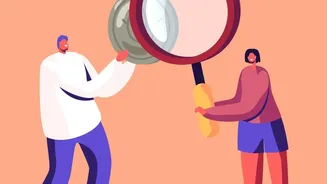
An AI agent for scientific research is more than a simple chatbot. It is a sophisticated system designed to execute complex tasks, such as reviewing literature, analyzing data, and even attempting to rerun experiments using publicly available code. These “AI auditors” are trained on vast datasets of scientific papers and can be programmed to look for specific types of inconsistencies. They function as a tireless, large-scale fact-checker for the scientific community, scanning immense volumes of data and text that would take human teams years to process. Companies and academic labs are now developing these tools to systematically vet existing knowledge.
How AI Spots What Humans Miss
AI excels at pattern recognition on a massive scale. These agents can be programmed to check for a variety of errors. This includes statistical inconsistencies, such as when the reported numbers in a paper don't align with standard statistical tests. They can cross-reference data points against vast databases, flagging discrepancies. One recent example involved an AI that uncovered a 75-year-old error in a chemistry database that scientists had been citing for decades. They can also detect image manipulation, check for plagiarism, and even identify fabricated citations—a problem that has reportedly increased with the misuse of generative AI in writing papers. By automating these checks, AI can systematically flag papers that require closer human inspection.
The Promise of Automated Scrutiny
The primary benefit of using AI auditors is the ability to check research at an unprecedented scale and speed, helping to restore integrity and trust. For example, one AI analysis of papers from a major machine learning conference found that for many, less than 40% of their core claims could be reproduced by the AI agent. While this doesn't automatically mean the papers were wrong, it massively highlights areas needing further scrutiny. This process can significantly reduce the burden on human peer reviewers, allowing them to focus on the more nuanced aspects of research, like methodology and interpretation. Some researchers are even using AI tools to pre-check their own work before submission, catching errors early.
A Tool, Not a Panacea
However, AI auditors are not infallible. Critics rightly point out that these systems are not yet fully reliable. Studies have shown that AI can miss a significant percentage of errors that human experts spot, and they can also generate “false positives,” incorrectly flagging correct content as an error. There is also the “black box” problem, where some AI algorithms are so complex that their reasoning is not transparent, creating skepticism. Furthermore, delegating the entire task of peer review to an AI is considered unethical; authors must remain responsible for the integrity of their work, and human oversight is essential.
The Future of Peer Review
AI isn't positioned to replace human scientists, but to augment them. The future of scientific validation may involve a partnership: AI agents perform large-scale, continuous audits of the literature, while human experts investigate the anomalies the AI finds. This transforms peer review from a one-time gatekeeping event at publication to an ongoing process of verification. As these tools become more sophisticated, they will likely be integrated directly into the workflows of journals, funders, and research institutions, creating a more robust and self-correcting scientific ecosystem. The goal is not just to find more errors, but to build a system where fewer errors are published in the first place.