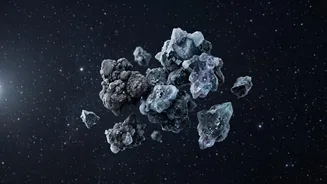




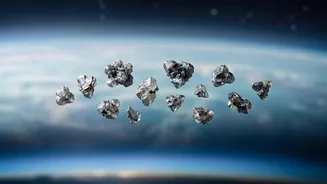
Tiny grains of dust, collected high in Earth’s atmosphere, are rewriting our understanding of the solar system’s edge. A new study reveals these particles hold the chemical signature of ancient water, hinting at a vast, frozen reservoir beyond Neptune.
What the Dust Revealed
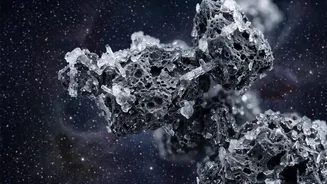
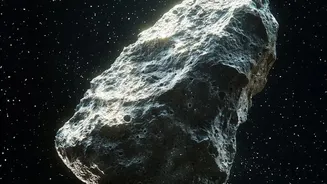
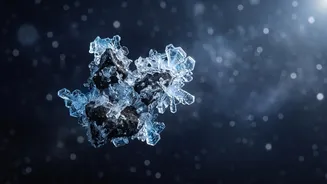
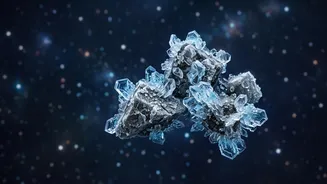
In a study published in early November 2026, scientists led by NASA's Lindsay Keller announced a remarkable discovery. After analyzing just 12 microscopic dust particles collected by high-altitude aircraft, they found compelling evidence of ancient water. These are not just any dust grains; they are visitors from the Kuiper Belt, a frigid, distant region of icy bodies orbiting beyond Neptune. The key was the discovery of hydrated minerals like saponite and serpentine clays within the dust. These minerals can only form when liquid water interacts with rock, meaning that at some point in the distant past, the parent bodies from which this dust originated must have contained liquid water. This finding provides a physical clue to conditions in the solar system's deep freeze, a place we have only begun to explore.
A Fingerprint of Heavy Water
The discovery goes deeper than just the presence of water-formed minerals. The team found that the oxygen locked within these minerals was unusual. It was enriched with 'heavy' oxygen isotopes, which contain more neutrons than the standard oxygen we are familiar with. This isotopic signature acts like a chemical fingerprint, and it's distinctly different from water found in other parts of the solar system, such as in meteorites that formed closer to the Sun. The findings suggest that the Kuiper Belt contains a massive, primordial reservoir of heavy water that remained largely isolated from the chemical mixing that occurred in the inner solar system billions of years ago. This confirms a long-held theory that was difficult to prove because samples from this region are incredibly rare.
The Kuiper Belt: A Primordial Deep Freeze
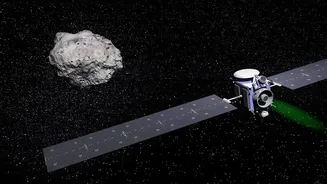
The Kuiper Belt is a vast, doughnut-shaped ring of millions of icy objects left over from the formation of the solar system 4.6 billion years ago. Stretching from Neptune's orbit at 30 astronomical units (AU) out to about 50 AU and possibly much farther, it's a repository of some of the most primitive materials available for study. This region is home to dwarf planets like Pluto, Haumea, and Makemake. Because these objects are so far from the Sun, their interiors and compositions have been preserved in a deep freeze, offering a window into the building blocks of planets. While spacecraft like New Horizons have given us stunning flybys of Pluto and another Kuiper Belt Object (KBO) called Arrokoth, directly sampling these worlds is not yet possible. That's why interplanetary dust that travels to Earth is so scientifically valuable.
From Frozen Ice to Liquid Water
The presence of minerals formed by liquid water raises a critical question: how could water exist in a liquid state in one of the coldest parts of our solar system? Surface temperatures in the Kuiper Belt are incredibly low, around 50 Kelvin (-223 degrees Celsius). However, scientists believe that early in the solar system's history, the interiors of some larger KBOs could have been warmed. Heat generated by the decay of radioactive elements within their rocky cores, or heat from energetic collisions, could have been sufficient to melt the surrounding ice, allowing it to react with rock and form the minerals now seen in the dust. While that liquid water is long gone, its chemical legacy is preserved in these tiny grains, giving us a glimpse inside these ancient, icy worlds.
Shaping Future Exploration
This discovery, combined with other recent findings, is reshaping our view of the outer solar system. NASA's New Horizons mission, which flew past Pluto in 2015 and Arrokoth in 2019, has detected more dust than expected at the far edges of the Kuiper Belt, suggesting the belt might be more extensive than previously thought, or that there might even be a second one. Understanding the composition of KBOs and the history of water in this region is crucial. It helps scientists piece together the story of how our solar system formed and how water, a key ingredient for life as we know it, was distributed. These findings will undoubtedly influence future missions, helping to identify the most scientifically interesting targets for exploration in our quest to understand the origins of planets and, ultimately, ourselves.