




The Global Standard: Class I to VI
Before dropping into a river, every kayaker and rafter needs to know its rating. The International Scale of River Difficulty is the global standard, classifying rapids from Class I to VI. A Class I rapid is basically fast-moving water with small riffles—easy
and low-risk. Class II involves straightforward rapids with clear channels. Class III introduces moderate, irregular waves that require skillful manoeuvring. Things get serious at Class IV, with intense, powerful rapids in turbulent water demanding precise boat handling. Class V is for experts only, featuring long, violent rapids with potentially unavoidable waves and drops where rescue is difficult. Class VI is considered extreme and exploratory, often deemed unrunnable.
Meghalaya’s Unique River Geography
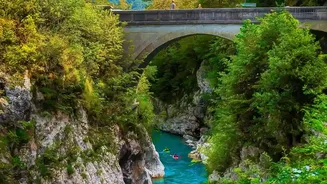
Meghalaya, the 'abode of clouds', is defined by its dramatic landscape. The state's plateau gives rise to rivers that plummet through steep gorges and rocky terrain, creating world-class whitewater conditions. Rivers like the Umngot, Kynshi, and Umtrew are famous among paddlers for their crystal-clear water and exciting rapids set in pristine jungle. This unique topography, combined with the fact that the region is one of the wettest on Earth, makes its river systems incredibly dynamic. Even outside the monsoon, these rivers demand respect, offering a mix of serene stretches and challenging boulder gardens.
Enter the Monsoon: When Water Rages
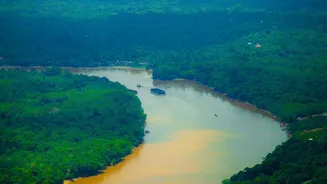
From June to September, Meghalaya is inundated by the monsoon, receiving immense amounts of rainfall. This deluge has a profound and immediate effect on the rivers. A gentle stream can become a raging torrent overnight. The most critical change is the massive increase in water volume, measured in cubic feet per second (CFS). This extra water dramatically increases the river's speed and power. Features that were visible rocks or ledges can become submerged and create dangerous underwater hydraulics, like powerful whirlpools or 'holes' that can trap a boat. The water turns from clear to a muddy brown, hiding new obstacles like floating logs and debris.
The Classification Shift Explained
This radical change in water volume is what drives the rapid classification shifts. A river section that is a fun, technical Class III in the dry season can transform into a dangerous, high-volume Class V during a monsoon flood. The established 'lines' or safe paths through a rapid disappear completely, washed out by the sheer force of the water. What was once a series of manageable drops might become a single, continuous stretch of violent whitewater. Paddlers often say that at flood stage, you must consider a river to be at least one full class higher than its normal rating. In Meghalaya's extreme environment, that change can be even more pronounced and far less predictable.
Navigating the Risks: Safety Is Non-Negotiable
Paddling in Meghalaya during the monsoon is an undertaking for expert kayakers only, and never without extensive planning. The first rule is to hire experienced local guides. Khasi and Jaintia guides possess an invaluable, generation-spanning knowledge of local weather patterns and river behaviour. Continuously monitoring weather forecasts and river levels is essential, as conditions can change in minutes, not hours. Essential safety protocols include never paddling alone, carrying comprehensive rescue equipment, and having a solid, practiced combat roll to stay in your kayak. The most important skill is knowing when to walk away. If conditions look uncertain, the safest decision is always to portage the rapid or call off the trip for the day.