







What is Space Weather and Satellite Monitoring?
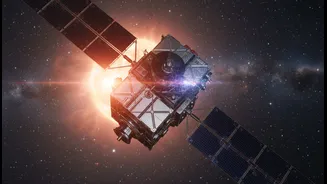
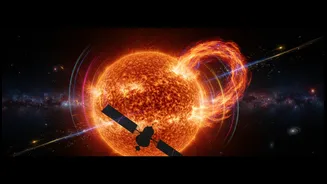
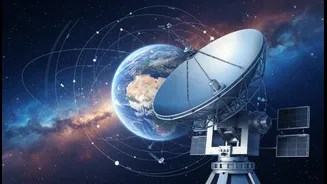
Space weather refers to conditions in space, primarily caused by the Sun's activity. This includes solar flares and coronal mass ejections (CMEs), which are massive bursts of plasma. These events can disrupt our planet's magnetic field, endangering satellites,
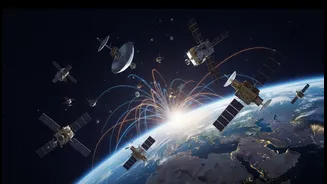
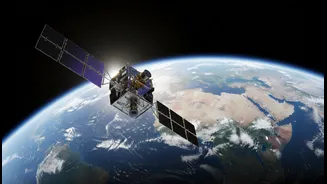
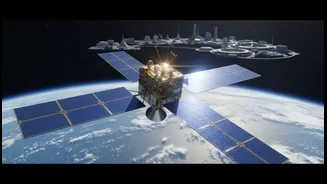
power grids, and communication systems. Satellite monitoring involves tracking, controlling, and interpreting data from the thousands of satellites orbiting Earth. These professionals ensure our constellations for navigation, remote sensing, and communication function correctly, and they play a key role in analysing the data sent back to the ground. In essence, one field studies the threat, and the other manages the assets at risk.
Why This is the Next Frontier for Indian Careers
India's ambitions in space are growing rapidly. The Aditya-L1 mission, our first dedicated solar observatory, is a clear signal of the nation's focus on understanding the Sun and its impact. This mission, along with India's expanding fleet of communication, navigation, and earth observation satellites, creates a massive demand for specialists who can forecast solar events and protect these valuable assets. Furthermore, the government’s opening of the space sector has led to a boom in private companies like Pixxel, Dhruva Space, and Digantara, all of whom are building, launching, and managing satellites and need skilled professionals. A career in this domain is not just a job; it's an opportunity to contribute to national security and India’s growing space economy.
The Academic Path: What to Study
A strong foundation in science and technology is essential. Students should focus on pursuing an undergraduate degree in fields like Physics, Atmospheric Science, Astronomy, Aerospace Engineering, Mechanical Engineering, or Computer Science. For those aiming for research or more specialized roles, a Master’s degree or a Ph.D. is often required in specific domains like Heliophysics, Space Physics, or a related discipline. Premier institutions like the Indian Institutes of Technology (IITs), the Indian Institute of Space Science and Technology (IIST), and the Indian Institute of Astrophysics (IIA) offer robust programs that can lead to these careers.
Essential Skills Beyond the Degree
A degree is just the starting point. To truly excel, students need a specific set of technical and analytical skills. Proficiency in programming languages like Python and MATLAB is crucial for data analysis and modeling. Experience with machine learning frameworks such as TensorFlow and PyTorch is becoming highly desirable, as AI is increasingly used to process vast amounts of space data and improve forecasting models. Familiarity with data analysis software, satellite data processing tools, and software versioning platforms like GitHub will make a candidate stand out. Strong problem-solving abilities and communication skills are also vital for collaborating in team-based scientific environments.
Who Are the Future Employers?
The primary employer remains the Indian Space Research Organisation (ISRO) and its various centers, such as the Space Physics Laboratory (SPL) and the National Remote Sensing Centre (NRSC), which regularly hire research scientists and engineers. Government bodies like the India Meteorological Department (IMD) also require space weather experts. However, the private sector is becoming a major recruiter. Companies in the satellite manufacturing, launch services, and geospatial data analytics fields are expanding rapidly. Research institutions and universities also offer roles for those inclined towards academia and pure research, often in collaboration with ISRO and international agencies.
Building Your Profile Starting Today
Aspiring students shouldn't wait for a degree to start their journey. High school students can join astronomy clubs and participate in science fairs. Undergraduates should seek internships at space-tech companies or research assistantships at their universities. Following the updates from ISRO, IN-SPACe, and private players like Dhruva Space or Digantara provides valuable industry insight. There are also numerous short-term courses on remote sensing and satellite technology offered by institutions like IIRS and IN-SPACe that can provide foundational knowledge and certifications. Taking initiative in these areas demonstrates a passion and commitment that employers value highly.