



The Hidden Dangers of Your Desk Chair
Prolonged sitting, a hallmark of modern office work, is often dubbed 'the new smoking' for its wide-ranging health risks. Beyond the established links to heart disease and diabetes, sitting for hours has a profound and immediate effect on your musculoskeletal
system. When you sit, your hip flexors shorten and tighten, while your gluteal muscles—the powerful muscles in your buttocks—are lengthened and become inactive. This imbalance can lead to a condition sometimes called 'gluteal amnesia' or 'dead butt syndrome', where your glutes essentially forget how to fire properly. As a result, your body compensates by over-relying on other muscles, particularly those in your lower back, to stabilize your pelvis. This can lead to chronic lower back pain, poor posture, and increased pressure on your spinal discs.
The Glute Bridge: Your Morning Counter-Move
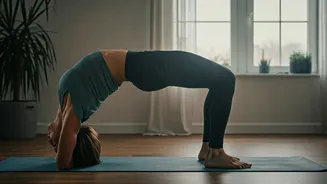
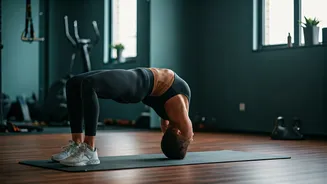
The glute bridge is a simple, no-equipment exercise that directly counteracts the problems caused by sitting. By performing this move, you specifically target and activate the gluteus maximus, the largest muscle in your body. Waking up these dormant muscles is crucial. Strong glutes help stabilize your pelvis, support your lower back, and improve your overall posture. A morning glute bridge routine essentially serves as a reset button. It reminds your glutes of their job before you spend the day in a seated position. This activation helps prevent the compensatory patterns that lead to pain and discomfort, particularly in the lower back and knees. It's a foundational movement that strengthens the entire posterior chain—the group of muscles on the back of your body, including your hamstrings, glutes, and back extensors.
How to Perform the Perfect Glute Bridge
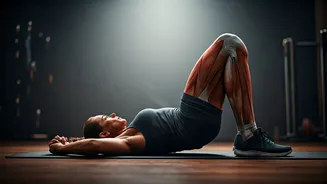
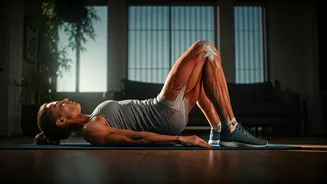
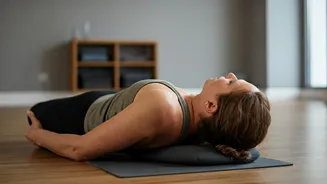
Proper form is essential to get the most benefit and avoid strain. Follow these steps: 1. Lie on your back on a comfortable surface, like a yoga mat. Bend your knees and place your feet flat on the floor, about hip-width apart. Your heels should be about 6-8 inches away from your glutes. 2. Rest your arms by your sides, with your palms facing down or up. 3. Engage your core by gently pressing your lower back toward the floor to create a stable base. 4. Press through your heels and lift your hips off the floor by squeezing your gluteal muscles. Raise your hips until your body forms a straight line from your shoulders to your knees. Avoid arching your lower back; the work should come from your glutes. 5. Pause at the top for a couple of seconds, focusing on squeezing your glutes tightly. 6. Slowly and with control, lower your hips back down to the starting position. Aim for 2-3 sets of 12-15 repetitions each morning.
Make It a Habit and Advance
The key to seeing results is consistency. The beauty of the glute bridge is that you can do it right after you wake up, even before getting out of bed. Tying a new habit to an existing one—like doing your bridges right after your alarm goes off—makes it easier to stick with. Once the standard glute bridge becomes easy, you can progress to more challenging variations. Try a single-leg glute bridge by extending one leg toward the ceiling while you lift your hips; this increases the load and challenges your stability. You can also add a resistance band just above your knees to further engage your hip muscles or place a weight across your hips for a weighted glute bridge.
Beyond the Bridge: Other Healthy Habits
While a morning glute bridge is a fantastic start, it's most effective when combined with other healthy movement habits throughout the day. The goal is to break up long periods of sitting. Set a timer to stand up, stretch, and walk around for a few minutes every hour. Simple stretches at your desk, like a chest opener or a seated figure-four stretch, can also provide relief. Consider incorporating walking meetings or taking the stairs instead of the elevator. Think of your daily routine not as one long sedentary block, but as an opportunity for frequent, small movements that keep your body active and combat the negative effects of a desk-bound lifestyle.