






From Harvest Waste to Urban Quiet
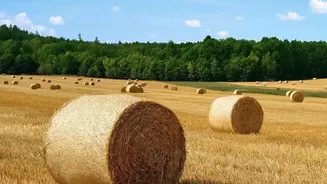
The concept centres on turning a low-value agricultural byproduct into a high-performance building material. Each year, grain harvests for foods like wheat, rye, and barley leave behind immense quantities of straw. Instead of being treated as waste, this
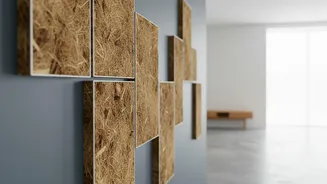
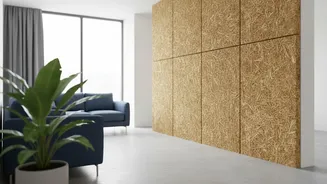
straw is now being collected and processed into dense, rigid panels. The manufacturing process typically involves compressing the straw under high heat and pressure, which binds the natural fibres together without the need for synthetic adhesives. Companies in India and across Europe are pioneering these technologies, creating panels designed specifically for interior walls and ceilings, offering a unique solution for drywall construction and soundproofing.
The Science of Straw Soundproofing
Acoustic insulation works in two main ways: by absorbing sound waves to reduce echo within a space, and by blocking sound transmission between spaces. Materials like synthetic foams are generally effective, but straw offers compelling performance due to its unique physical structure. The hollow, porous nature of straw fibres is highly effective at trapping and dissipating sound energy. Studies show that compressed straw panels can be particularly good at insulating against lower-frequency sounds. Some tests have found that a 45mm thick straw panel can provide soundproofing equivalent to a much thicker concrete wall, making it a powerful tool for creating peaceful living environments.
Greener, Healthier Living Spaces
Beyond acoustics, the primary driver for this innovation is sustainability. Unlike petroleum-based synthetic foams, straw is a rapidly renewable resource. Using it in buildings sequesters carbon, meaning the panels store more carbon than is emitted during their production, contributing to a negative carbon footprint. This provides a significant environmental advantage in the construction industry, a major source of global emissions. Furthermore, these natural panels improve indoor air quality. They do not release volatile organic compounds (VOCs), which are common in synthetic materials and can be harmful to human health. By regulating moisture naturally, straw-based materials contribute to a healthier indoor environment.
Addressing Old Myths with Modern Tech
The idea of using straw in buildings often raises concerns about fire, pests, and rot. However, modern straw insulation panels bear little resemblance to a loose bale in a field. The extreme compression used in manufacturing removes most of the oxygen, making the panels inherently difficult to ignite. When combined with plaster or other finishing layers, these wall systems can achieve fire resistance ratings of up to two hours, far surpassing many standard building regulations. The density and composition of the panels, which do not contain the edible grain found in hay, make them unattractive to pests. As long as they are kept dry, like any other insulation material, they do not rot.
A Boost for the Circular Economy
The rise of straw insulation represents a perfect example of a circular economy. It creates a valuable new revenue stream for farmers from what was once considered agricultural surplus. Simultaneously, the construction industry gains a cost-effective, high-performance material that helps builders meet increasingly stringent green building standards. Companies like India's Strawcture Eco and Poland's VestaEco are part of a growing ecosystem turning this vision into a commercial reality. By linking agriculture directly with urban construction, this technology tackles waste, reduces carbon emissions, and creates quieter, healthier buildings for the future.