





What’s Fuelling This Shift?
The rise of these destinations is no accident. A major driver is a dramatic improvement in connectivity. Government schemes like UDAN have been instrumental, operationalising new airports and air routes, making once-remote areas accessible. For instance,
the number of airports in the region has more than doubled since 2014, with new facilities in places like Itanagar (Donyi Polo Airport) and Tezu in Arunachal Pradesh slashing travel times. This infrastructure boom, which also includes significant road and railway expansion, has laid the physical groundwork for tourism growth. Parallel to this is a cultural shift. Post-pandemic, there's a growing thirst among Indian travellers for offbeat, experiential journeys over cookie-cutter holidays. The search is on for authenticity, tranquillity, and bragging rights on social media—qualities these lesser-known towns offer in abundance.
Ziro Valley, Arunachal Pradesh: A Cultural Canvas
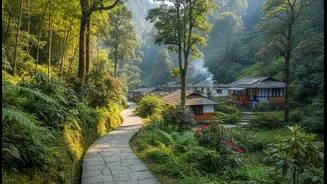
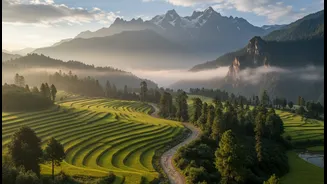
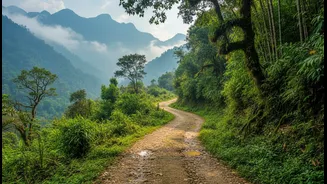
Once known mainly to music lovers for its eponymous festival, Ziro Valley is fast becoming a poster child for this new wave of tourism. It’s not a city in the conventional sense, but a collection of villages inhabited by the Apatani tribe, set against a backdrop of serene rice fields and pine-clad hills. The appeal lies in its tranquillity and the chance to experience a unique, sustainable way of life. Travellers come here not just for the views but for the cultural immersion—exploring Apatani villages, learning about their unique agricultural practices, and staying in local homestays. The improved accessibility via the nearby Donyi Polo Airport has been a game-changer, transforming a multi-day road journey into a far more manageable trip.
Dawki, Meghalaya: The Lure of Crystal Waters
While Shillong and Cherrapunji have long been Meghalaya’s main draws, smaller border towns like Dawki are now carving out their own identity. Famous for the Umngot River, whose water is so clear it creates the illusion of boats floating in mid-air, Dawki has become an Instagram sensation. This visual appeal, combined with the thrill of being right on the India-Bangladesh border, offers a unique travel experience. The journey itself, through the lush hills of Meghalaya, is part of the attraction. The growth of tourism here is largely organic, driven by social media and word-of-mouth, and supported by a growing network of local guides and boat operators, showcasing how even small-scale attractions can have a big impact.
Mechuka, Arunachal Pradesh: The Remote Retreat
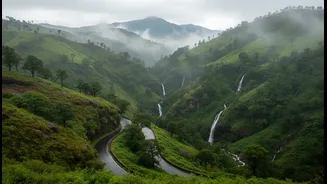
Tucked away in the Shi-Yomi district close to the Indo-China border, Mechuka was, until recently, a destination for only the most intrepid travellers. Known as the 'Forbidden Valley', its dramatic landscapes of snow-dusted mountains, pristine rivers, and a 400-year-old monastery offer a profound sense of escape. The development of infrastructure, including an Advanced Landing Ground that facilitates flights, has been crucial in opening up this remote paradise. Tourism here is centred around nature and spirituality, with opportunities for trekking, visiting tribal villages, and staying in homestays that offer a window into the local Memba tribe's culture. Mechuka exemplifies the trend of travellers seeking out remote beauty that is now within reach.
The Rise of Community-Led Tourism
A defining feature of this expansion is the central role of community-based tourism. In places like Ziro Valley, Nagaland's Dzukou Valley, and villages across Meghalaya, the homestay has become the accommodation of choice. This model does more than just provide a place to sleep; it offers an authentic cultural exchange. Visitors get to experience local life and cuisine firsthand, while the economic benefits flow directly into the community, creating sustainable livelihoods. This approach ensures that as these destinations grow in popularity, they retain the unique cultural fabric that makes them so attractive in the first place, turning tourism into a tool for both economic empowerment and cultural preservation.