
A Cosmic Countdown
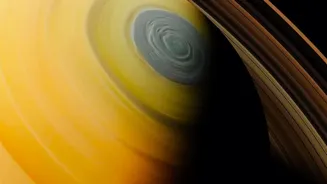
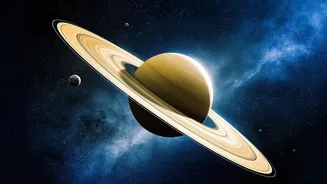
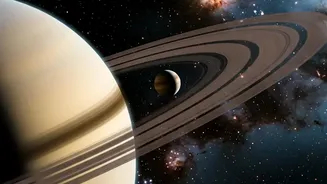
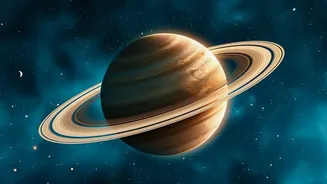
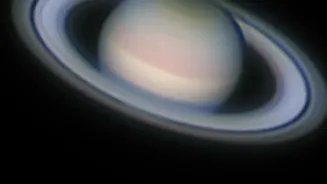
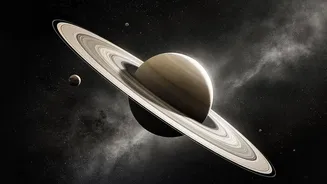
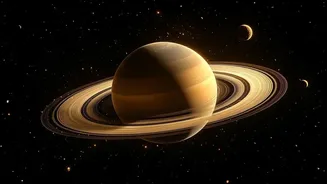
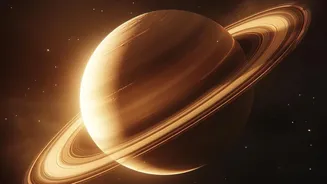
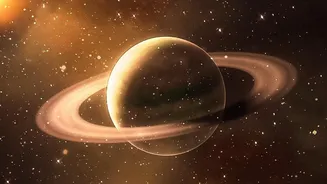
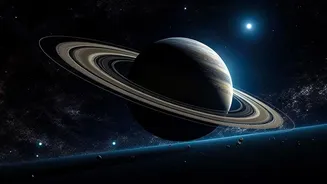
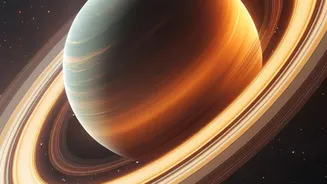
The glorious rings of Saturn, a spectacle of ice and rock, are facing a slow but certain demise. For years, scientists have theorized that the rings are not as ancient as the planet itself, but recent data suggests they are also disappearing at a surprisingly
fast rate. NASA research indicates the entire ring system could be gone in as little as 100 million years. While that sounds like an eternity, it's a fleeting moment in cosmic terms, especially compared to Saturn's age of over four billion years. This raises a tantalizing possibility: we are incredibly lucky to be alive during a brief window in our solar system's history when Saturn is adorned with its famous rings.
The Mystery of 'Ring Rain'
The primary culprit behind the rings' disappearance is a phenomenon known as 'ring rain'. Scientists have confirmed that material from the rings is being pulled inward by Saturn's gravity, falling into the planet’s atmosphere as a dusty shower of particles. This isn't just pure water ice. Data from NASA's Cassini spacecraft revealed this cosmic rain is a complex cocktail of chemicals. During its final, daring dives between the planet and its rings—a maneuver called the 'Grand Finale'—Cassini directly sampled this material. It found that while the rings themselves are mostly water ice, the rain they produce is a surprising mix of water, methane, ammonia, carbon monoxide, and various organic compounds like butane and propane.
An Unexpected Downpour
The sheer volume of this ring rain astonished researchers. Initial estimates, based on observations from the Voyager probes decades ago, have been confirmed and even amplified by Cassini's more recent findings. The spacecraft measured material falling onto the planet at a rate of up to 22,000 pounds (about 10,000 kilograms) per second. At this rate, the amount of water and other compounds draining from the rings in just half an hour could fill an Olympic-sized swimming pool. Scientists described the flow not as a light drizzle, but as a 'ring downpour'. This heavy influx not only depletes the rings but also has a noticeable effect on Saturn's upper atmosphere, influencing its composition and temperature.
A New Age of Observation
While the Cassini mission ended in 2017 by plunging into Saturn's atmosphere, the science continues with powerful new tools. The James Webb Space Telescope (JWST) has turned its powerful infrared eyes on Saturn, offering unprecedented clarity. Because methane gas in Saturn's atmosphere absorbs sunlight at these wavelengths, the planet itself appears dark, making the bright, icy rings stand out in stark contrast. These observations are helping scientists study the rings' structure and composition with fresh detail. Furthermore, the changing seasons on Saturn, which has an axial tilt like Earth, provide different viewing angles over time. As the planet heads towards its 2025 equinox, when the rings will be edge-on and temporarily invisible from Earth, researchers are gearing up for unique observational opportunities.
Why This Cosmic Puzzle Matters
Understanding why Saturn’s rings are temporary helps us piece together the history of our own solar system. The discovery that the rings may be only 100 million years old, or even younger, suggests they are a relatively recent addition to the planet, not a feature it was born with. This implies that the dramatic events that form ring systems—like a moon or comet being torn apart by a planet's gravity—might be more common and more recent than previously thought. Studying Saturn offers a real-time laboratory for how planetary systems evolve. The fading of its rings is a reminder that the heavens are not static but are in a constant state of change, and that the beautiful celestial displays we see today may be just a passing phase in a much grander, longer story.