





Staring into a wardrobe full of clothes but feeling like you have nothing to wear is a common frustration. The secret to effortless style isn't about owning more; it's about owning smarter pieces that work together in multiple ways.
Rule 1: Build a Strong Foundation
The entire system rests
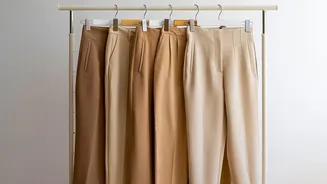
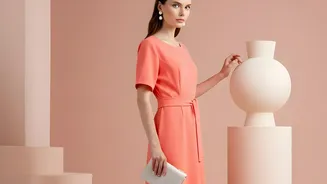
on choosing the right ten items. Think of these as your core building blocks. For maximum versatility, your ten pieces should be heavily weighted towards high-quality, neutral basics that fit you perfectly. A good starting point could be: two bottoms (like straight-leg jeans and tailored black trousers), four tops (such as a white t-shirt, a button-down shirt, a simple knit sweater, and a neutral tank top), one versatile dress, one layering piece (like a blazer), and two pairs of shoes (one casual, like sneakers, and one dressier, like loafers or ankle boots). These items serve as a neutral canvas. Black, white, navy, cream, and grey are your best friends here because they pair effortlessly with each other and with any accent colours you might add later.
Rule 2: Master the Art of Layering
Layering is the fastest way to multiply your outfits. That simple t-shirt and jeans combination is one outfit. But add a blazer, and it becomes a second, more polished look. Wear an open button-down shirt over the t-shirt for a third, more casual vibe. A single dress can be worn on its own, with a blazer over it for a professional setting, or even with a knit sweater layered on top, making the dress look like a skirt. Suddenly, your core items are doing double or triple duty, easily pushing you towards that goal of twenty distinct looks from just a few pieces.
Rule 3: Embrace the 'Third Piece' Rule
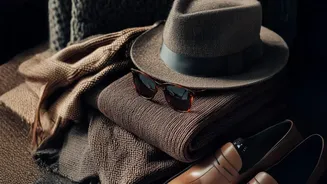
Stylists often talk about the 'third piece' as the secret to making an outfit look intentional and complete. Your base outfit is typically two pieces: a top and a bottom. The third piece is that extra element that adds personality and polish. In our ten-item wardrobe, the blazer is a perfect example. However, this rule also highlights the power of accessories. While we haven't included them in the core ten-item count, a scarf, a belt, or a statement piece of jewellery can function as a third piece, completely changing the character of your base outfit without adding another core garment.
Rule 4: Let Your Accessories Do the Talking
Accessories are the ultimate style multipliers. The same pair of black trousers and a white t shirt can look completely different depending on your finishing touches. Pair them with white sneakers and a simple tote bag for a casual weekend errand. Swap the sneakers for loafers, add a leather belt, and carry a structured bag, and the outfit is suddenly smart enough for a business casual office. For an evening out, you could switch to heeled shoes and add some elegant jewellery. Shoes and accessories are where you can play with trends and personality without needing to overhaul your entire clothing collection. They are essential tools for dressing an outfit up or down.
Rule 5 : Think in Formulas , Not Fixed Outfits
Stop thinking of your clothes as pre set outfits . Instead , see them as variables in a formula . Your two pairs of trousers matched with each of your four tops already gives you eight core outfits . Now , apply the layering rule : add the blazer to each of those eight combinations , and you have sixteen outfits . Wear the dress on its own . Wear it with the blazer . Wear the knit sweater over the dress . Wear the button down shirt open over the dress . You have just created four more looks , bringing your total to at least twenty . This simple math shows how quickly a small , curated collection of basics can create a vast and varied wardrobe .