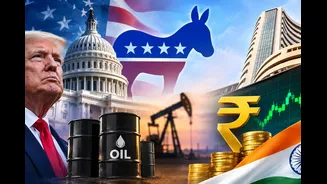







The votes are counted, and the US midterm elections have delivered a new political landscape in Washington. For global markets, the immediate uncertainty of the election is gone, but now the real work begins: pricing in what comes next.
An Initial Rally on Predictability
In the immediate
aftermath of the election, which saw the Democratic party take control of both the House and Senate, US stock markets posted significant gains. The Dow Jones Industrial Average surged by 3% in its best day since April 2025. This reaction might seem counterintuitive, but markets often rally after midterm elections, regardless of the outcome. The primary reason is the removal of uncertainty. For months, investors had been contending with polls and predictions; with a clear result, they can move forward. More importantly, the outcome ushers in an era of divided government, with a Republican President and a Democratic Congress. Wall Street often views this kind of political gridlock favourably, as it makes sweeping, disruptive policy changes less likely. With the prospect of sudden new tariffs or major spending bills diminished, businesses feel they have a more predictable environment for the next two years.
The Gridlock Effect: A Double-Edged Sword
Political gridlock is generally seen as a positive for markets because it prevents radical legislative shifts. Major changes to tax law, for instance, are now highly unlikely to pass. Similarly, sectors that feared increased regulation may breathe a sigh of relief. However, this paralysis isn't without risks. A key concern on the horizon is the US debt ceiling, which will need to be raised in 2027. A divided government could lead to tense, protracted negotiations, potentially rattling markets and risking a government shutdown, as seen in past standoffs. While day-to-day business is shielded from legislative shocks, the potential for high-stakes fiscal cliffs becomes a significant new risk factor that investors will have to monitor closely.
Sector-Specific Winners and Losers
The new power dynamic in Washington creates a mixed bag for different industries. AI-linked technology stocks, which have powered market gains, came under immediate pressure. Investors are pricing in the potential for greater regulatory scrutiny from a Democratic-controlled Congress on everything from data centre energy consumption to market concentration. On the other hand, healthcare stocks, particularly insurers focused on Medicaid, rallied on the expectation that a Democratic Congress will block spending cuts and may even push to expand subsidies. The outlook for defense and energy is more complex. While a Democratic Congress is expected to scrutinize military spending, especially concerning the conflict in Iran, compromises on funding for defense are still possible. This has led to an initial drop in oil prices and defense stocks as traders bet on de_escalation, though some analysts caution this may be premature.
The Global Ripple Effect
The US election results have significant implications beyond American borders. One of the most immediate effects was a fall in the US dollar. This was driven by the idea that legislative gridlock and potential curbs on the booming AI sector could slightly hamper US economic growth. For emerging markets like India, a weaker dollar can be beneficial, making it cheaper to service dollar_denominated debt. However, the future of international trade policy remains a major question mark. While a Democratic Congress is expected to exert more oversight, the President retains significant power to enact trade policy and tariffs through executive actions. Analysts believe that a broad reversal of the current protectionist stance is unlikely, as a tougher approach to trade has gained bipartisan support. Therefore, businesses in India and elsewhere involved in global trade must continue to monitor policy announcements closely, as trade relations and potential tariffs will still be influenced heavily by the White House, even with an opposition Congress.