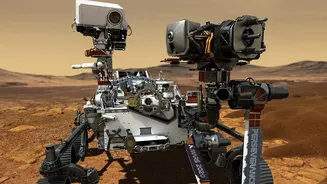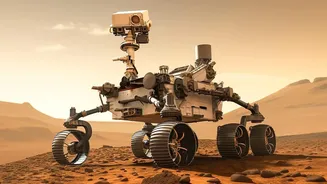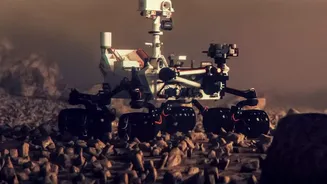








For years, bringing pieces of Mars back to Earth has been a holy grail for scientists. Now, NASA is hitting the reset button with a new plan, the Perseverance Sample Retrieval Architecture (PSRA), to tackle this monumental challenge.
A Fresh Start for a Grand Ambition
NASA's ambitious Mars
Sample Return (MSR) program, a joint effort with the European Space Agency (ESA), has a singular, audacious goal: to bring the first pristine samples of Martian rock and atmosphere to Earth for detailed study. The Perseverance rover has been diligently collecting these samples since its arrival in Jezero Crater in 2021. However, the plan to get them home has hit significant hurdles. In response, NASA announced a new initiative on November 9, 2026, called the Perseverance Sample Retrieval Architecture, or PSRA. This isn't just a minor tweak; it’s a fundamental reassessment designed to find a more efficient, affordable, and timely way to complete one of the most complex robotic missions ever conceived.
Why the Old Plan Was Scrapped
The previous roadmap for the Mars Sample Return mission had become a source of major concern. Independent reviews flagged a ballooning price tag, with some estimates soaring as high as $11 billion. The timeline had also slipped, pushing the sample's arrival on Earth to as late as 2040. NASA officials deemed this combination of cost and delay unacceptable. The complexity of the original multi-part mission—which involved a Sample Retrieval Lander, a fetch rover, and a Mars Ascent Vehicle—contributed to the challenges. The PSRA was born out of the need to go back to the drawing board, review lessons learned, and develop a more feasible architecture.
Inside the New PSRA Initiative
The PSRA is less a detailed blueprint and more a strategic reset. NASA is forming a dedicated team to re-evaluate the entire sample return strategy from the ground up. This team will kick off its work in January 2027 with a mandate to deliver 'impartial recommendations' by the winter of 2027-2028. Their job is to assess all options, including current capabilities and potential new technologies, to formulate a plan that is both scientifically compelling and logistically achievable. The goal is to bring the samples back faster and for a lower cost, with some previous analyses suggesting a return by 2035 for around $8 billion might be feasible. The entire process aims to encourage innovation and competition to find the best path forward.
The Precious Cargo Waiting on Mars
While the return plan is being retooled, the first part of the mission has been a resounding success. The Perseverance rover has been methodically exploring Jezero Crater, the site of an ancient lake and river delta that may hold clues to past microbial life. It has already collected and sealed dozens of samples, including rock cores from different geological units, regolith (soil), and even a sample of the Martian atmosphere. Some of these sample tubes are stored aboard the rover itself, while a backup cache of ten tubes has been strategically placed at a depot on the Martian surface named 'Three Forks' as a contingency. These carefully selected specimens are the reason for the entire endeavor, promising to revolutionize our understanding of Mars.
The Race to Bring Mars Home
NASA's strategic pivot with PSRA is happening in a new context of international competition. China is moving forward with its own ambitious Mars sample return mission, Tianwen-3. Current timelines project China could launch its mission as early as 2028 and return its samples to Earth by 2031. This adds a sense of urgency to NASA's efforts. While the primary driver for the MSR program is science, the prospect of another nation achieving this historic first has undoubtedly influenced the decision to seek a faster and more efficient plan. The PSRA initiative is therefore not just about managing budgets and timelines; it's about ensuring American leadership in a new era of planetary exploration.