





The Monsoon Kitchen Challenge
July in India brings the welcome relief of monsoon rains, but it also ushers in a period of intense humidity. This airborne moisture affects everything in the kitchen, from clumps in your salt shaker to the very texture of your food. When it comes to deep-frying,
humidity is the ultimate villain. Frying is essentially a high-temperature dehydration process. Hot oil works to rapidly drive water out of food, creating a dry, porous structure that we perceive as a crispy crust. However, when the air itself is laden with moisture, it makes this process much more difficult, setting the stage for disappointing, oil-logged snacks.
Anatomy of a Soggy Fritter
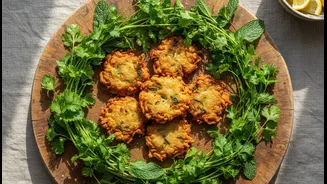
The science of a soggy fritter, or pakora, is simple: excess water. When an ingredient with high moisture content is added to the batter, it thins out the mixture and introduces more water into the hot oil. Instead of the oil’s heat focusing on creating a crisp shell, it expends energy turning this extra water into steam. This steaming effect from within prevents the surface from crisping properly. Furthermore, excess moisture can cause the oil's temperature to drop. Cooler oil doesn't create a quick-forming seal, allowing more of it to seep into the fritter, resulting in a greasy, heavy, and undeniably soggy outcome.
The Hidden Culprit: Your Fresh Herbs
We often blame the main ingredients, like onions or potatoes, for releasing water. While it's true they need moisture control—salting and resting sliced onions is a great technique to draw out water—we often overlook the smaller additions. Fresh herbs like coriander (dhania) and mint (pudina) are staples in Indian fritter recipes, prized for their aroma and flavour. However, these delicate, soft herbs have a very high water content. When they've been washed or stored in a way that leaves moisture clinging to their leaves, they become tiny water bombs in your batter, contributing significantly to the sogginess problem.
Mastering Herb Storage for Crispness
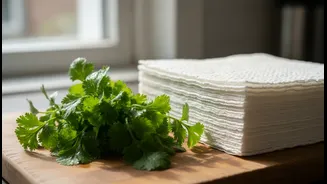
The secret to controlling this variable lies in how you handle your herbs from the moment you bring them home. The goal is to have leaves that are fresh but externally dry. First, wash your herbs in cool water, then dry them thoroughly. A salad spinner is ideal for this. If you don't have one, gently pat them dry with paper towels. For soft herbs like coriander and mint, the 'bouquet method' works wonders for storage: trim the stems and place them upright in a jar with an inch of water, covering the leaves loosely with a plastic bag before refrigerating. Before chopping them for your batter, take out the required amount and let them air-dry for a few minutes or give them one final pat with a clean towel to remove any surface condensation from the fridge. This simple pre-preparation step ensures you're adding flavour and aroma, not unwanted water.
Beyond Herbs: More Tips for Perfect Fritters
While managing herb moisture is a game-changer, a truly perfect fritter benefits from an all-around strategy. Ensure your batter isn't too thin; it should coat the ingredients, not drip off excessively. Adding a spoonful or two of rice flour or cornflour to your besan (gram flour) batter can significantly boost crispness. Maintain the right oil temperature, around 180°C, and fry in small batches to avoid overcrowding the pan, which lowers the temperature and leads to greasy results. Finally, once fried, don't stack your hot pakoras on a plate where they will steam each other. Instead, place them on a wire rack to allow air to circulate, preserving that hard-won crunch.