




The Right Gear for the Task
You don’t need a powerful or expensive telescope to see the Galilean moons; in fact, a good pair of binoculars is more than enough to reveal them. Models like 7x50 or 10x50 are ideal, with the first number indicating magnification and the second representing
the diameter of the main lenses in millimeters. While you can see the moons by hand-holding the binoculars, your view will be significantly improved by stabilizing them. Mounting them on a standard camera tripod using an L-shaped adapter is best, but even resting your elbows on a fence or the roof of a car will reduce the natural shaking of your hands and make the tiny moons much easier to spot.
Finding Jupiter in the Night Sky
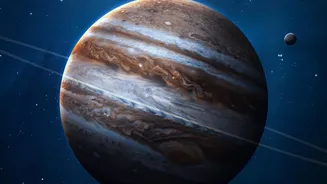
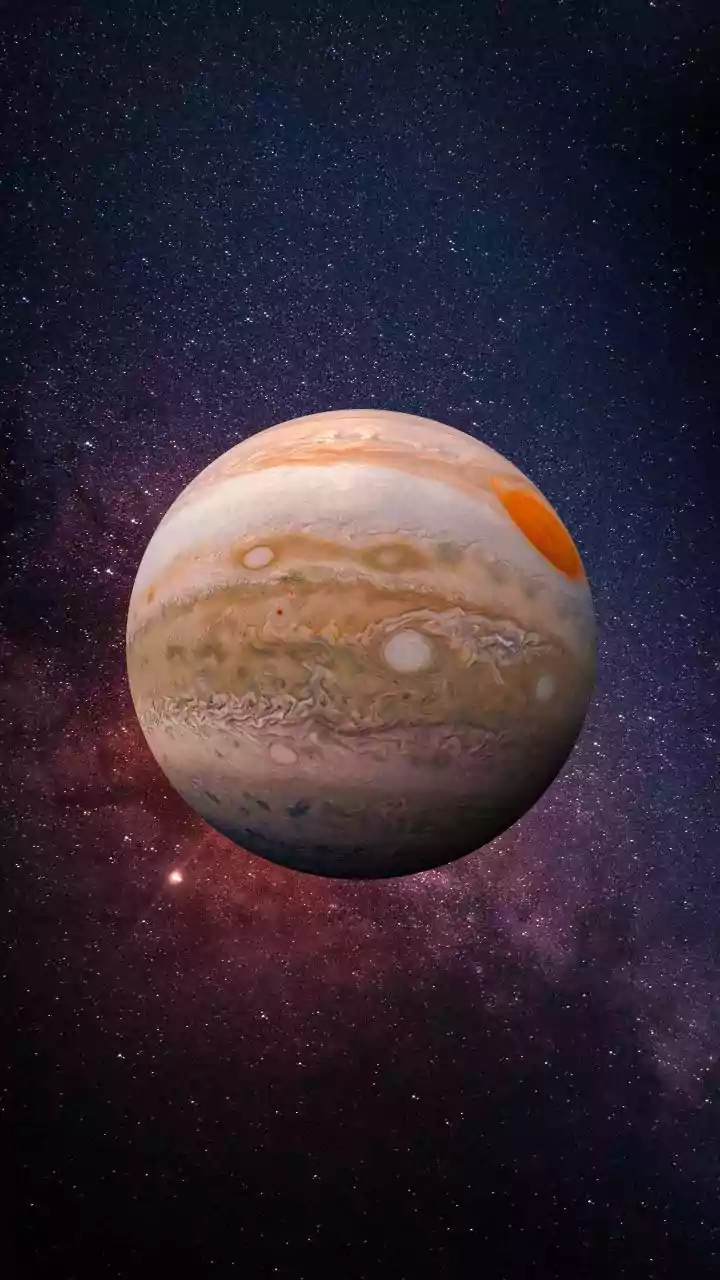
Jupiter is one of the brightest objects in the night sky, outshone only by the Moon and Venus, so it’s easy to find when it’s visible. It shines with a steady, brilliant, yellowish-white light and doesn't twinkle like distant stars. For stargazers in September 2026, Jupiter will be a prominent object in the predawn eastern sky, rising a few hours before the sun. It will be located in the constellation of Cancer. To be certain, you can use a stargazing app on your smartphone, like Sky Tonight or Stellarium, which will show you exactly where to look from your specific location at any given time.
Spotting the Moons
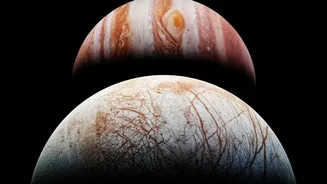
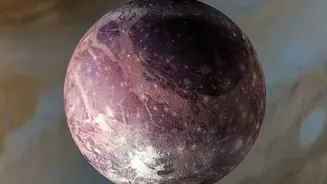
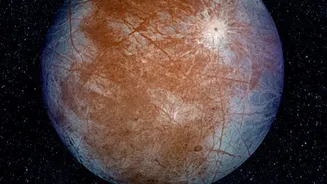
Once you have Jupiter in your sights, you will see it as a small, bright disc of light rather than a mere point. Look closely on either side of the planet. You should see up to four tiny, star-like dots of light, all arranged in a nearly perfect straight line that passes through Jupiter itself. These are not background stars; they are the Galilean moons: Io, Europa, Ganymede, and Callisto. Depending on the day and time, you might see all four, or you might only see two or three. If a moon is missing, it’s likely either hidden behind Jupiter (an occultation), passing in front of it (a transit), or moving through its vast shadow (an eclipse).
A Celestial Dance Night After Night
When Galileo first saw the moons, he initially thought they were fixed stars. But after observing them over consecutive nights, he realized they were constantly changing their positions relative to Jupiter, confirming they were satellites orbiting the giant planet. This is what makes observing them so rewarding. The innermost moon, Io, zips around Jupiter in less than two days, while the outermost, Callisto, takes nearly 17 days. This rapid movement means their configuration is different every single night. Keeping a small journal with sketches of their positions can be a fascinating project, allowing you to track their celestial dance firsthand.
Mapping Who's Who
Once you've spotted the moons, the next question is: which one is which? While experienced observers can sometimes tell them apart by subtle differences in brightness—Ganymede is the largest and often brightest, while Callisto can appear dimmer—the easiest way is to use a digital tool. Several websites and apps provide real-time diagrams of the moons' positions. Sky & Telescope and TheSkyLive both offer interactive online tools that show you exactly where Io, Europa, Ganymede, and Callisto are at any given moment. Simply enter the current date and time, and the tool will generate a map matching what you see in your binoculars, allowing you to put a name to each point of light.