


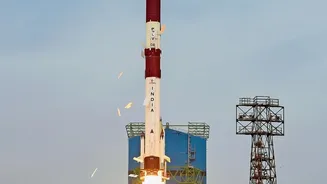
Gaganyaan: The Ultimate Driving Force
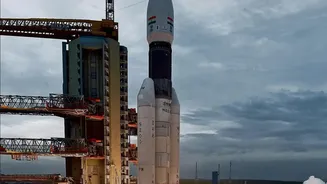
At the heart of India's space medicine push is the Gaganyaan mission, the country's inaugural human spaceflight program. Keeping astronauts healthy in the extreme environment of space is a monumental challenge and the primary objective. The Indian Space
Research Organisation (ISRO) has made crew safety and performance its most critical priorities. To achieve this, ISRO is spearheading a national effort, bringing together the country's top scientific and medical minds. This involves developing everything from space-grade food and crew medical kits to life support systems and emergency protocols. These preparations are the catalyst for a much broader collaboration with far-reaching implications.
A Groundbreaking Partnership
A key pillar of this initiative is a landmark collaboration between ISRO and premier medical institutions like the All India Institute of Medical Sciences (AIIMS) and the Sree Chitra Tirunal Institute for Medical Sciences & Technology (SCTIMST). These partnerships formalize a framework for joint research into the medical challenges of space travel. Scientists and doctors will work together to study the effects of microgravity, radiation, and confinement on the human body. Research areas are extensive, covering human physiology, cardiovascular health, behavioural science, immunology, and the gut microbiome, among others. According to AIIMS Director Prof. M. Srinivas, this collaboration provides the "escape velocity to venture into space medicine," benefiting patients, the nation, and ultimately, humankind.
Space as an Earthly Laboratory
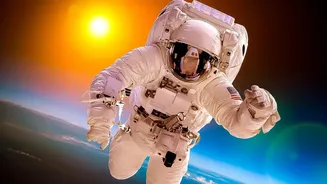
The microgravity environment of space acts as a unique laboratory for understanding human health. In space, astronauts experience physiological changes that are remarkably similar to accelerated ageing on Earth, including muscle atrophy, bone density loss, and shifts in cardiovascular function. Studying these processes in a controlled manner provides invaluable insights into age-related diseases like osteoporosis and circulatory problems. As Prof. K K Deepak, former head of physiology at AIIMS, explains, understanding these changes helps scientists better understand how ageing affects people on Earth. The research also extends to the immune system, which is impaired in microgravity, offering a model to study age-related immune deficiencies.
From Orbit to the Clinic
The innovations born from this space-focussed research are not destined to remain in orbit. The technologies and countermeasures developed to keep astronauts healthy have direct applications for terrestrial healthcare. For instance, devices created to improve blood flow in astronauts' legs could help treat patients with circulation disorders on Earth. The push for lightweight, portable diagnostic tools for space missions could revolutionize remote healthcare and point-of-care diagnostics in underserved areas. Furthermore, advancements in telemedicine to monitor astronaut health can be adapted to connect medical experts with patients in remote regions. This transfer of technology from space exploration to everyday medical practice is one of the most compelling returns on India's investment.
Building a Healthier Future
India's space medicine program is more than a support system for its astronauts; it's a strategic investment in national healthcare and scientific prowess. By fostering collaboration between its space agency and top medical institutes, India is building a robust, multidisciplinary expertise in a niche but critical field. This will not only support future long-duration missions like the planned Bharatiya Antariksh Station but will also spur innovations in medical devices and diagnostics. As ISRO Chairman V Narayanan has highlighted, these partnerships are crucial for strengthening India's human spaceflight capabilities while also improving healthcare for everyone on the ground.