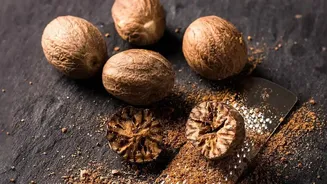









A pinch of nutmeg warms our cakes and curries, but a wellness buzz suggests it could also boost brain health. This familiar spice holds exciting scientific promise, yet the leap from a laboratory finding to a real-world human benefit is a long one.
The Aromatic Promise in a Humble Spice
Nutmeg,
the ground seed of the Myristica fragrans tree, is more than just a festive flavouring. For centuries, traditional medicine has used it for various ailments. Recently, modern science has taken an interest in its potential neuroprotective properties, with claims linking it to improved memory and even protection against cognitive decline. This interest is largely due to its array of bioactive compounds, including myristicin, eugenol, and macelignan, which have shown antioxidant and anti-inflammatory effects in research settings. These are mechanisms known to be important for maintaining brain health, leading to exciting hypotheses about what this common spice could do for our minds.
What Happens in the Laboratory
The most compelling evidence for nutmeg's brain benefits comes from preclinical studies—research conducted in labs on cells, tissues, or animals. In these controlled environments, specific compounds from nutmeg have shown remarkable potential. For instance, macelignan, a substance found in nutmeg, has been shown to reduce neuronal damage and improve cognitive deficits in animal models of vascular dementia. Other rodent studies have found that nutmeg extracts can improve learning and memory, sometimes by preventing the breakdown of acetylcholine, a neurotransmitter crucial for memory function. These studies often use specific extracts and doses to isolate and observe effects, such as protecting brain cells from oxidative stress or reducing neuroinflammation. It is this type of research that fuels headlines about the next big 'superfood'.
The Crucial Gap: From Lab to Life
While lab and animal studies are a vital first step in scientific discovery, their results cannot be directly applied to people. The human body is far more complex than a petri dish or a rodent model. Differences in physiology, metabolism, and how our bodies absorb and use compounds mean that a substance that works in a mouse may have a different, weaker, or even no effect in a human. Dosage is another key factor; animals in studies are often given far higher concentrations of a substance than a person would ever consume in a normal diet. These studies are designed to understand a mechanism or generate a hypothesis, not to provide dietary recommendations. They are an essential part of the scientific pyramid of evidence, but they sit at the bottom, providing weaker, less practical insights than human trials.
Human Evidence: The Missing Piece
When it comes to robust human clinical trials on nutmeg and cognitive function, the evidence is scarce. While some sources cite nutmeg's traditional use for improving mood or sleep, these are not the same as controlled trials measuring cognitive outcomes like memory or executive function. Without randomized controlled trials—the gold standard in nutritional research—it's impossible to say definitively that eating nutmeg will protect your brain. Researchers themselves often conclude their promising lab studies with a call for more human research to validate their findings, a crucial step that has not yet been taken in a significant way for nutmeg's cognitive benefits. This lack of human data means any claims about its proven effects on the brain remain speculative.
A Pinch of Spice, Not a Prescription
It's also critical to approach nutmeg with a healthy dose of respect. The same compounds that show therapeutic potential in the lab can be toxic at high doses. Specifically, myristicin can cause unpleasant and dangerous side effects if consumed in large amounts—far more than you would ever use in cooking. Ingesting as little as two teaspoons (around 10 grams) can lead to symptoms like nausea, dizziness, rapid heartbeat, and even hallucinations. These toxic effects can last for up to two days. Therefore, attempting to use nutmeg as a supplement or a 'natural high' is risky and strongly discouraged. Its place is as a culinary spice, used in small, safe amounts to flavour food.