



Why Europa?
For decades, scientists have been captivated by Europa, one of Jupiter's largest moons. It’s considered one of the most promising places in our solar system to search for life beyond Earth. Strong evidence suggests that beneath its icy shell, which is estimated
to be 15 to 25 kilometers thick, lies a global saltwater ocean containing twice as much water as all of Earth's oceans combined. The key to its potential habitability comes from tidal flexing; Jupiter's immense gravity constantly squeezes and stretches the moon, generating enough heat to keep its deep ocean liquid. This process could create a stable environment, complete with the three essential 'ingredients' for life as we know it: liquid water, essential chemical elements, and a source of energy.
An Orbiter's Clever Strategy
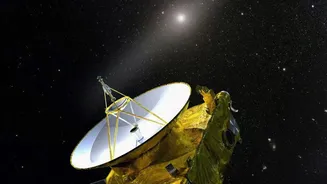
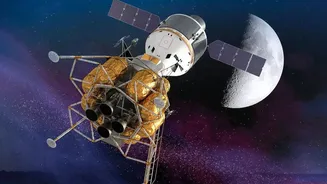
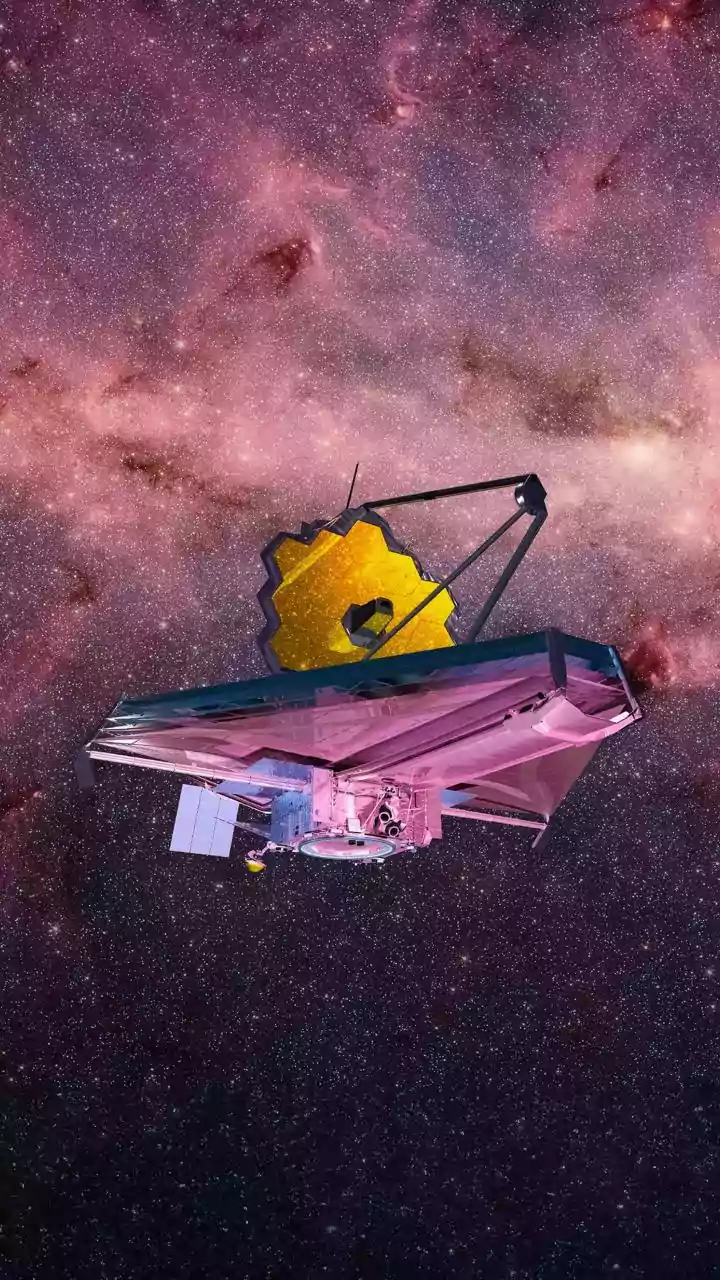
The headline's mention of exploring 'ocean crusts' might conjure images of a lander drilling into the ice, but Clipper's method is more strategic. The mission is not designed to find life directly but to determine if Europa has the right conditions to support it. To do this, the spacecraft, which launched in October 2024, will perform dozens of close flybys of the moon after arriving in the Jupiter system in 2030. This approach avoids the immense radiation belts around Jupiter that could damage the spacecraft's electronics. Instead of orbiting Europa directly, Clipper will make long, looping orbits around Jupiter, diving in for quick, targeted passes over the moon’s surface, some as close as 25 kilometers. This allows it to gather detailed data from different regions while minimizing radiation exposure.
The Toolkit for Finding Answers
Europa Clipper is equipped with a suite of nine sophisticated science instruments shielded inside a protective vault. Its cameras will map Europa's surface in high resolution, while an ice-penetrating radar will measure the thickness of the icy shell and search for pockets of liquid water within it. Spectrometers will analyze the chemical composition of the surface, identifying salts, organics, and other materials that might have originated from the ocean below. A magnetometer will measure the strength and direction of the moon's magnetic field, which can help determine the ocean's depth and salinity. These instruments work together to build a comprehensive picture of Europa as a dynamic world.
Searching for Biosignatures
The mission's central goal is to hunt for biosignatures—scientific evidence of past or present life. This doesn't mean looking for aliens, but for chemical clues that are hard to explain without biology. Two key instruments, the SUrface Dust Analyzer (SUDA) and the MAss SPectrometer for Planetary EXploration (MASPEX), are crucial here. They will analyze particles and gases from Europa's tenuous atmosphere. Scientists hope the spacecraft might fly through plumes of water vapor erupting from the ocean through cracks in the ice. By sampling this material directly, Clipper could analyze the ocean's chemistry without ever touching down, looking for complex organic molecules or specific isotopic ratios that point to biological processes.
Reading the Icy Crust
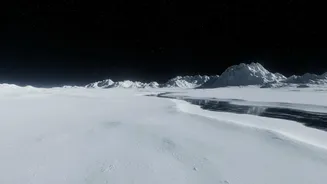
So, how does this relate to the 'ocean crusts'? Europa's icy shell is the crust of its ocean. This surface is not static; it's marked by reddish-brown lines and cracks, suggesting geological activity and interaction with the ocean below. Scientists theorize that material from the ocean can be churned up and deposited on the surface. Recent research even suggests that salty, nutrient-rich surface ice could sink, creating a conveyor belt that feeds the ocean. By studying the composition of this icy crust, Clipper's instruments can essentially read the story of the ocean it covers. The thermal imager, for instance, will look for warm spots where the ice is thin or recent eruptions may have occurred, pointing to areas where ocean water has recently surfaced.