





Sachin Tendulkar: The 1994 ODI in Auckland
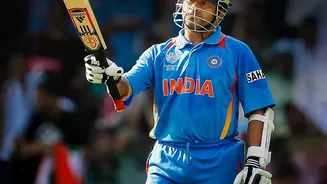
Before 1994, Sachin Tendulkar was a prodigious talent batting in India’s middle order. While his genius was evident, he had yet to score an ODI century in 78 matches. Everything changed on March 27, 1994, in Auckland. With regular opener Navjot Singh
Sidhu injured, a 21-year-old Tendulkar pleaded with captain Mohammad Azharuddin and manager Ajit Wadekar to let him open the innings. The request was granted, and what followed was carnage. Chasing a modest 143, Tendulkar unleashed an innings that was ahead of its time, smashing 82 runs off just 49 balls. He attacked the bowlers from the outset, taking full advantage of the field restrictions. Though he missed a century, the knock was a revelation. It not only cemented his spot at the top of the order but also redefined the role of an ODI opener, proving that attacking from the start was a match-winning strategy. This single decision unlocked the Master Blaster's full potential, leading to 49 ODI centuries and a permanent change in the grammar of white-ball cricket.
Sourav Ganguly: Captaincy in Crisis
In 2000, Indian cricket was at its nadir. The match-fixing scandal had shattered fan trust, and the team's morale was in tatters. Sachin Tendulkar had stepped down from the captaincy, leaving a void. Sourav Ganguly, the vice-captain, was handed the reins. This was not just a promotion; it was a rescue mission. Ganguly’s ascension to the captaincy was the turning point for his own career and for Indian cricket itself. He transformed from an elegant left-handed batsman into a fiery, aggressive leader. He famously backed young, unproven talents like Virender Sehwag, Yuvraj Singh, Harbhajan Singh, and Zaheer Khan, instilling in them a fearless attitude. Under his leadership, India started winning Test matches abroad, something that had been a rarity. He taught the team to fight, to give as good as they got, and to believe they could win from any situation. His tenure as captain laid the foundation for the dominant Indian teams that followed, creating a legacy defined by courage and transformation.
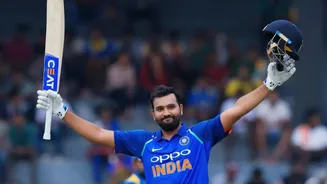
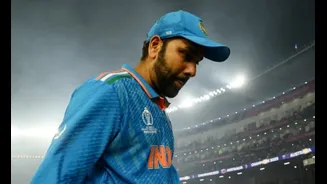
Rohit Sharma: The 2013 Champions Trophy Promotion
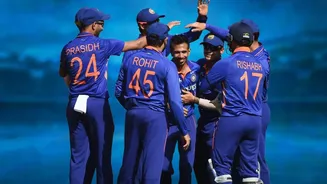
For years, Rohit Sharma was an enigma—a batsman blessed with immense talent but plagued by inconsistency in the middle order. He was in and out of the team and had not secured a permanent spot. The turning point arrived during the 2013 ICC Champions Trophy in England. Then-captain MS Dhoni, known for his gut-instinct decisions, asked Rohit to open the batting alongside Shikhar Dhawan. Rohit himself admitted to being nervous about the sudden change, but he accepted the challenge. In the very first match against South Africa, the new opening pair put on a 127-run stand. Rohit went on to have a successful tournament, and he never looked back. The move was a masterstroke that completely changed his career's trajectory. As an opener, Rohit found the consistency that had eluded him. He had more time to build his innings, allowing his full range of strokes to flourish. The promotion turned a talented middle-order batsman into one of the greatest white-ball openers of all time, the 'Hitman' who would go on to score three ODI double-hundreds.
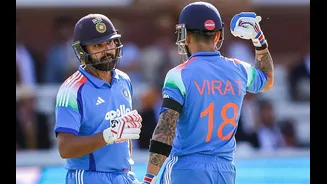
Virat Kohli: The 2014 England Tour Aftermath
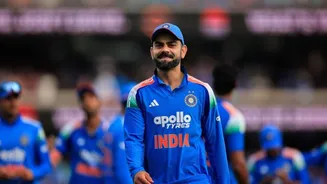
For Virat Kohli, the defining turning point was not a moment of success, but one of profound failure. During India's 2014 tour of England, he was completely at sea against the swinging ball, particularly from James Anderson. He scored a miserable 134 runs in 10 Test innings, a performance he later called a 'milestone' in his career for all the wrong reasons. It was a public humbling that forced him to confront his technical and mental vulnerabilities. Instead of breaking him, it rebuilt him. After the tour, Kohli sought help from Sachin Tendulkar, who advised him on his stance and approach to fast bowling. He spent hours in the nets, re-tooling his technique to better handle the ball outside off-stump. More importantly, he changed his mindset, deciding to be more fearless and proactive. The results were immediate and spectacular. In the very next Test series in Australia, he plundered 692 runs, including four centuries. That failure in England became the catalyst for his evolution into the relentlessly consistent, all-conquering run machine that dominated world cricket for the next decade.