

The Greek Classic: Simple and Bold
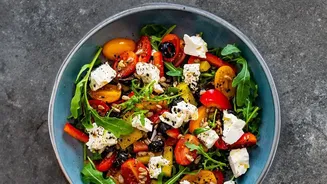
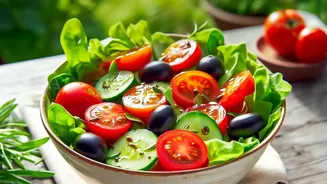
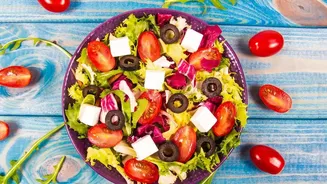
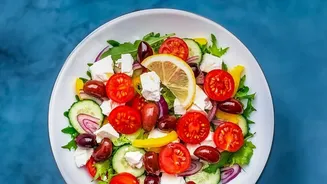
Perhaps the most famous is the Greek salad, or 'horiatiki'. This salad is a testament to the power of simple, high-quality ingredients. It typically features juicy tomatoes, crisp cucumber, sliced red onion, and green peppers. The defining elements are
the block of salty, briny feta cheese placed on top and the plump, flavourful Kalamata olives. The dressing is kept minimal to let the vegetables shine: a generous drizzle of high-quality extra virgin olive oil and a sprinkle of dried oregano are all that's needed. Red wine vinegar or lemon juice can be added, but often the acidity from the tomatoes is enough. The focus is on freshness and the robust, sunny flavours of the region.
The Levant: Aromatic Herbs and Zesty Sumac
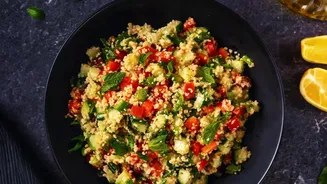
Heading to the Eastern Mediterranean, or the Levant (Lebanon, Syria, Palestine, Jordan), salads take on a distinctly herbaceous and zesty character. Two prime examples are tabbouleh and fattoush. Tabbouleh is fundamentally a herb salad; finely chopped parsley is the star, supported by mint, tomato, onion, and a small amount of soaked bulgur wheat. The dressing is a simple, bright mix of lemon juice and olive oil. Fattoush, on the other hand, is a rustic bread salad. It features a medley of chopped vegetables like lettuce, radish, cucumber, and tomato, but its signature ingredients are crispy pieces of fried or toasted pita bread and a dressing made with sumac. Sumac, a ground dark red berry, imparts a tangy, lemony flavour that is unique and deeply refreshing.
The Italian Way: Rustic and Hearty
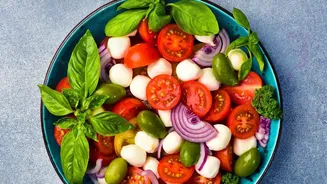
In Italy, salads often celebrate just a few perfect, seasonal ingredients. The Caprese salad, with its simple layers of ripe tomatoes, creamy fresh mozzarella, and aromatic basil, is a perfect example of this philosophy. Another beloved Italian creation is the Panzanella, a hearty Tuscan bread salad. It was originally created to use up stale bread, which is torn into chunks and tossed with juicy tomatoes, onions, basil, and sometimes cucumber. The bread soaks up the juices from the tomatoes and the simple vinaigrette dressing, becoming flavourful and tender. It's a rustic, satisfying dish that transforms humble ingredients into something truly special.
North Africa: Warm Spices and Cooked Vegetables
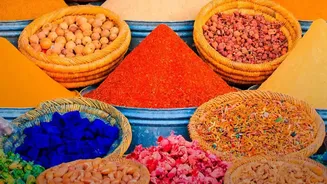
The salads of North Africa, from countries like Morocco, Tunisia, and Algeria, introduce a different palette of flavours, often featuring cooked vegetables and warm, aromatic spices. A classic Moroccan salad might feature diced tomatoes, cucumbers, and roasted peppers in a vinaigrette seasoned with earthy cumin. Tunisian cuisine offers 'Mechouia', a smoky and flavourful salad made from grilled and chopped peppers, tomatoes, and garlic seasoned with olive oil. Cooked carrot salads, like 'Houria', are also popular, seasoned with harissa, garlic, and spices like caraway and coriander. These salads showcase a deeper, more complex flavour profile, using spices like cumin, paprika, and cinnamon, reflecting the region's rich culinary traditions.
The Unifying Ingredient: Olive Oil
Across these diverse regions, one ingredient serves as the unifying thread: olive oil. Called 'liquid gold' by the poet Homer, it is the foundation of Mediterranean cooking. Used generously in dressings and for cooking, its flavour profile can range from grassy and peppery to fruity and mild, depending on the olive variety and how it's processed. In Greek cuisine, an entire category of dishes called 'lathera' translates to 'cooked in oil'. This liquid gold doesn't just add flavour and healthy monounsaturated fats; it also helps the body absorb nutrients from the vegetables. From Greece to Lebanon, Italy to Morocco, a drizzle of good extra virgin olive oil is the signature of a truly Mediterranean salad.