



The End of Awkward Fusions
The term 'fusion food' often brings to mind awkward pairings and culinary gimmicks. Think paneer tacos or a gulab jamun cheesecake. While some of these creations were born from a playful spirit, they often represented a superficial mash-up of cultures.
This early phase of modern Indian food was frequently about spectacle, with foams, smokes, and liquid nitrogen sometimes overshadowing the soul of the dish. Many chefs and diners alike grew weary of these forced marriages, where the novelty wore off quickly, leaving a sense of inauthenticity. The new movement, often called 'progressive Indian' or 'contemporary Indian' cuisine, is a direct response to this. It marks a shift away from just translating Indian food for a global audience and toward elevating it on its own terms. This isn't about rejecting innovation, but about finding a more meaningful way to evolve.
The Ingredient as the Ultimate Bridge
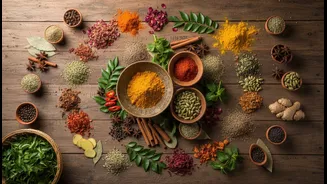
So, what does this new approach look like? Instead of forcing a Rajasthani curry into a French croissant, chefs are looking inward, at the vast pantry of India itself. The philosophy is simple yet profound: find an ingredient that naturally exists in two or more distinct regional cuisines and use it as an authentic bridge. For example, a chef might take a type of millet celebrated in both Karnataka and Uttarakhand and create a dish that speaks to both traditions without betraying either. They might use a specific chili from Andhra Pradesh in a dish inspired by Goan flavours, creating a link based on a shared profile of heat and flavour. This ingredient-led approach is about finding the common ground that already exists within India's incredibly diverse culinary map. It’s a dialogue between regions, facilitated by a single, thoughtfully chosen element, whether it's a forgotten heirloom grain, a hyper-local spice, or a specific vegetable.
A New Generation of Culinary Curators
Across India and in global culinary capitals, chefs are championing this philosophy. They see themselves less as inventors and more as curators, honouring tradition while making space for innovation. Chefs like Sujan Sarkar, with his 'progressive Indian' restaurants, aim to preserve the soul of traditional flavours while presenting them in a fresh, relevant way. At Mumbai's Masque, the focus is on highlighting indigenous ingredients, like transforming a prickly pear into a sorbet with tadgola (ice apple). These chefs partner with local farmers to revive forgotten grains and promote indigenous produce, making provenance the new luxury. The goal is to enhance, not erase, a dish's character. Modern techniques like sous-vide or precision fermentation are used not for gimmickry, but to solve historical problems or enhance texture and flavour, all while preserving the essence of the original dish.
A Cuisine Confident in Its Own Skin
This evolution signifies a growing confidence within Indian cuisine. For a long time, Indian food felt the need to explain itself, to simplify its terminology and concepts for a Western palate. Now, chefs are diving deep into micro-regionality, celebrating the unique culinary identities of Kashmir, Kerala, Bengal, and Nagaland. They are showcasing India as a collection of remarkable culinary cultures rather than a single, monolithic cuisine. This trend is about modernising from within, not by simply adopting Western techniques or formats. It’s a recognition that Indian cuisine has always been plant-forward, sustainable, and built on wellness principles. By focusing on the integrity of the ingredients and the stories behind them, these chefs are building a new culinary language that is both rooted in tradition and boldly forward-looking.