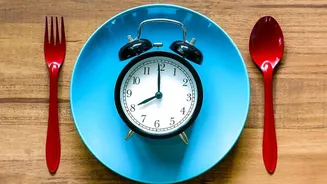







Understanding Your Body’s Clock
Deep within our brains, a master clock known as the suprachiasmatic nucleus (SCN) governs our circadian rhythms. This is the 24-hour cycle that tells our bodies when to wake up, feel tired, and even when to feel hungry. This internal timer is primarily
influenced by light, which signals the start of our active day. However, it’s not the only cue. Food intake acts as a powerful signal for the 'peripheral clocks' in our organs, including the liver, stomach, and pancreas, telling them when to ramp up for digestion and metabolism. When your eating patterns are erratic or go against this natural rhythm—for instance, by skipping breakfast or eating late at night—it can create a state of 'circadian misalignment', disrupting these carefully orchestrated metabolic processes.
Aligning Meals to Boost Fat Burning
The concept of aligning food intake with our body clocks is called chrononutrition. Research indicates that our bodies are primed to process food more efficiently during the earlier parts of the day. Studies have shown that genes related to digestion and metabolism are more active during daylight hours. Consequently, eating your largest meals earlier may lead to better metabolic outcomes. A study found that delaying meal times, even when calories and activity levels were controlled, decreased fat oxidation, meaning the body burned less fat for energy. Another study involving overweight women found that those who consumed a large breakfast and a small dinner lost significantly more weight than those who had a small breakfast and a large dinner, despite eating the same total number of calories. Eating earlier aligns with your body's peak metabolic state, potentially improving insulin sensitivity and reducing the likelihood that calories are stored as fat.
The Connection Between Late Meals and Poor Sleep
A large, late-night dinner can be a significant disruptor of sleep quality. When you eat close to bedtime, your body must focus on digestion instead of powering down for rest. This can increase your core body temperature and heart rate, making it harder to fall asleep and stay asleep. Moreover, late eating can interfere with the natural evening release of melatonin, the hormone that signals sleepiness. The digestive process can also lead to issues like acid reflux or indigestion, further fragmenting your sleep. By shifting your main calorie intake to earlier in the day and having a smaller, lighter dinner several hours before bed, you give your digestive system ample time to work. This allows your body to fully transition into a state of rest and repair overnight, leading to a more restorative sleep cycle.
Simple Steps to Align Your Eating Window
Adopting a circadian-aligned eating pattern doesn't require a radical diet overhaul. The focus is on timing. A popular and effective approach is known as early time-restricted eating (eTRE). This involves consuming all of your daily calories within an 8-to-10-hour window, typically finishing your last meal by the mid-afternoon or early evening. A simple mantra to follow is 'Breakfast like a king, lunch like a prince, and dinner like a pauper.' Aim to make breakfast your most substantial meal, followed by a moderate lunch, and a small, easily digestible dinner. Try to finish your last meal at least three to four hours before you go to sleep. If a strict window feels too difficult, start by gradually shifting your dinner time earlier by 30 minutes each week. Consistency is key, as regular meal times help reinforce a strong and stable circadian rhythm.
What to Realistically Expect
While the evidence is promising, it's important to remember that individual results can vary based on genetics, lifestyle, and overall diet quality. Shifting your meal timing is a powerful tool, but it works best in conjunction with a balanced diet rich in whole foods and regular physical activity. Some studies have noted that while late eaters tend to have a higher risk of obesity, a controlled calorie deficit remains the primary driver of weight loss itself. The main benefit of circadian-aligned eating appears to be its ability to make your body's metabolic machinery run more efficiently, which can support weight management and improve overall health markers over time. It’s not a quick fix, but a sustainable strategy for working with your body’s biology, not against it.