


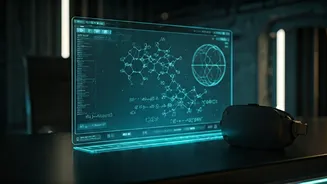
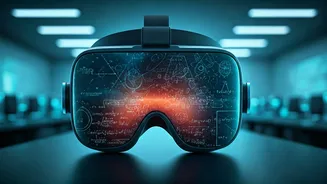


What is a Virtual Chemistry Lab?
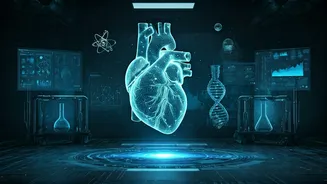
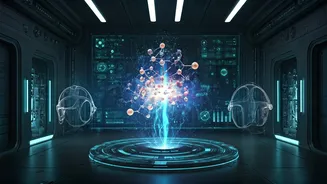
Imagine stepping into a laboratory where you can manipulate molecules with your hands, conduct explosive reactions without fear, and reset your experiment with the click of a button. This is the promise of virtual and augmented reality (VR/AR) in chemistry.
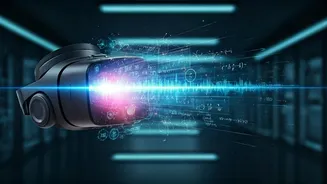
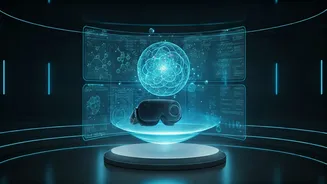
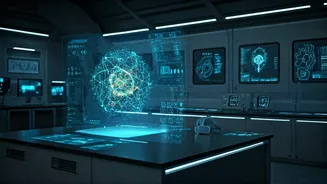
Using a VR headset and specialised software, students and researchers are transported into a fully interactive, three-dimensional lab environment. These platforms are not simple videos; they are sophisticated simulations. Users can pick up virtual equipment, mix reagents from digital shelves, and observe chemical reactions at a level of detail impossible in the real world, from colour changes to the actual bonding of atoms.
The Safety Revolution
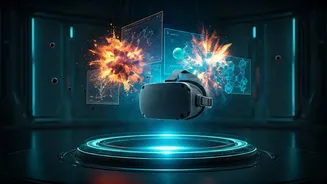
The most immediate benefit of virtual labs is the complete elimination of physical risk. Advanced chemistry often involves volatile, toxic, or radioactive materials that require expensive safety equipment and strict protocols. A small mistake can lead to serious injury or environmental damage. In a virtual environment, these dangers vanish. A student can simulate a thermite reaction—a highly exothermic process—and watch the spectacular outcome up close without needing a blast shield. They can work with simulated hydrofluoric acid without risking severe chemical burns. This safety net encourages curiosity and experimentation, allowing learners to explore the consequences of their actions—even their mistakes—in a controlled setting, fostering a deeper understanding of lab protocols and chemical properties.
Beyond Safety: Deeper Conceptual Understanding
While safety is a major driver, the educational impact of VR labs goes much deeper. Chemistry is often abstract. Visualising a complex three-dimensional molecule from a 2D textbook drawing is a challenge for many students. In VR, that same molecule can be grabbed, rotated, and inspected from any angle. You can shrink down to the atomic level to see how bonds form and break during a reaction. This ability to make the invisible visible transforms abstract concepts into tangible experiences. Platforms like Labster and Nanome allow users to explore protein structures or design new drug molecules interactively. This spatial, hands-on learning method has been shown to improve retention and comprehension far more effectively than traditional lectures.
Democratising Advanced Science
High-level scientific research requires incredibly expensive equipment. A single Nuclear Magnetic Resonance (NMR) spectrometer or a high-resolution mass spectrometer can cost crores of rupees, putting them out of reach for many universities and colleges in India. Virtual labs offer a powerful solution. They can provide access to simulated versions of this cutting-edge equipment for a fraction of the cost. A student in a small-town college can get hands-on training with a virtual gas chromatograph, an experience previously reserved for those at top-tier research institutions. This democratisation of access not only enhances education but also better prepares a wider pool of students for careers in STEM, levelling the playing field and accelerating scientific literacy across the country.
The Road Ahead for India
The adoption of VR/AR in Indian education is still in its early stages, but the potential is immense. Institutions like the IITs and IISc are beginning to explore these technologies for research and teaching. The challenge lies in initial setup costs—procuring headsets and software licenses—and training educators to integrate these new tools effectively into their curriculum. However, as hardware becomes more affordable and platforms become more sophisticated, virtual labs could become a cornerstone of India's New Education Policy (NEP), which emphasises experiential and skill-based learning. By investing in this technology, India can equip its next generation of scientists with world-class training, regardless of their physical location.