



The Ultimate Ejection Seat
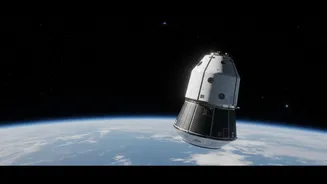
Think of the Crew Escape System (CES) as the most sophisticated ejection seat ever built. It's a rapid-response safety mechanism designed to pull the entire crew module—the capsule carrying the astronauts—away from a malfunctioning rocket in milliseconds.
This isn't just for problems on the launchpad; it's designed to work during the perilous ascent through the atmosphere, a phase filled with extreme speeds and forces. The primary goal is simple but crucial: get the crew to a safe distance from a potential disaster, ensuring their survival above all else. This system is a cornerstone of the Gaganyaan programme, representing ISRO's absolute commitment to astronaut safety.
Anatomy of a Lifesaver
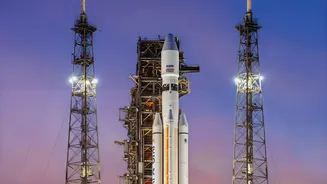
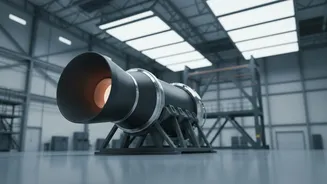
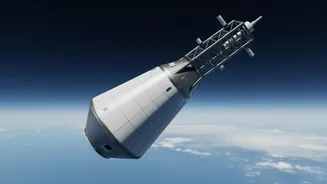
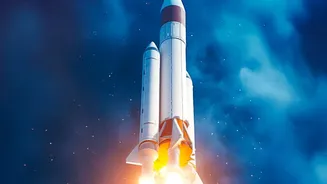
The CES is the tower-like structure sitting atop the main rocket. It's not a single part but a system of powerful, quick-acting solid-fuel motors. These motors are special; they use high burn-rate propellants that fire with incredible force, generating an acceleration up to ten times that of gravity. This allows the CES to literally pull the crew module clear of a failing launch vehicle, which is essential because the main rocket's solid boosters cannot be shut down once ignited. The system ISRO uses is known as a "puller" type, which has been a trusted design in other crewed missions like Russia's Soyuz and America's Apollo.
The High-Altitude Challenge
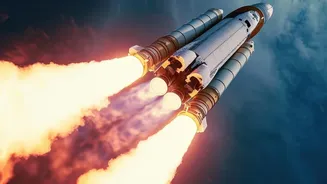
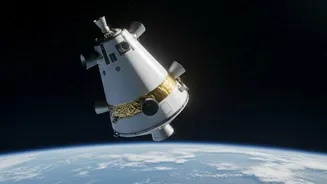
Aborting a launch at high altitude presents a unique set of challenges compared to an abort on the ground. The rocket is already travelling at supersonic speeds, sometimes over Mach 1.2, through a thin but still impactful atmosphere. An automated network of sensors, called the Integrated Vehicle Health Management System (IVHM), acts as the rocket's nervous system, constantly monitoring thousands of parameters. If it detects a critical anomaly, it triggers the abort sequence instantly. The CES must not only pull the capsule away but also stabilise it in a high-speed environment. This is achieved using grid fins, which deploy to control the capsule's orientation as it separates, ensuring a stable trajectory before the parachutes are deployed.
A Simulated Emergency in Action
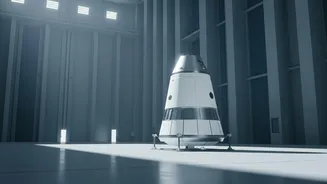
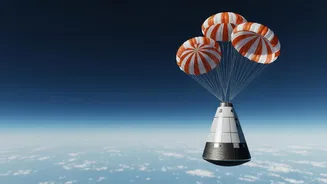
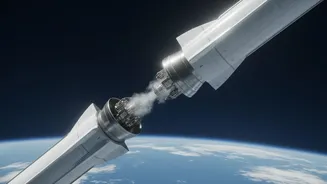
So what does a high-altitude abort look like? ISRO has already proven the system's capability with the Test Vehicle Abort Mission-1 (TV-D1). In this test, a specially designed vehicle was launched to an altitude of about 17 km. At a predetermined point, the abort was triggered. The CES motors fired, pulling the unpressurised crew module away from the test rocket. The system successfully steered the capsule to a safe distance. After the escape motors did their job, the escape tower itself was jettisoned. Then, a carefully timed sequence began: a set of drogue parachutes deployed to stabilise and slow the module, followed by the main parachutes which brought it to a safe splashdown in the Bay of Bengal, ready for recovery.
Testing for Flawless Performance
The success of the TV-D1 mission was not a one-off event but the culmination of a rigorous testing campaign. Years of work have gone into perfecting every component. This includes a Pad Abort Test in 2018, which validated the system's ability to function from a standstill on the launchpad. Engineers have also performed static fire tests of the escape motors, parachute deployment tests, and flotation tests to ensure the capsule remains upright after splashdown. Each test provides crucial data, allowing ISRO to refine the system and build confidence that when Indian astronauts, or Vyomanauts, finally launch, they will be protected by one of the most thoroughly tested safety systems in the world.