



The Unstable Dam
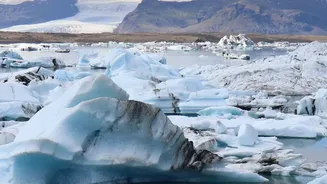
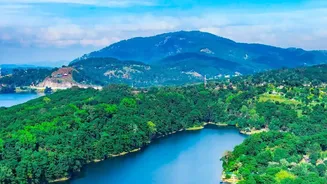
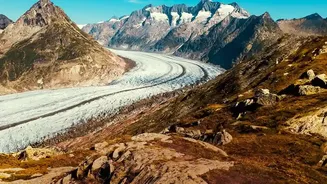
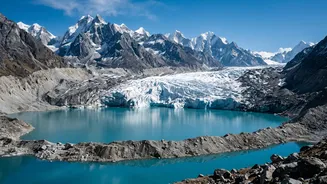
The story often begins not with a collapse, but with a lake. As glaciers melt and retreat due to rising temperatures, they leave behind vast quantities of water. This water often gets trapped behind a natural dam, forming a glacial lake. These are not man-made
dams of engineered concrete, but unstable barriers made of loose rock, sediment, and ice, known as a moraine. As the glacier continues to melt, the lake grows, putting immense pressure on this fragile moraine dam. This sets the stage for a ticking time bomb known as a Glacial Lake Outburst Flood, or GLOF.
The Trigger Event
An unstable glacial lake needs a trigger to unleash its destructive power. This can come in many forms. A large chunk of ice calving from the glacier and crashing into the lake can create a massive wave that overtops the dam. Similarly, a rockslide or avalanche from the steep valley walls can have the same effect, displacing huge volumes of water. Other triggers include heavy rainfall that rapidly raises the lake level, an earthquake that destabilizes the moraine, or even internal weaknesses, like the melting of buried ice cores within the dam itself, causing it to fail from within.
From Collapse to Catastrophe
Once the dam is breached, the process becomes terrifyingly fast. Water pouring over the top of the loose moraine rapidly erodes a channel. This creates a powerful feedback loop: as the channel deepens, more water escapes, which in turn carves an even bigger channel. Within minutes, the entire lake can begin to drain. However, a GLOF is not just a flood of water. As the torrent rushes downstream, it picks up the very material from the dam—boulders, rocks, and sediment—transforming into a thick, fast-moving debris flow. This slurry can be far more destructive than water alone.
The Chamoli Disaster: A Different Kind of Collapse
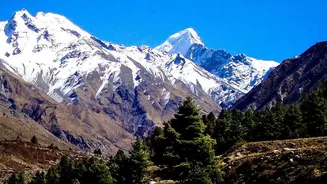
Not all glacial floods involve a lake. The 2021 Chamoli disaster in Uttarakhand, which claimed over 200 lives, was caused by a different, though equally devastating, mechanism. In that event, an enormous mass of rock and glacier ice—estimated at 27 million cubic metres—broke off from a steep peak. The sheer energy of the fall, over a vertical distance of more than 3 kilometres, generated enough friction and heat to melt almost all the ice in the avalanche. This instantly transformed the rock and ice slide into a massive, mobile debris flow that scoured the valley below, destroying two hydropower plants.
A Growing Threat in the Himalayas
These events are becoming a more pressing concern across the Hindu Kush Himalaya region. Climate change is accelerating glacier melt, leading to the formation of new glacial lakes and the expansion of existing ones. Studies have identified thousands of glacial lakes in the region, with a significant number posing a potential GLOF threat to downstream communities in India, Nepal, and China. The combination of rapid environmental change and increasing infrastructure development, such as hydropower projects in these vulnerable valleys, heightens the risk. A 2023 study found that 15 million people globally are at risk from GLOFs, with a large portion of them living in India and Pakistan.