







The Unannounced Voice Note
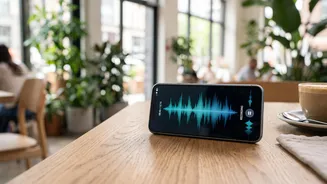
You see it appear in your chat: a three-minute audio file. Suddenly, you have homework. The sender saved themselves the trouble of typing, but now you have to find a quiet place, plug in headphones, and dedicate your undivided attention to their rambling
monologue. Psychologists note this is a key reason many people dislike voice notes; they remove the receiver's control. You can't skim a voice note for key details like a time or address, and research shows many people have to listen more than once to grasp all the information. They're convenient for the sender, but feel like a demand on the receiver's time and attention. Unless you're sending a quick 'Happy Birthday' song, a heads-up like 'Can I send a quick voice note?' goes a long way.
Leaving Someone on 'Read'
Ah, the two blue ticks of doom. The 'read receipt' is a double-edged sword. On one hand, it confirms your message has been seen. On the other, when it’s followed by hours of silence, it can feel like a deliberate slight. According to a 2026 survey, being left on read is one of the biggest texting annoyances, with over a quarter of people finding it to be poor etiquette. It creates a social anxiety that a simple, 'Got this, will reply later!' could easily solve. While some argue that leaving a message on read is an implicit acknowledgement, for many it signals that they aren't a priority. In our hyper-connected world, the silence after a seen message often speaks louder than words, creating unnecessary friction in both personal and professional relationships.
The One-Word 'K' Reply
Few things can shut down a conversation as efficiently as the single-letter response: 'k'. It’s the digital equivalent of a slammed door. You’ve just typed out a thoughtful, multi-sentence message, and in return, you get a response that feels dismissive at best and passive-aggressive at worst. While intended to be a quick acknowledgement, it often reads as curt and uninterested. It leaves the sender wondering if they’ve done something to offend. Other one-word replies like ‘fine’ or ‘sure’ can have a similar effect, draining the warmth from a conversation. If you're short on time, even a 'Got it, thanks!' or a thumbs-up emoji can feel more engaged and less abrupt than the cold, hard finality of 'k'.
The Rapid-Fire Message Bomb
Your phone buzzes. Then it buzzes again. And again. And again. You look down to see a barrage of one-line messages that could have easily been consolidated into a single text. This habit, often called message bombing or serial texting, is not just distracting; it’s overwhelming. Each notification demands your attention, breaking your focus for what is essentially one continuous thought broken into a dozen tiny, irritating pieces. It clogs up notification screens and can make the sender seem frantic or inconsiderate. The rule of thumb should be to gather your thoughts and send them in one, concise paragraph. Your friends' and colleagues' sanity will thank you for it.
The Confusing Emoji Overload
Emojis are the spice of digital conversation, but too much spice can ruin the dish. A well-placed smiley can add warmth and clarify tone, but a long string of inscrutable icons can leave the recipient more confused than enlightened. One survey found that the overuse of emojis was a significant turn-off for nearly 40% of people. When your message has more pictures than words, it can come across as juvenile or, worse, make the meaning unclear. It’s also wise to be mindful of how different generations interpret emojis; a simple thumbs-up can be seen as a passive-aggressive brush-off by younger users. When in doubt, use your words. They are often clearer and less likely to be misinterpreted.