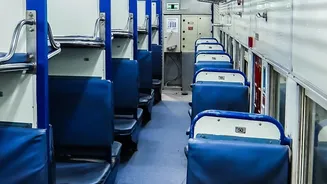






Securing a lower berth on a long train journey can feel like winning a lottery. For many, especially the elderly or those with mobility issues, it is a necessity. While not guaranteed, here are four settings that can improve your chances.
Master the Berth Preference Menu
The most direct
way to signal your need for a lower berth is by using the 'Berth Preference' dropdown menu on the IRCTC booking page. While it may seem obvious, many travellers leave this set to 'No Preference'. Actively selecting 'Lower' tells the reservation algorithm your priority. However, this is treated as a request, not a command. The system will only honour it if a lower berth is available in the general pool at the moment of booking. For the highest probability, it is crucial to book as soon as the advance reservation period opens, typically 120 days before the journey date, when availability is at its peak. If you absolutely need a lower berth, there's another crucial checkbox to use: 'Book, only if at least 1 lower berth is allotted'. Selecting this tells the system to only proceed with the booking if it can confirm a lower berth. If not, the transaction will not go through, saving you the trouble of getting an undesirable upper or middle berth.
Understand the Senior Citizen Quota
Indian Railways has a dedicated quota of lower berths specifically for certain passengers. This is the most powerful tool for securing a lower berth. The system automatically gives preference to male passengers aged 60 and above, and female passengers aged 45 and above. Pregnant women are also eligible for this priority allocation. To take advantage of this, ensure the age and gender details entered during booking are completely accurate, as the system uses this data to automatically flag eligibility. A common mistake that voids this priority is booking a large group on one PNR. The lower berth priority algorithm works best when a maximum of two eligible passengers are booked on a single ticket. If you are booking for three or more senior citizens, or a senior citizen with other non-eligible family members, the system may treat it as a general group booking, ignoring the lower berth priority. The best strategy is to book eligible passengers on a separate PNR.
Utilise Other Reservation Choices
Beyond the basic lower berth preference, the IRCTC booking page has other 'Reservation Choice' options that can indirectly influence your outcome. These options typically include choices like 'Book, only if all berths are allotted in same coach'. While designed to keep groups together, selecting this can sometimes work against your berth preference if the system cannot find your desired berth type within a single coach that can accommodate your entire group. If securing a lower berth is more important than being in the exact same coach as your travel partners, consider not selecting this option, or even splitting your booking into smaller PNRs. This gives the algorithm more flexibility to find isolated lower berths across different coaches if a consolidated block is unavailable.
Know Your On-Board Options
Even if you are not allotted a lower berth during booking, all is not lost. Your final chance lies with the Travelling Ticket Examiner (TTE) on the train. Indian Railways authorises TTEs to reallocate any vacant lower berths that may become available during the journey due to no-shows or last-minute cancellations. Passengers who are eligible for the lower berth quota (senior citizens, women over 45, etc.) but were allotted an upper or middle berth are given first priority for these vacant seats. The most effective approach is to politely approach the TTE as soon as you board and explain your situation. Waiting until later in the journey decreases your chances as other passengers may have already made similar requests. A friendly conversation with fellow passengers in your compartment can also sometimes lead to a mutually agreeable swap, especially if a younger traveller prefers the relative privacy of an upper berth.