




The Global Weather Connection
It might seem strange, but our daily weather is part of a giant, interconnected global system. Meteorologists use the term 'teleconnections' to describe how climate anomalies in one part of the world can be related to events far away. Think of it like
a ripple effect in a massive pond. A change in the temperature or pressure of the ocean in one area can create atmospheric waves that travel across the globe, influencing weather patterns thousands of kilometres away. The most powerful of these connections for India links us to the tropical Pacific Ocean.
Meet El Niño and La Niña
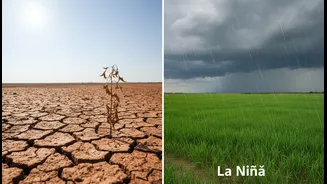
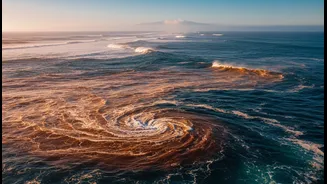
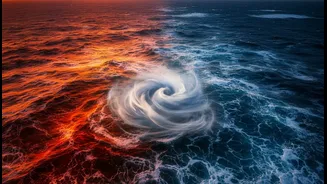
The primary way the Pacific influences our weather is through a phenomenon called the El Niño-Southern Oscillation, or ENSO. It has two main phases: El Niño and La Niña. During an El Niño, the surface waters of the central and eastern Pacific Ocean become unusually warm. Conversely, during a La Niña, those same waters become unusually cool. These are not annual events but occur irregularly every two to seven years. This heating and cooling cycle dramatically alters atmospheric circulation patterns, including the trade winds that are crucial for global weather.
The Monsoon's Pacific Problem
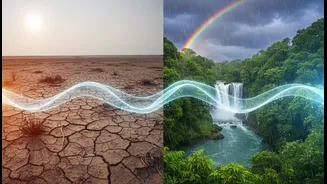
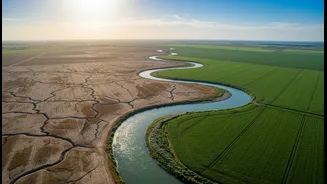
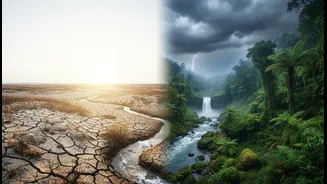
The Indian summer monsoon is famously vital for our agriculture and economy. El Niño events have a history of disrupting it. The warming of the Pacific Ocean during an El Niño can weaken the trade winds that help drive moisture-laden monsoon winds toward India. This often results in reduced rainfall and, in some cases, severe droughts. Historically, about half of all El Niño years have coincided with monsoon droughts in India. On the flip side, La Niña events typically do the opposite. The cooling of the Pacific tends to strengthen the monsoon, often leading to normal or above-average rainfall across the country.
Beyond the Monsoon
The influence doesn't stop with the monsoon. ENSO phases can affect weather throughout the year. El Niño years are often associated with an increased frequency and intensity of heatwaves during the hot season (April-June) across north, northwest, and central India. Conversely, La Niña can contribute to colder-than-usual winters, particularly in northern India, and can alter the patterns of cyclonic activity in the Bay of Bengal. Essentially, this distant oceanic cycle can dial up the heat in summer and deepen the chill in winter.
The Indian Ocean's Own Game
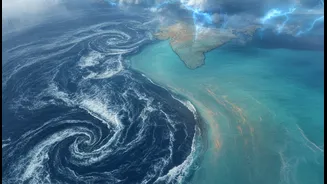
While the Pacific is a major player, it's not the only one. Our own Indian Ocean has a similar, though less powerful, phenomenon called the Indian Ocean Dipole (IOD). The IOD involves the alternate warming and cooling of the western (Arabian Sea) and eastern parts of the Indian Ocean. A 'positive' IOD, with a warmer Arabian Sea, can enhance monsoon rainfall and sometimes even counteract the negative effects of an El Niño. In 2019, for instance, a very strong positive IOD led to a deluge late in the monsoon season despite a weak El Niño. A 'negative' IOD, however, can weaken the monsoon and worsen drought conditions, especially if it occurs alongside an El Niño.