





A Telescope on a Global Scale
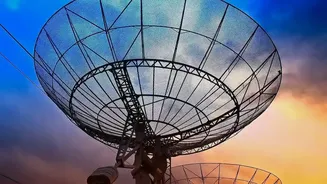
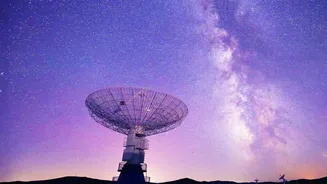
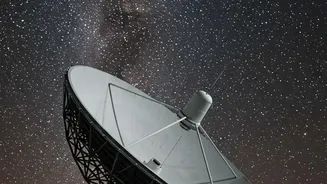
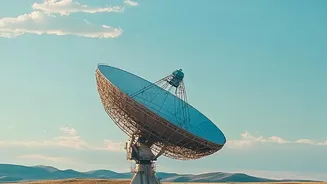
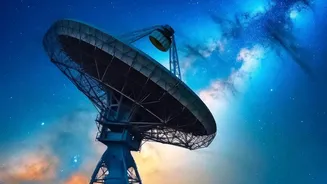
Imagine a telescope so large it spans two continents. That is the reality of the Square Kilometre Array (SKA). It isn't a single instrument, but a massive network of thousands of antennas working together as one. The project is split between two remote
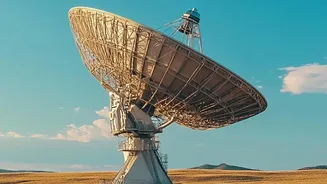
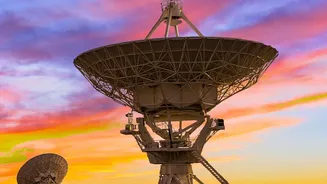
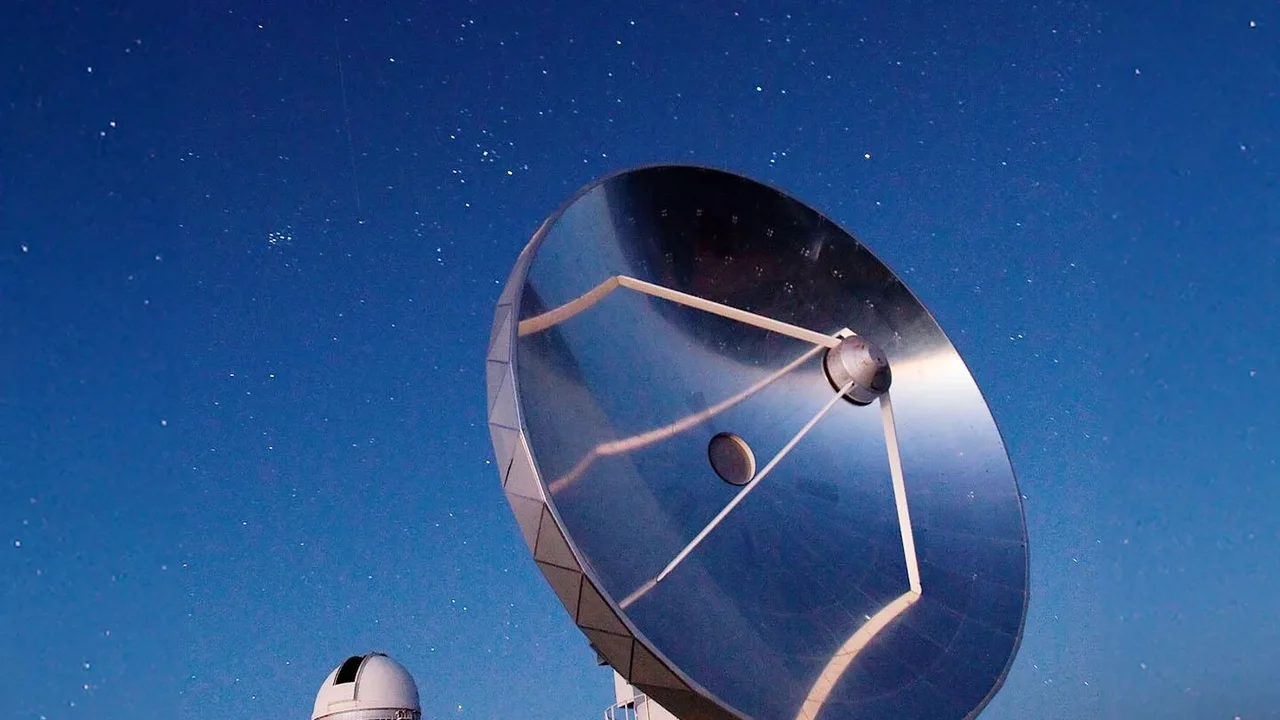
desert locations to minimize radio interference. In South Africa, the SKA-Mid will consist of 197 large dishes, including the existing MeerKAT array. In Western Australia, the SKA-Low will feature 131,072 smaller, tree-like antennas. When combined, they will have a collecting area of one square kilometre, making the SKA the most powerful radio telescope ever built, capable of surveying the sky with unprecedented sensitivity and detail. Construction officially began in 2022 and is progressing in stages, with the first scientific observations expected towards the end of the decade.
Listening to the Cosmic Dawn
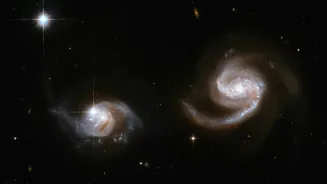
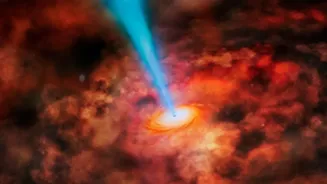
The SKA's primary mission is to peer back in time to a mysterious period known as the Cosmic Dawn and the Epoch of Reionization. This was the era, roughly 400,000 to one billion years after the Big Bang, when the universe was filled with a fog of neutral hydrogen gas. Before the first stars and galaxies ignited, the universe was dark. The SKA is designed to detect the faint, specific radio signal emitted by this primordial hydrogen at a wavelength of 21 centimetres. As the universe has expanded over 13 billion years, this signal has been stretched to much longer, lower-frequency wavelengths. By capturing these ancient radio waves, the SKA will create three-dimensional maps of how the first luminous structures lit up the cosmos, burned through the hydrogen fog, and shaped the universe we see today.
India’s Role as the Telescope’s ‘Brain’
India is a crucial partner in this monumental scientific endeavour, playing a key role since the project's early days. The nation's participation is led by the National Centre for Radio Astrophysics (NCRA) in Pune, leveraging the expertise gained from operating the acclaimed Giant Metrewave Radio Telescope (GMRT), an SKA Pathfinder facility. India's most significant contribution has been leading the design and development of the Telescope Manager, the highly complex software system that will serve as the 'brain' and 'nervous system' of the entire observatory. This system will control and monitor the thousands of antennas, direct observations, and manage the immense flow of data. With a funding commitment of ₹1250 crore, India has secured its position as a full member of the SKA Observatory, ensuring Indian scientists have significant access to the telescope and opportunities to lead groundbreaking research.
Unlocking Universal Mysteries
Beyond the Cosmic Dawn, the SKA's incredible sensitivity will tackle some of the biggest questions in astrophysics. Scientists will use it to test Albert Einstein's theories of gravity by timing the signals from pulsars, the super-dense, rapidly spinning remnants of stars. It will investigate the nature of dark matter and dark energy, the mysterious components that make up about 95% of the universe. The telescope will also hunt for the building blocks of life in space by searching for complex organic molecules, and its power could even detect faint radio signals from potential extraterrestrial intelligence. The SKA will generate more data than the entire global internet traffic of today, presenting enormous computing challenges but also opening a new window onto the cosmos.