








The Allure of the Non-Stop Dream
In recent years, Indian travellers have seen a welcome surge in new direct international flights, connecting cities like Guwahati, Indore, and Kolkata to global destinations. Airlines are responding to a booming demand for outbound travel, which saw 32.8
million departures in 2025 alone. The primary appeal is obvious: slashing travel time by avoiding layovers in busy hubs. A non-stop flight promises to turn a draining 16-hour journey into a manageable 9 or 10 hours, a powerful proposition for both business and leisure travellers. This focus on point-to-point connectivity is a massive step forward, especially for passengers from Tier-2 cities who previously had to endure multiple connections. But the celebration over a shorter flight time often masks a more complicated reality. The journey doesn't begin at takeoff or end at landing; it’s a lengthy process where hours saved in the air can easily be lost on the ground.
The Airport Gauntlet
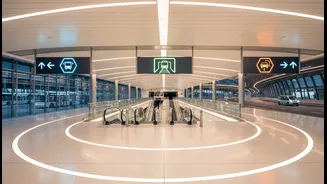
Before a passenger even boards, they face the airport itself. Long queues for check-in, security, and immigration can add hours of stress. A recent initiative to allow international passengers from cities like Varanasi to complete immigration at their origin airport is a positive development, but this seamless experience is not yet universal. The pre-departure phase sets the tone for the entire trip. Indian travellers are digitally savvy and increasingly expect a smooth, tech-enabled airport experience. Research shows that 84% believe more lounge access would significantly enhance their journey, indicating a desire for comfort and amenities that go beyond basic transit. As India plans to expand its airport count to 220 by 2025, the focus must be on creating infrastructure that processes passengers efficiently and pleasantly, transforming airports from stressful bottlenecks into comfortable gateways.
Beyond the Aircraft Door
The onboard experience is another critical factor. While a shorter flight is good, a comfortable one is better. Seat comfort, the quality of meals, the attentiveness of the cabin crew, and reliable in-flight entertainment are not minor details on a long-haul flight. A significant 92% of Indian passengers state they are more likely to rebook with an airline if it offers quality Wi-Fi, highlighting the demand for connectivity. Airlines that deploy their oldest, most poorly maintained aircraft on Indian routes—a long-standing passenger complaint—will find that a direct flight alone isn't enough to build loyalty. As Indian travellers become more experienced and discerning, they expect a global standard of service. The success of a route depends not just on getting passengers there quickly, but on getting them there in a state of comfort and satisfaction.
The Final Mile: Visas and Value
A route’s ultimate success is also determined by factors completely outside the airline's control. Visa facilitation is paramount. Destinations that offer visa-free access or a simple e-visa process, like Vietnam and Thailand, see a much quicker uptake in passenger numbers. The recent launch of a Delhi-Hanoi route, for example, is expected to be popular precisely because Vietnam is affordable and visa-friendly for Indians. Furthermore, the overall value proposition matters. This includes not just the ticket price, but also the cost of local transport from the arrival airport and the general affordability of the destination. Airlines must consider these external realities when planning new routes. A direct flight to a destination that is difficult to enter or prohibitively expensive will struggle to attract the high passenger volumes needed to remain profitable.