






The Staggering National Cost
The numbers paint a stark picture of the economic damage inflicted by air pollution. Studies have consistently shown that the cost to India is immense, representing a significant drag on its GDP. A Lancet Commission report highlighted that in 2019, the economic loss
from premature deaths and illnesses due to air pollution was approximately $36.8 billion, equivalent to 1.36% of India's GDP. More recent analyses from 2021 and 2022 suggest the figure could be even higher. One report estimated annual business losses at around $95 billion, or 3% of GDP, from factors like lower productivity and consumer footfall. Another joint report by FICCI and EY suggests the total economic loss could be as high as 9.5% of GDP when accounting for all impacts. These figures represent a massive loss of potential that could otherwise be invested in infrastructure, education, and further economic development, directly impeding the nation's growth aspirations.
The Price of a Sick Day
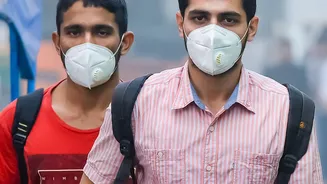
At the heart of the economic burden are lost workdays. When air quality plummets, rates of respiratory and cardiovascular illnesses rise, forcing workers to stay home. This absenteeism has a direct impact on both individual earnings and company output. Reports estimate that India loses approximately 1.3 billion working days annually due to pollution-related illnesses. For the millions of daily wage earners in sectors like construction and logistics, a sick day means a direct loss of income for their families. The IT sector, a cornerstone of the modern Indian economy, loses an estimated $1.3 billion annually to pollution-induced productivity loss. The cumulative effect of these individual absences creates a significant dent in national productivity, costing businesses billions of dollars in lost revenue.
More Than Absenteeism: The 'Presenteeism' Problem
Even when employees show up to work, pollution takes a toll. This phenomenon, known as 'presenteeism', refers to lost productivity that occurs when employees are at their jobs but not fully functioning. Exposure to toxic air can cause headaches, fatigue, and reduced cognitive function, making it difficult to concentrate and perform tasks efficiently. Some studies estimate that employee productivity can decrease by 8% to 10% on high-pollution days. In fact, presenteeism is believed to be a larger issue than absenteeism, costing Indian businesses around $24 billion and accounting for 80% of the total losses from reduced labour productivity. This is especially pronounced in cognition-intensive sectors like software development and finance, where mental output is critical.
A Drain on Healthcare and Households
The direct costs of treating pollution-related diseases place a heavy burden on both the public health system and household budgets. Illnesses like asthma, chronic obstructive pulmonary disease (COPD), heart disease, and lung cancer require long-term medical care, including medication, doctor visits, and hospitalisations. With a large portion of health expenditure in India being paid out-of-pocket, these recurring costs can be financially devastating for families. One crude estimate suggested the health-care cost for air pollution-related diseases was around $11.9 billion in 2019 alone. This money spent on treating preventable illnesses is capital that could otherwise be used for household savings, consumption, or investment, further stifling economic activity at a grassroots level.
Impacts Across All Sectors
No corner of the economy is immune to the effects of air pollution. The tourism industry suffers as poor air quality and smog deter visitors, with one World Bank study estimating a loss of $1.7 billion every year for this sector. Retailers report lower consumer footfall, as people choose to stay indoors during severe pollution spells, impacting sales. Even the renewable energy sector is affected, with one solar company reporting a 13% decrease in its panels' productivity on high-pollution days due to haze blocking sunlight. Agriculture also faces crop yield losses from pollutants like ground-level ozone. This widespread impact demonstrates that air quality is not just an environmental issue but a fundamental business and economic concern.