



A Universe for Your Ears
For decades, we have marvelled at breathtaking images of space. The swirling arms of a galaxy, the vibrant colours of a nebula, and the pinpricks of distant stars have defined our vision of the cosmos. But seeing is only one of our senses. Now, science
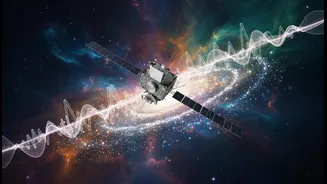
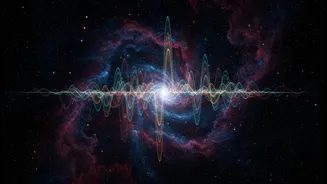
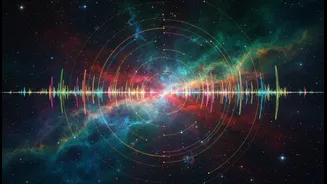
is asking us to listen. A pioneering project, primarily led by NASA's Chandra X-ray Observatory, is translating astronomical data into sound in a process called data sonification. It’s a revolutionary approach that takes the silent, digital information gathered by telescopes—the ones and zeroes—and maps it to musical notes, pitches, and volumes. The result is an auditory journey through the cosmos, where you can hear the crescendo of light at the centre of our galaxy or the delicate notes assigned to individual stars.
More Than Just Pretty Pictures
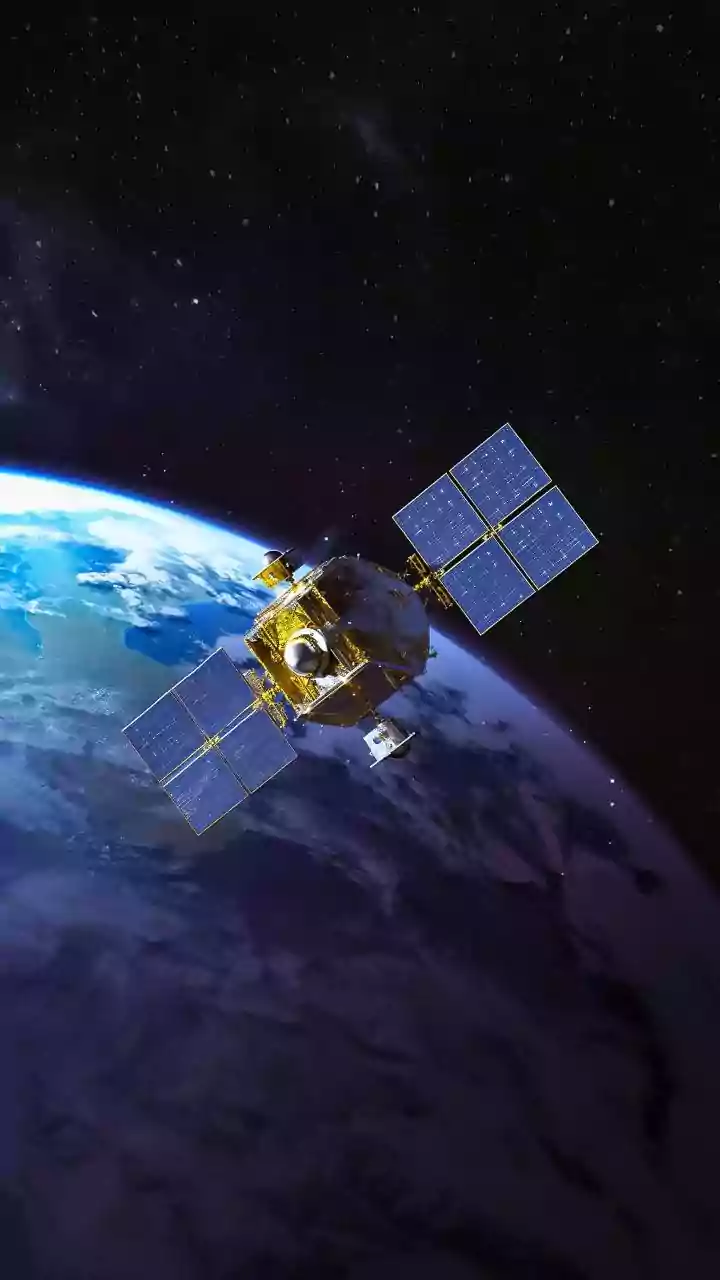
The Chandra X-ray Observatory is not just any telescope. Launched in 1999, it is the world's most powerful X-ray telescope, designed to detect X-ray emissions from the hottest and most energetic regions of the universe. While optical telescopes like Hubble show us the visible light from stars and galaxies, Chandra reveals a hidden universe of colliding galaxies, supermassive black holes, and the remnants of exploded stars called supernovas. This is a realm of extreme physics that is invisible to the human eye. By converting this high-energy data into images, astronomers have made incredible discoveries. But translating that same data into sound provides another layer of information, a new texture to our understanding that a picture alone might not convey.
How to Hear a Supernova
So, how exactly do you make a star sing? It’s important to remember that these are not actual sounds recorded in space, which is a vacuum. Rather, it is a translation. Scientists and musicians work together to assign sonic characteristics to the visual data. For example, in an image of a nebula, light that is further from the centre might be assigned a higher pitch. Brighter objects might translate to a louder volume. Different types of light captured by different telescopes can even be assigned unique instruments; X-rays from Chandra might be represented by bells, while infrared data from the James Webb Space Telescope is played by woodwinds. A scan across the image from left to right or in a circle creates a symphony of data, allowing listeners to aurally experience the structure and composition of a cosmic object.
A New Tool for Discovery
While the idea of listening to the cosmos is poetic, its primary motivation is rooted in serious science and accessibility. For scientists, sonification is a powerful analytical tool. The human ear is exceptionally good at picking up patterns, changes, and anomalies over time. Listening to data can reveal subtle variations that might be missed by visual inspection alone, helping researchers sift through massive datasets more efficiently. Furthermore, the project has a profound social impact. It makes the study of astronomy accessible to people who are blind or have low vision, breaking down barriers and allowing more individuals to participate in scientific discovery. By providing a rich, auditory 'roadmap' to a celestial object, sonification opens up the wonders of the universe to a whole new audience.
Experience the Cosmos Yourself
This cosmic concert is not exclusive to scientists. NASA has made these sonifications publicly available online, complete with videos that show the image being 'scanned' as the corresponding sounds play. You can listen to the centre of the Milky Way, the haunting sounds of the Cassiopeia A supernova remnant, or the surprisingly complex audio of the Pillars of Creation. This initiative represents a major leap in science communication. It moves beyond static images and invites the public to engage with data in a more personal, immersive, and emotional way. NASA has even produced a short documentary, "Listen to the Universe," to take people behind the scenes of this fascinating project. It’s a testament to the idea that science is not just about facts and figures, but also about wonder, creativity, and finding new ways to explore our place in the cosmos.