




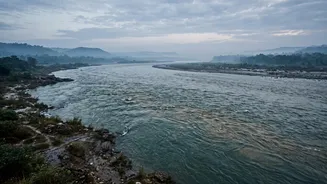

A Landmark Treaty Reaches Its End
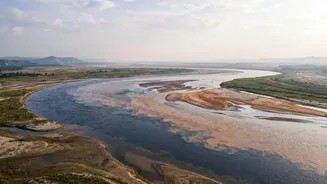
Signed in December 1996 for a duration of 30 years, the Ganga Water Treaty was a diplomatic breakthrough. It provided a formula for sharing the river's flow at the Farakka Barrage in West Bengal during the critical dry season, from January 1 to May 31
each year. The barrage, designed to divert water to the Hooghly to keep Kolkata's port navigable, had been a major point of contention since its commissioning in 1975. Bangladesh, as the lower riparian country, argued that the diversion severely reduced water flow downstream, affecting agriculture, fisheries, and increasing salinity in its southwestern regions. The 1996 treaty aimed to create predictability by establishing a sharing mechanism based on 10-day water flow averages, balancing India's needs with Bangladesh's vulnerabilities.
What's at Stake for Bangladesh?
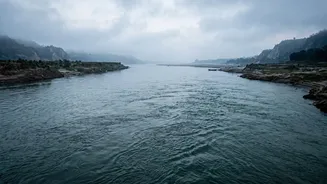
For Bangladesh, the stakes could not be higher. The Ganges, known as the Padma in Bangladesh, is the lifeline for a vast, densely populated region. Reduced freshwater flow during the dry season has had devastating effects over the years. Farmers have struggled with irrigation, fishermen have seen their catches dwindle, and the delicate ecosystem of the Sundarbans, the world's largest mangrove forest, is threatened by increasing salinity from the Bay of Bengal pushing further inland. Ahead of the deadline, Dhaka has made it clear that it is seeking a new or revised agreement. A key demand is the inclusion of a 'guarantee clause' to ensure a minimum flow, a provision that was present in a 1977 arrangement but absent from the 1996 treaty.
India's Complex Calculus
From India's perspective, the situation is equally complex. The Farakka Barrage serves the primary purpose of preserving the Kolkata port, a vital commercial hub for eastern India. Furthermore, domestic water demand has risen significantly over the last three decades. The Indian government must also manage the political sensitivities of West Bengal, the state most directly involved. India's Ministry of External Affairs has stated that a 'structured mechanism' through the Joint Rivers Commission (JRC) is in place to handle all discussions on shared rivers. However, officials have remained non-committal on the details or timing of a renewed pact, noting that a visit to New Delhi by Bangladesh's Prime Minister Tarique Rahman has been invited but is yet to be scheduled.
The Lingering Shadow of the Teesta
Complicating the Ganga negotiations is the unresolved issue of the Teesta River, another of the 54 rivers shared by the two countries. An agreement on sharing the Teesta's water was nearly finalised in 2011 but was stalled due to strong opposition from West Bengal's government, which cited water scarcity in its northern districts. For Bangladesh, the Teesta is critical for irrigation in its northern Rangpur region. The failure to deliver on the Teesta pact has remained a persistent irritant in an otherwise largely positive bilateral relationship, and it casts a long shadow over the upcoming Ganga treaty renewal talks.
A Changed Geopolitical and Climatic Landscape
The context for these negotiations has changed dramatically since 1996. Climate change is making rainfall patterns more erratic and river flows less predictable. Both nations face growing populations and increasing water demand. Moreover, the broader geopolitical landscape has shifted. While India and Bangladesh share a deep partnership, the renewal talks are happening at a time of political transition in Dhaka. Observers note that how these water negotiations are handled will be a significant test of the bilateral relationship, especially as both countries navigate the complex regional dynamics. A fair and sustainable water-sharing framework is seen as essential for longterm regional stability.