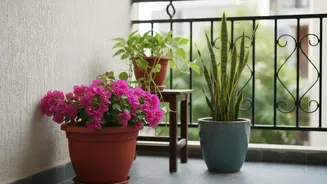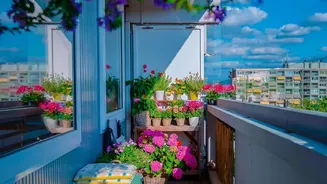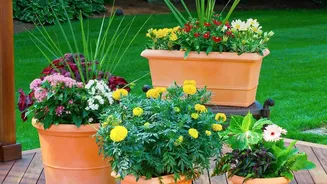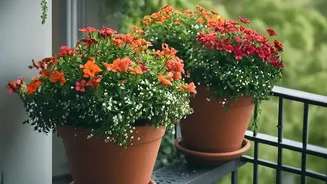

Understanding the Balcony Test
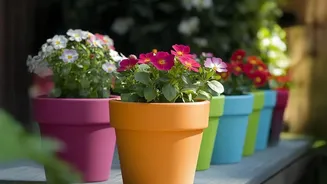
A balcony is a uniquely challenging environment for plants, especially during the peak heat and humidity of summer. It’s not just about the direct sun. Metal railings and concrete floors absorb and radiate heat, essentially baking the pots from all sides.
Wind can be more intense, drying out soil in hours. Unlike a garden bed where roots can seek cooler, deeper moisture, a container plant is entirely dependent on the limited resources within its pot. This intense combination of high temperatures, reflected heat, and quick-drying soil is the 'balcony test'. Passing this test requires more than just a tolerance for sun; it requires true resilience.
The Indestructible All-Stars
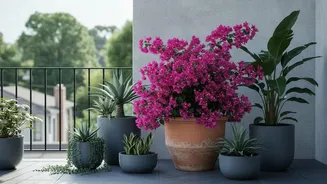
So who are the top performers? Bougainvillea is a champion of the hot, sunny balcony, famous for its vibrant paper-like bracts in pink, purple, and orange. This plant thrives on neglect and actually produces more color when slightly water-stressed. Similarly, Lantana is a workhorse, offering continuous clusters of flowers that attract butterflies while standing up to scorching heat. For a spectacular floral display, Adenium, or the Desert Rose, is an excellent choice. This succulent has a thick, water-storing trunk and rewards the forgetful gardener with brilliant blooms when kept on the dry side. And for those seeking a classic look, many varieties of Hibiscus are well-adapted to Indian heat, producing their iconic large flowers throughout the summer.
Hardy Flowers and Resilient Greens
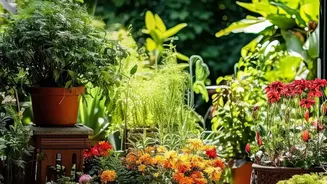
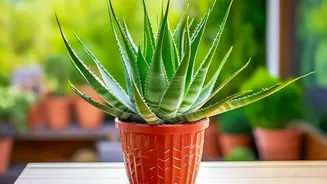
Beyond the big shrubs, a host of smaller plants can add vibrant color and texture. Portulaca, also known as Moss Rose, is a low-growing succulent that produces jewel-toned flowers that love the full sun. Gaillardia, or Blanket Flower, is another tough perennial that seems to perform even better with less water, offering cheerful red and yellow blooms. For a touch of blue, a rare color in heat-loving plants, Plumbago offers delicate, airy blossoms with very little fuss. And don't forget foliage. Succulents like Aloe Vera and Jade Plants are naturals for hot conditions, storing water in their leaves. Their structural shapes provide a wonderful contrast to the more riotous flowering plants.
Smarter Care for Summer Survival
Choosing the right plant is half the battle; the other half is care. The best time to water is in the early morning before the sun gets intense, allowing the plant to hydrate before the day's heat. Water deeply and thoroughly until it runs out the bottom, rather than giving small, frequent sips. Grouping pots together can create a more humid microclimate, shielding the plants and soil from the sun. It’s also wise to avoid fertilizing or repotting during an intense heatwave, as this adds stress when the plant is already working overtime just to survive. Finally, consider using a layer of mulch, like pebbles or bark chips, on top of the soil. This helps insulate the roots and dramatically reduces water evaporation.