


The Allure of the Abyss
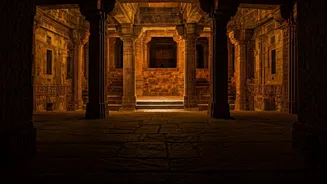
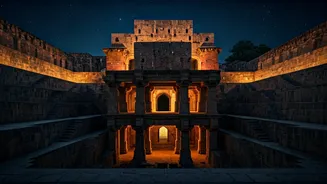
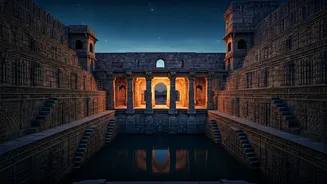
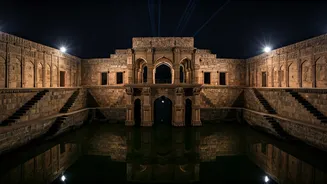
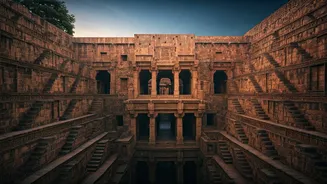
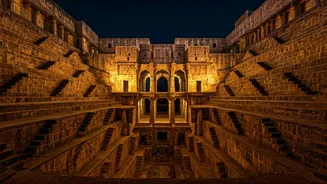
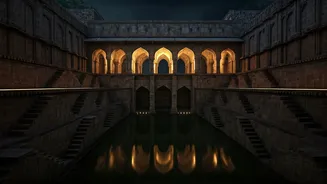
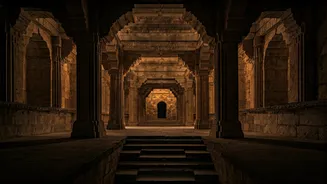
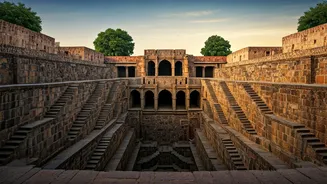
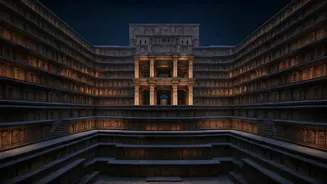
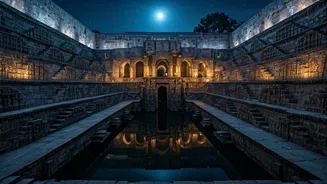
Photographing Indian stepwells is a popular pursuit, but capturing them after sundown is a different quest altogether. The harsh daylight that often flattens their intricate details gives way to a dramatic interplay of shadow and engineered light. The absence
of crowds, the deep silence, and the cool night air transform these historical water sources into moody, atmospheric stages. Your goal is no longer to simply document the structure, but to capture its soul. Night photography reveals the textures of the stone, the sheer scale of the descent, and the echoes of history in a way sunlight cannot. It’s an exercise in patience and a conversation with the past, using light as your language.
Gearing Up for the Dark
Low-light photography is gear-dependent. While a smartphone with a good night mode can produce surprising results, a dedicated camera will give you full creative control. Your essential kit should include: A DSLR or mirrorless camera with manual mode. A sturdy tripod is non-negotiable; you will be using long shutter speeds, and any movement will result in a blurry image. A wide-angle lens (14-35mm) is ideal for capturing the grand scale and plunging geometry of the stepwells. Also, pack a remote shutter release or use your camera’s self-timer to avoid camera shake when pressing the shutter button. Finally, a powerful torch or a small, portable LED light panel is crucial, not just for navigating in the dark but for ‘light painting’ — selectively illuminating parts of the stepwell during a long exposure.
Location, Access, and the Golden Hour
Herein lies the biggest challenge: access. Most prominent stepwells like Chand Baori in Rajasthan or the UNESCO-listed Rani ki Vav in Gujarat are protected monuments with strict closing times. A literal 'midnight walk' is usually impossible without special, pre-arranged permits, which are rare. So, how do you manage? First, target the 'blue hour'—the period just after sunset or before sunrise when the sky has a deep blue hue and there is still enough ambient light to create a dramatic contrast. Second, look for urban stepwells, like Agrasen ki Baoli in Delhi, which are sometimes situated in areas with ambient city light that can be used to your advantage, even from outside the gates. Finally, seek out organised photography walks. Many heritage groups and photography communities in cities like Delhi, Jaipur, and Ahmedabad host guided night photography tours that secure the necessary permissions.
Mastering the Technicals
Switch your camera to Manual (M). Start with these settings and adjust as needed. Set your ISO to its lowest native value (usually 100 or 200) to minimise noise and get the cleanest image. Choose a mid-range aperture, like f/8 or f/11, to ensure most of the structure, from the nearest steps to the farthest wall, is in sharp focus. The shutter speed is your creative tool. It will be long—anywhere from 5 to 30 seconds, or even longer using 'Bulb' mode. This is what captures the light and creates the magic. Use manual focus and your camera's live view, zoomed in, to focus precisely on a well-lit edge. Autofocus systems often struggle in such low light.
Composing with Shadows
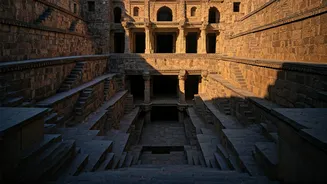
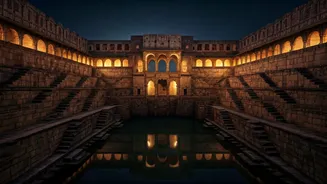
Your composition should emphasise the unique architecture of the stepwell. Focus on the patterns, symmetry, and repetition of the steps. Leading lines are your best friend here; use the staircases to draw the viewer's eye deep into the frame. Don't be afraid of negative space—the large, dark areas can add to the sense of mystery and scale. Experiment with light painting. During your long exposure, walk through the scene (while wearing dark clothes so you don't appear in the photo) and use your torch to 'paint' light onto specific walls, arches, or steps. This technique allows you to be the lighting designer, highlighting details that would otherwise be lost in the gloom.
Ethics and Safety
Remember, you are a guest in a place of immense historical and cultural significance. Behave with respect. Never climb on fragile structures or enter restricted areas. Work quietly and efficiently, especially if you are part of a group. Safety is also paramount. Stepwells are, by their nature, deep and have many uneven surfaces. Always survey the area with a torch before setting up, be mindful of your footing, and never photograph alone at night in an isolated area. If you've joined an organised walk, listen to the guide's instructions carefully.