







The Undeniable Need for Speed
In the highly competitive quick-service restaurant (QSR) industry, speed of service is directly linked to customer satisfaction and revenue. Faster service leads to higher table turnover in dine-in settings and increased throughput at the drive-thru,
meaning more customers can be served in less time. As customer expectations for convenience and efficiency grow, restaurants that fail to keep pace risk losing business. This pressure has turned operational efficiency from a back-of-house concern into a primary competitive advantage, forcing brands to innovate or be left behind in the queue. The market for AI and robotics in QSRs alone is projected to reach over USD 14 billion by 2033, demonstrating a major industry shift.
AI Takes Your Order
One of the most visible applications of this new tech is at the point of ordering. AI-powered voice assistants are being rolled out at drive-thrus to take orders with remarkable accuracy. These systems can handle complex requests, understand various accents, and are never distracted, reducing the potential for human error and speeding up the line. Inside, self-service kiosks achieve a similar goal, cutting ordering time by as much as 40% while also increasing upselling opportunities by suggesting personalised add-ons. By automating the ordering process, employees are freed up to focus on fulfillment and hospitality, improving both speed and the overall customer experience.
Robots in the Kitchen
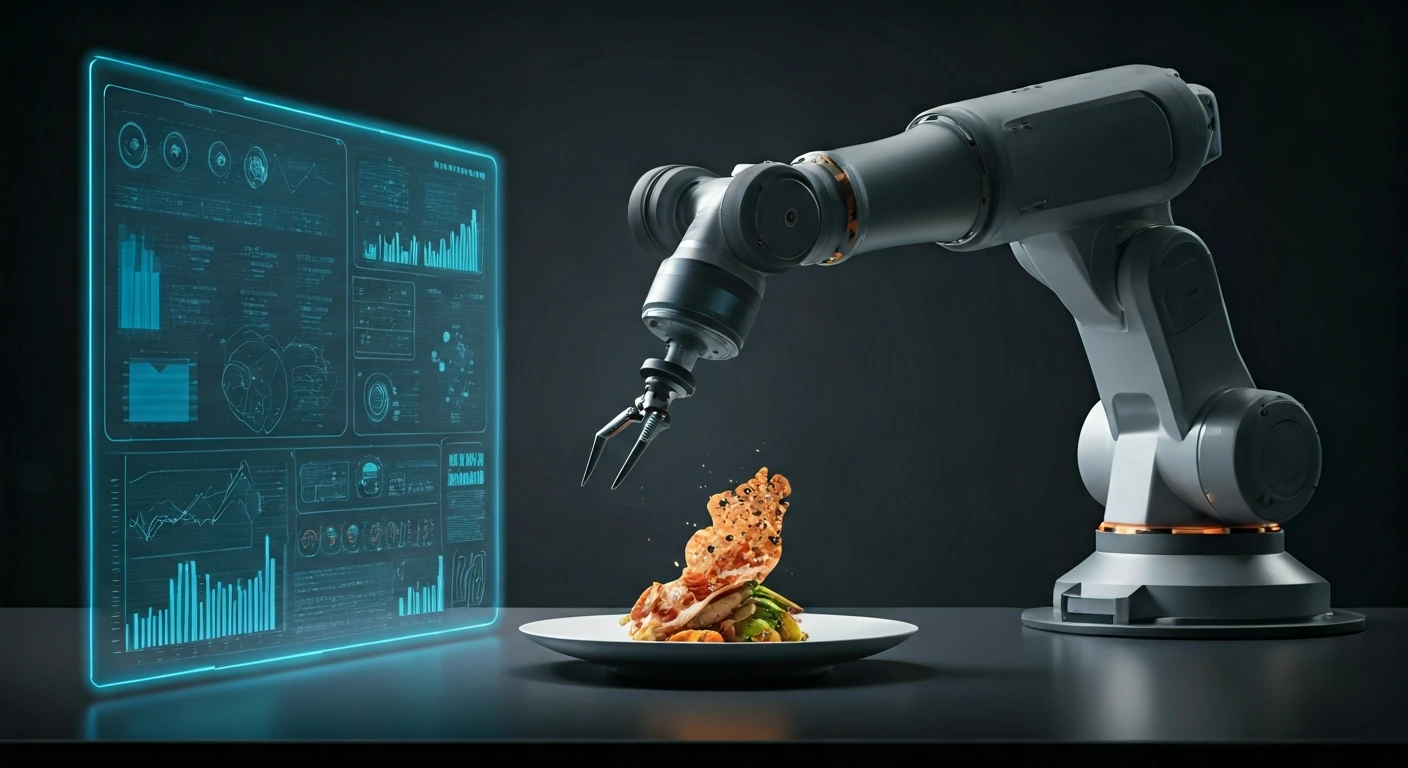
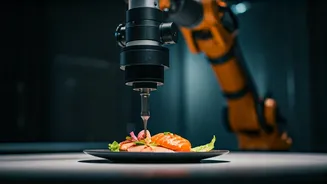
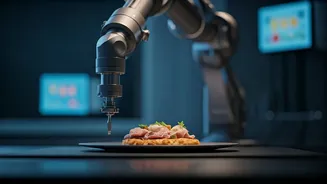
The technological revolution continues in the kitchen, where automation is streamlining food preparation. Robotic arms and automated cooking stations are now capable of handling repetitive tasks like frying, grilling, and even assembling meals. This not only accelerates service but also ensures a consistent product every time. Companies are developing robotic systems designed to handle everything from cooking wings to slicing avocados, allowing human staff to manage more complex tasks. While a significant upfront investment, restaurant automation can reduce operational costs, address labour shortages, and improve inventory management by minimising waste.
Smarter, Not Just Faster
Beyond the flashy robots, a quieter but equally powerful transformation is happening in restaurant management systems. AI-powered predictive analytics are becoming essential, forecasting demand by analysing historical sales data, weather patterns, and local events. This allows kitchens to prep ingredients in advance, ensuring they have what they need during peak hours without overproducing. Advanced Kitchen Display Systems (KDS) and video analytics help managers identify and resolve bottlenecks in real-time, optimising the workflow from order to delivery. These integrated systems create a hyper-efficient environment where every step is measured and managed for maximum speed.
The Human Element in a High-Tech World
As restaurants lean into automation, a critical question emerges: what happens to the human touch? The goal for many brands is not to replace employees, but to empower them. By automating repetitive and mundane tasks, staff can devote more time to meaningful customer interaction, enhancing hospitality rather than being bogged down by process. However, there is a balance to be struck. Some customers may miss the personal connection of a fully human-led experience, and the technology itself isn't foolproof. The most successful restaurants will be those that integrate technology seamlessly to make service faster and more reliable while preserving the essential element of human connection that defines a great dining experience.