





The Real Power of Five Minutes
The idea of a five-minute workout might seem too good to be true, but its benefits are rooted in psychology and physiology. The primary goal isn't dramatic physical transformation in a week, but rather the establishment of a consistent habit. When a task
feels small and manageable, we are far more likely to do it. Completing a short workout provides a daily win, building confidence and momentum that makes it easier to show up the next day. This consistency is more effective for long-term change than occasional, high-intensity sessions. These 'movement snacks' can improve mood, boost energy, and even offer cardiovascular benefits like reduced blood pressure. It’s about proving to yourself that you can make time for your health, creating a foundation you can build upon.
Your 5-Minute Full-Body Routine
This no-equipment routine is designed to be simple, effective, and easy to perform anywhere. The structure is straightforward: perform each of the following five exercises for 45 seconds, followed by 15 seconds of rest before moving to the next. This brings you to a total of exactly five minutes. Before you begin, do a very brief warm-up like marching in place or arm circles to prepare your muscles.
The Exercises Explained
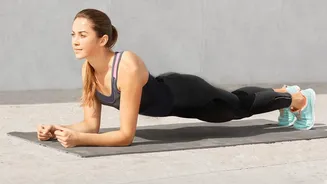
1. Jumping Jacks: A classic cardio move to get your heart rate up. Stand with your feet together and arms at your sides. Simultaneously jump your feet out to the sides while raising your arms overhead. Jump back to the starting position. It's a fantastic way to warm up the entire body. 2. Bodyweight Squats: This is a fundamental movement for leg strength. Stand with your feet shoulder-width apart. Keeping your chest up and back straight, lower your hips as if sitting in a chair. Go as low as is comfortable, then push through your heels to return to the start. 3. Push-ups (or Knee Push-ups): An excellent upper-body strengthener. Start in a plank position. Lower your body until your chest nearly touches the floor, then push back up. If a full push-up is too difficult, perform the movement with your knees on the ground. 4. Plank: This move is all about core strength. Hold your body in a straight line from head to heels, either on your hands or forearms. Engage your core and glutes, and be careful not to let your hips sag. 5. Glute Bridges: This exercise targets your glutes and lower back. Lie on your back with your knees bent and feet flat on the floor. Pushing through your heels, lift your hips off the floor until your body forms a straight line from your shoulders to your knees, then slowly lower back down.
How to Make It a Habit
Consistency is the most critical factor. To make your five-minute workout automatic, try 'habit stacking'—linking it to something you already do every day, like right before your morning shower or immediately after brushing your teeth. Another powerful strategy is to set a specific time and place for your workout. This creates a mental cue that reduces the need for motivation. Laying out your workout clothes the night before can also serve as a strong visual trigger. Don't worry about perfection; focus on just getting it done. The act of showing up, even for five minutes, reinforces the habit.
From Five Minutes to a Fuller Workout
Once you have consistently completed your five-minute routine for a few weeks and it starts to feel easy, it's time to progress. This doesn't mean you have to jump to a 60-minute session. The key is gradual progression. You can start by adding a second round of your five-minute circuit, turning it into a 10-minute workout. Alternatively, you could increase the work time for each exercise from 45 to 50 seconds. As you get stronger, you can introduce new exercises or swap in more challenging variations, like moving from knee push-ups to full push-ups. The goal is to gently challenge yourself so you continue to make improvements without feeling overwhelmed.