




Elon Musk’s vision of a future where data centers orbit the Earth, powered by the sun and cooled by the vacuum of space, is a compelling one. This grand plan, however, faces a reality check: a gantlet of immense technical and financial hurdles.
The Grand Vision: An AI Cloud in Orbit
The core
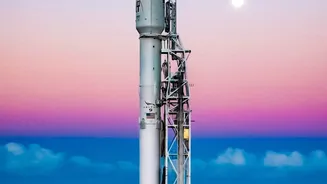
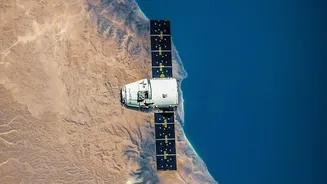
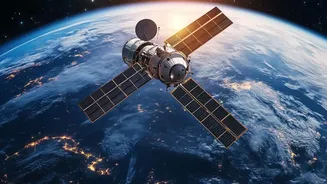
idea is to move the power-hungry engine of modern artificial intelligence—the data center—off the planet. SpaceX has laid out plans to deploy potentially millions of satellites that function as orbital data centers, forming a massive AI computing constellation. This initiative, sometimes referred to as 'Starmind', would leverage SpaceX's Starlink satellite internet network and its developing Starship heavy-lift rocket. Proponents argue that space offers a solution to the terrestrial constraints of land, water, and, most importantly, power. In Sun-synchronous orbit, satellites could harvest near-continuous solar energy, bypassing the strained electrical grids on Earth that are struggling to keep up with AI's explosive energy demands.
The Sobering Reality of Space Engineering
Despite the ambitious vision, the challenges are monumental. The first is heat. Terrestrial data centers use vast amounts of air and water for cooling, options that don't exist in the vacuum of space. Dispersing the intense heat generated by thousands of computer chips would rely solely on thermal radiation, requiring massive, heavy, and expensive radiator systems. Another significant obstacle is cosmic radiation, which can disrupt electronics and corrupt data, necessitating specialized and costly radiation-hardened components. Furthermore, the logistics of maintenance are staggering. There is no simple way to repair or upgrade a satellite in orbit, making any hardware failure a potentially permanent loss.
The Economics of Orbit
Beyond the engineering, the financial equation is daunting. Current estimates suggest that putting a data center in orbit would cost at least three times as much as building an equivalent facility on the ground. Launch costs, while decreasing thanks to SpaceX's reusable rockets, still represent a massive expense, accounting for roughly 60% of a hypothetical orbital data center's total investment. Achieving cost parity with Earth-based centers would require launch costs to fall by as much as 70%, a feat that depends heavily on the full success and high-frequency operation of the still-in-testing Starship. While some investors are betting on the long-term prospect, many analyses highlight that for now, the cost premium makes it an uncompetitive option for most applications.
Why Pursue It? The Strategic Advantages
If it's so difficult and expensive, why bother? The benefits, if realized, could be game-changing. For certain specialized tasks, orbital data centers offer unique advantages that could justify the cost. One key area is processing sovereign data—sensitive national information that cannot legally or securely transit foreign networks. An orbital system could provide a physically separate and secure computing environment. Another major driver is latency. By processing data in orbit, close to where it is collected by satellites for applications like Earth observation, climate monitoring, and disaster response, the time delay in sending vast amounts of raw data to the ground can be dramatically reduced. It could also create a truly global, resilient compute layer, independent of terrestrial outages.
Prospect, Not Launch
Currently, space computing remains a 'prospect' because no fullscale orbital data center has been launched or demonstrated. SpaceX has filed an application with the U.S. Federal Communications Commission (FCC) to operate up to one million compute satellites, but this is the beginning of a long regulatory process, not an approval. The company has mentioned targeting a first demonstration payload launch in late 2027, with potential deployment starting as early as 2028. However even SpaceX's own IPO filings have warned that the technology is unproven and may not become commercially viable. Other companies including Google are also exploring the concept signaling a serious industry trend but these efforts are also in their earliest experimental stages.