
The Ultimate Ejection Seat
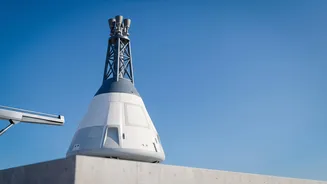
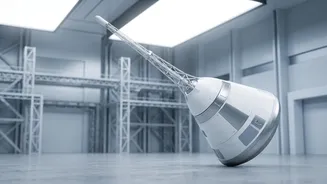
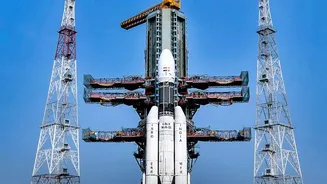
Imagine an ejection seat, but instead of just firing a pilot out of a jet, it pulls an entire space capsule containing astronauts away from a malfunctioning rocket. That's the essence of the Gaganyaan Crew Escape System (CES). This isn't just a single
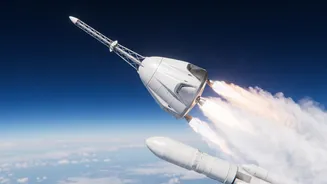
motor; it's a powerful assembly of quick-acting solid-fuel thrusters mounted on top of the crew module. In the event of a catastrophic failure during launch, the CES is designed to ignite in milliseconds, generating immense thrust to yank the capsule and its occupants to a safe distance before the rocket can endanger them. The system needs to be powerful enough to outrun the launch vehicle's own acceleration, making its thrusters a critical lifeline.
A Trial by Fire on the Ground
Before any system can be trusted in flight, it must first prove its mettle on the ground. ISRO has conducted a series of static tests at its Propulsion Complex (IPRC) in Mahendragiri, Tamil Nadu, to validate the performance of these crucial abort motors. A key milestone was the successful test-firing of the Low Altitude Escape Motor (LEM). This motor is a special-purpose solid rocket designed with four reverse-flow nozzles that point forward, ensuring the hot exhaust plume doesn't hit the crew module it's trying to save. During these ground tests, engineers evaluated everything from the motor's thrust and burn time to the performance of its thermal liners and ignition system, confirming that the hardware performed exactly as predicted and could withstand the intense forces of an abort.
Taking the Test to the Skies
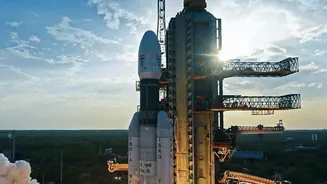
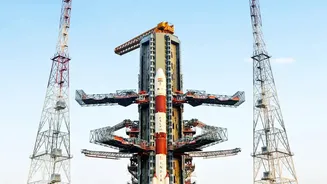
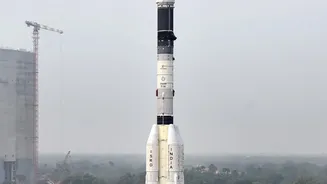
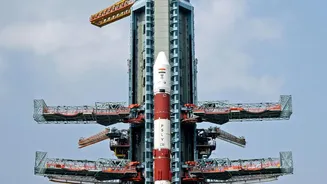
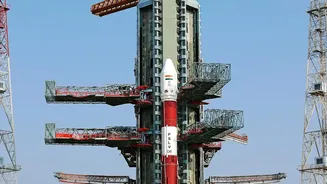
Proving the system works on a test stand is one thing; ensuring it functions under the chaotic conditions of a real launch is another. To achieve this, ISRO designed the Test Vehicle Abort Mission (TV-D1). In a landmark test, a specially designed single-stage liquid-fuelled rocket carried a boilerplate crew module and a fully functional Crew Escape System to a specific altitude. The mission's goal was to simulate an abort during the most aerodynamically stressful part of the ascent, known as the transonic phase, where the vehicle is travelling at around Mach 1.2—or 1.2 times the speed of sound. The test was a resounding success, with the CES firing perfectly, separating the crew module from the test rocket, and pulling it safely away before a parachute sequence initiated a soft splashdown in the Bay of Bengal.
More Than Just the Launch
The validation of safety systems extends far beyond the initial launch phase. Astronaut safety is a continuous thread running through the entire mission profile, right down to the moment of recovery. In a series of recent qualification tests in July 2026, ISRO focused on the crew module's post-splashdown capabilities. One critical test validated the Crew Module Uprighting System (CMUS), an ingenious system of gas-inflated balloons designed to flip the capsule upright if it lands upside down in the sea. Other tests confirmed the clean separation of the umbilical cords connecting the crew module to its service module and ensured the capsule's structure could withstand the pyrotechnic force of the parachute cover being jettisoned. These trials demonstrate a holistic approach to safety, where every potential contingency is tested and mitigated.