



How We Predict a Harvest
Forecasting future food availability is a complex process. Globally and nationally, organisations rely on a variety of data points to estimate how much food will be produced. These models typically include factors like historical sales data, weather patterns,
known stocks of seeds and grains, and economic indicators. They look at satellite imagery to assess crop coverage and use climate predictions to anticipate the impact of rainfall or drought. The goal is to create a balance sheet of supply and demand, allowing governments and businesses to plan for potential shortages, manage stock levels, and ensure that food moves from farms to our tables efficiently. These forecasts are crucial tools for maintaining stability in a volatile world.
The Ground-Level Problem
For all their sophistication, these forecasting models largely overlook one of the most essential variables: the health of the agricultural land itself. The productive capacity of soil is not a constant. Years of intensive farming, erosion, and changing climate patterns can degrade the land, reducing its ability to sustain crops. This isn't a minor detail; it's a foundational flaw in our calculations. Globally, it's estimated that a significant portion of agricultural land is moderately to highly degraded. In India, the situation is particularly serious, with some estimates suggesting that over 140 million hectares of land are affected by some form of degradation. When forecasts treat land as a static, unchanging variable, they are not forecasting reality.
The Silent Toll of Soil Degradation
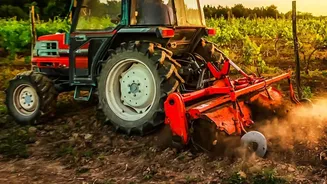
Degraded soil is less fertile, holds less water, and is more vulnerable to climate shocks. Erosion, primarily from wind and water, strips away the nutrient-rich topsoil essential for plant growth. Compaction from heavy machinery reduces the soil's ability to absorb water and air, effectively suffocating plant roots. Overuse of chemical fertilizers can lead to acidification and nutrient imbalances, diminishing the soil's natural fertility. The result is that farmers must use more inputs, like fertilizer and water, just to achieve the same yield. In some severely affected regions, crop yields have fallen by as much as 50%. This gradual decline in productivity is a hidden tax on our food system, one that current forecasts are ill-equipped to measure.
A More Resilient Forecasting Model
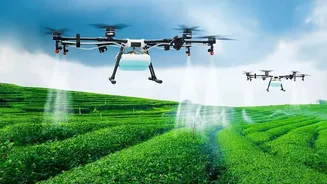
Integrating the condition of agricultural land into food availability forecasts is not just an academic exercise; it's a necessity for building a resilient food future. A new generation of forecasting models would need to incorporate dynamic data on soil health. This could include metrics on soil organic carbon, nutrient levels, water retention capacity, and rates of erosion. Technologies like precision farming, remote sensing, and digital soil mapping can provide the detailed, real-time information needed to make this possible. By tracking the health of our soil, these models could provide a much more accurate picture of future yields, flagging potential problem areas long before they become full-blown crises.
Why This Matters for India
For India, the stakes are particularly high. The nation supports 18% of the world's population on just 2.4% of its land area, making land productivity a critical concern. The Green Revolution dramatically increased agricultural output, but often at the cost of soil health. Reports indicate that a huge percentage of India's land is affected by degradation, a challenge compounded by population pressure and climate change. By including land condition in its food security calculations, India could better target interventions, promote sustainable farming practices like crop rotation and cover cropping, and build a more durable agricultural sector. It would shift the focus from short-term yield maximisation to long-term sustainability.