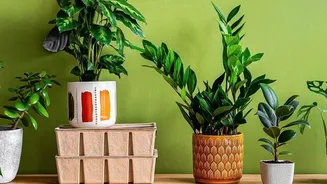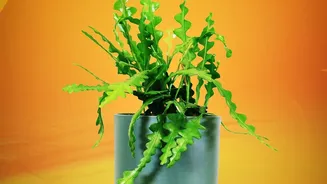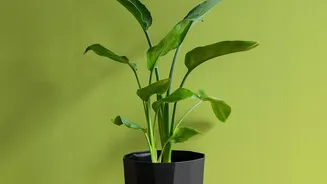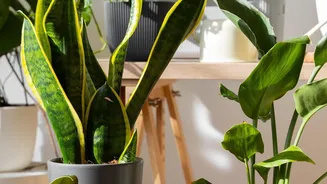





The Promise from Outer Space
The belief that houseplants are nature's air purifiers can be traced back to a landmark 1989 study by NASA. Faced with the challenge of maintaining breathable air in sealed environments like space stations, researchers explored whether common houseplants could
remove airborne toxins. They placed plants inside small, airtight chambers and injected volatile organic compounds (VOCs) like formaldehyde and benzene—pollutants commonly found in synthetic materials. The results were promising: plants like the Peace Lily and Snake Plant successfully removed a significant percentage of these chemicals from the sealed chamber's air. This finding was widely publicised, and the idea of the 'air-purifying plant' was born, quickly becoming a staple of wellness blogs and home decor magazines. For decades, it stood as a simple, green solution to indoor pollution.
Lost in Translation to the Living Room
The problem, as recent analyses have shown, is that your home is not a sealed space station. A critical 2019 review of decades of research concluded that the effects observed in NASA's lab chambers don't translate to a standard house or apartment. The main reason is ventilation. In a typical home, air is constantly being exchanged with the outdoors, whether through open windows, doors, or ventilation systems. This natural air exchange rate removes VOCs far more effectively and quickly than a few potted plants ever could. The NASA experiments were powerful because the pollutants were trapped in a small, static environment, giving the plants hours to slowly absorb them without any other removal process at play. In the dynamic environment of a real home, the impact of a plant on air quality becomes almost negligible when compared to the simple act of opening a window.
A Jungle in Your Home Office
So, how many plants would it actually take to make a meaningful difference? The numbers are staggering. Researchers calculated that to replicate the cleaning effect seen in labs, you would need to place between 10 and 1,000 plants for every square metre of floor space in your home. One analysis estimated that a typical 1,500-square-foot home would require about 680 plants to achieve a significant improvement in air quality. In other words, you would need to turn your living space into a dense, literal jungle for your plants to compete with your home's natural ventilation. The popular advice to place one plant every 100 square feet, a guideline that originated from a landscape contractor's group, simply doesn't hold up to scientific scrutiny. While technically true that plants absorb pollutants, the rate at which they do so is too slow to impact the air you breathe in a normal, ventilated room.
The Real Superpower: A Boost for Your Brain
This does not mean you should abandon your plant parenthood journey. While their air-purifying abilities have been largely debunked in a home setting, houseplants possess another, more potent superpower: boosting your mental well-being. This is not just a feeling; it is backed by solid scientific evidence. Studies have shown that interacting with indoor plants can significantly reduce psychological and physiological stress. The simple act of tending to plants can lower levels of the stress hormone cortisol, reduce blood pressure, and instill a sense of calm. Being around greenery has also been linked to improved concentration, enhanced mood, and increased productivity, making a desk plant a genuinely useful work companion. This connection to nature, known as biophilia, appears to be deeply wired into our psychology, providing a soothing antidote to the stresses of modern urban life.