



A Monumental Find Beneath the Surface
While India’s Chandrayaan-1 mission first confirmed the presence of water molecules on the Moon, its successor is providing a much more detailed and strategic picture. The orbiter of the Chandrayaan-2 mission, which has been circling the Moon since 2019,
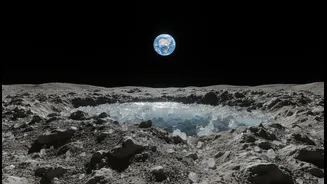
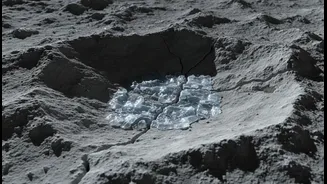
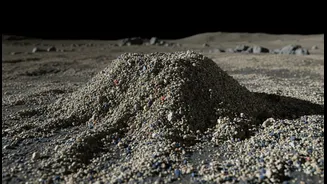
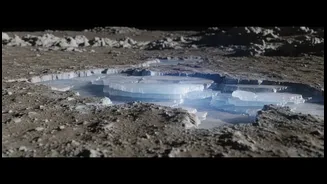
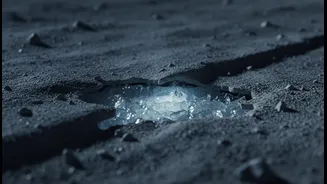
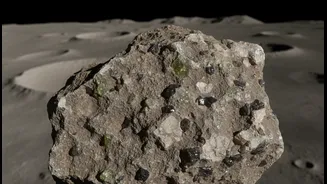
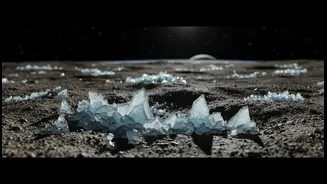
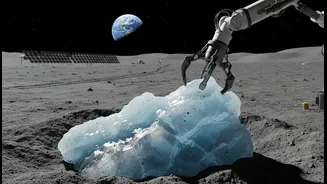
has identified strong evidence of thick, subsurface water ice deposits. These are not just trace amounts or thin surface frost. The data points to significant quantities of ice buried within the lunar soil, particularly in the Moon's south polar region. This discovery was made in what are known as "doubly shadowed" craters—areas within permanently dark regions that never see sunlight, where temperatures drop to as low as -248°C. These ultra-cold conditions act like a cosmic deep freeze, preserving the ice for billions of years.
The Technology That Saw the Unseen
The key to this discovery is a sophisticated instrument aboard the Chandrayaan-2 orbiter: the Dual-Frequency Synthetic Aperture Radar (DFSAR). Unlike cameras that see visible light, radar sends out microwave signals that can penetrate beneath the surface and bounce back. By analysing these returning signals, scientists can create a map of what lies hidden. The DFSAR is unique because it uses two different frequencies, L-band and S-band. The L-band provides deeper penetration, allowing scientists to 'see' several meters into the lunar soil, while the S-band is better at characterising the near-surface layer. This dual-frequency capability is crucial because it helps scientists distinguish the unique signature of thick ice deposits from other materials like rough, rocky terrain.
Why Water on the Moon is a Game-Changer
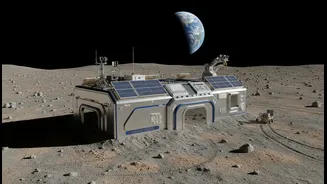
Finding accessible water on the Moon is arguably one of the most important goals of modern space exploration. Water is incredibly heavy and expensive to launch from Earth, so the ability to source it locally—a concept known as In-Situ Resource Utilization (ISRU)—is a complete game-changer. Lunar water ice can be melted for drinking water for astronauts and used to grow plants. More critically, it can be split into its component elements: hydrogen and oxygen. These provide breathable air for a lunar habitat and, crucially, are the primary components of rocket propellant. A Moon base with access to water could effectively become a refueling station for missions deeper into the solar system, such as to Mars.
Shaping India's Lunar Roadmap
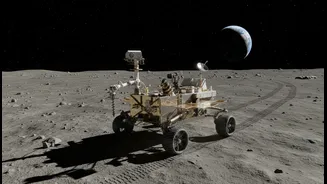
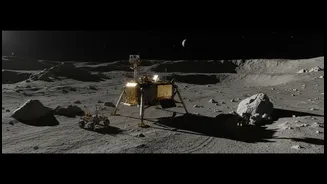
The data from Chandrayaan-2 is not just an academic achievement; it's a strategic asset for ISRO and India. The detailed maps of subsurface ice are essential for planning future missions. When selecting a landing site for a rover or a human crew, proximity to resources like water is a top priority. This information directly influences where future missions, such as the joint India-Japan LUPEX mission and India’s own planned Chandrayaan-4 sample return, will target for landing. By identifying specific craters, like one within the larger Faustini crater that shows particularly strong evidence of ice, Chandrayaan-2 is literally drawing the map for the next generation of lunar explorers. These findings solidify India’s position as a key player in the new global push towards establishing a long-term presence on the Moon.