





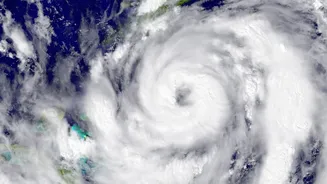


A 'very severe' cyclonic storm named Arnab has made landfall on India's southeastern coast, bringing torrential rain and high-speed winds. The India Meteorological Department (IMD) has issued alerts for several states.
Arnab's Path and Landfall
Cyclone Arnab completed its landfall
process along the Andhra Pradesh and Yanam coasts on the morning of October 28. The centre of the storm crossed the coast between Bapatla and Visakhapatnam, close to Yanam, as a 'very severe cyclonic storm'. At the time of landfall, the IMD reported maximum sustained wind speeds of 125-135 kmph, with gusts reaching up to 150 kmph. After making landfall, the system has weakened into a 'severe cyclonic storm' and is expected to move in a north-northwest direction, gradually losing intensity over the next 48 hours as it moves over land.
Andhra Pradesh: The Epicentre
Andhra Pradesh is bearing the brunt of Cyclone Arnab's impact. A red alert for extremely heavy rainfall has been issued for coastal districts, including Srikakulam, Visakhapatnam, Kakinada, Anakapalli, and Konaseema. Widespread damage to thatched homes, power lines, and crops is expected. Strong winds have uprooted trees and communication poles in several areas. A storm surge of 1 to 2.5 metres above the normal tide was predicted to inundate low-lying coastal areas around Kakinada and Yanam. In preparation, authorities have evacuated nearly 100,000 people from vulnerable coastal regions and set up over 2,000 relief shelters. Flights at several Andhra airports were suspended as a precaution.
Odisha, Chhattisgarh and Telangana on Alert
Neighbouring states are also feeling the effects of the cyclone. The IMD has issued a red alert for parts of Odisha and Chhattisgarh, with an orange alert for Telangana. In Odisha, heavy to very heavy rainfall is expected in southern districts like Ganjam, Gajapati, and Koraput. The state has activated response teams and opened over 1,700 cyclone shelters. In Chhattisgarh, districts in the southern Bastar region are on high alert for heavy rain and strong winds. Telangana is also under an orange alert, anticipating significant rainfall as the storm system moves inland.
Widespread Rainfall in Other States
The impact of Cyclone Arnab extends far beyond the immediate landfall zone. Heavy rainfall is forecast for West Bengal, with Kolkata expecting moderate showers. Fishermen have been warned not to venture into the sea. The storm's remnants are expected to bring unseasonal rain, thunderstorms, and strong winds to Jharkhand and parts of Uttar Pradesh between October 28 and 31. Kerala is also experiencing heavy rainfall spells in several districts as part of the broader weather system. Even parts of Jammu and Kashmir may see isolated rainfall.
How to Stay Safe: Official Advice
Authorities urge residents in all affected areas to prioritize safety. If you are in a high risk zone, stay indoors and away from windows. Turn off electricity, gas, and water supplies, and disconnect all appliances to prevent surges and leaks. Keep an emergency kit ready with a battery powered radio, torch, first aid supplies, and enough food and water for several days. It is crucial to listen to official broadcasts from the IMD and local disaster management authorities for the latest updates and instructions. Avoid spreading or believing rumours. After the storm passes, do not go outside until authorities declare it is safe. Beware of downed power lines, damaged structures, and flooded roads.