







The Current Monsoon Forecast
The India Meteorological Department (IMD) has sounded a note of caution, forecasting below-normal rainfall for July 2026 across most of the country. This comes after June registered a significant rainfall deficit, making it one of the driest in recent
history. The IMD expects July's rainfall to be less than 94% of the Long Period Average (LPA). This shortfall is attributed to strengthening El Niño conditions over the Pacific Ocean, a climatic pattern historically linked to weaker monsoons in India. The Reserve Bank of India (RBI) has already flagged a deficient monsoon as a key risk to the country's economic growth and inflation outlook.
From Fields to Food Prices: The Chain Reaction
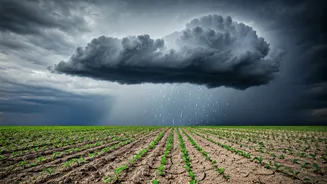
India's agricultural sector is heavily dependent on the southwest monsoon, which provides about 70% of the country's annual rainfall. A significant portion of farmland lacks access to irrigation, making timely rains crucial for the Kharif (summer) sowing season. A weak monsoon has a cascading effect: it lowers water levels in major reservoirs, reducing the water available for irrigation. This directly impacts crop sowing and growth, leading to lower yields. With a smaller harvest, the supply of essential commodities tightens. This supply-demand imbalance is what ultimately pushes market prices upward, leading to food inflation that affects every household.
Which Foods Are Most Vulnerable?
The impact of a poor monsoon is not felt evenly across all food items. The most vulnerable are rain-fed crops. The weak start to the season has already slowed the sowing of key Kharif crops. As of late June, data showed a significant year-on-year decline in the area sown for pulses, oilseeds, cotton, and even rice. Consequently, consumers may see price increases in staples like pulses (dals), edible oils derived from soybean and groundnut, and certain vegetables. Onions, a politically sensitive commodity, are also at risk as key growing regions have reported major rainfall deficits. While the government maintains comfortable buffer stocks of wheat and rice, which can help cushion some of the impact, perishable items and other grains are more exposed to price volatility.
How the Government Can Intervene
Fortunately, a weak monsoon does not automatically mean runaway inflation. The government has several tools to manage the situation. The primary defence is the use of buffer stocks of essential grains like rice and wheat held by the Food Corporation of India (FCI). Releasing these stocks into the market can help stabilize prices. The Finance Ministry has expressed confidence that these reserves, along with other interventions, can help manage supply risks. Additionally, the government can adjust trade policies, such as placing restrictions on exports of commodities like sugar or rice to ensure domestic availability, a measure used in previous years. Contingency plans have also been activated for hundreds of districts identified as vulnerable to low rainfall, including promoting the use of drought-tolerant seed varieties.