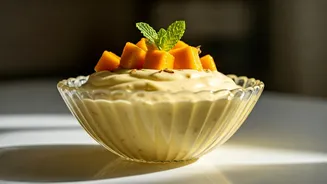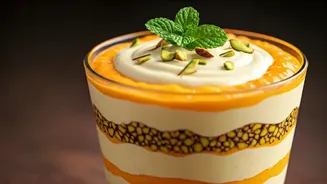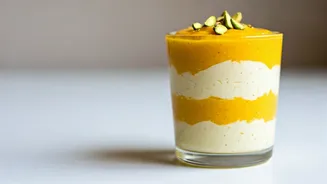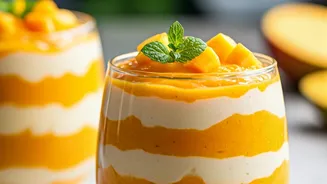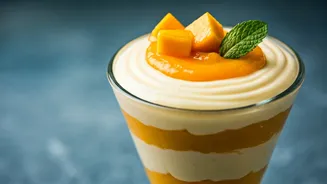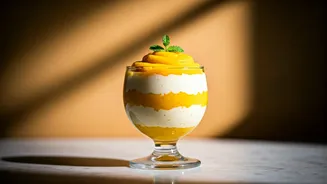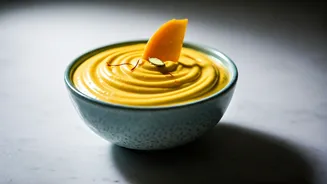



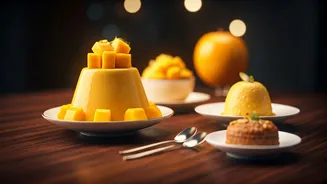



What Exactly is Mango Shrikhand?
Mango Shrikhand, known affectionately as Amrakhand in Marathi and Gujarati, is a traditional dessert that holds a special place in the hearts of many Indians. At its core, it's a sublime fusion of thick, strained yoghurt (known as 'chakka') and sweet,
luscious mango pulp. The result is a dessert with a texture that defies easy description—it's denser than a mousse, creamier than ice cream, and smoother than any pudding. Flavoured with delicate hints of cardamom and saffron, and often garnished with slivered nuts, each spoonful is a perfect balance of tangy, sweet, and aromatic.
More Than a Dessert, It’s a Tradition
Amrakhand is more than just a sweet treat; it’s a cultural icon, especially in the western states of Maharashtra and Gujarat. Its appearance on the dining table signals the peak of summer and the much-awaited arrival of mango season. It's a staple at weddings, festivals like Gudi Padwa, and celebratory family meals. Served chilled alongside fluffy puris, it creates a classic sweet-and-savoury combination that is both comforting and festive. Making it at home is often a cherished ritual, a way to connect with tradition and celebrate the seasonal bounty that nature provides.
The Secret: Perfect Hung Curd (Chakka)
The magic of Shrikhand lies in its base: 'chakka', or hung curd. This is simply regular dahi (yoghurt) that has been strained for several hours to remove all its whey, resulting in a thick, cheese-like consistency. This step is non-negotiable for achieving that signature rich and creamy texture. Using regular, unstrained curd will result in a watery, runny dessert that lacks the luxurious mouthfeel of authentic Shrikhand. You can make it easily at home by placing dahi in a muslin cloth, tying it up, and hanging it over a bowl in the refrigerator for at least 4-6 hours, or even overnight, until the whey has completely drained out.
Choosing the Right Mangoes
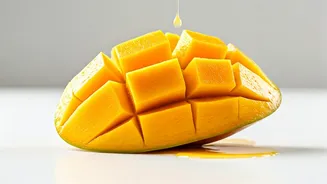
While any sweet mango will work, for a truly exceptional Amrakhand, the choice of mango matters. The king of mangoes, the Alphonso (Hapus), is the traditional and most popular choice, prized for its saffron-hued flesh, fibre-free pulp, and intense, complex sweetness. Its flavour is bold enough to shine through the tanginess of the curd. If Alphonsos are unavailable, other sweet and pulpy varieties like Kesar or even Dasheri work beautifully. The key is to use fully ripe, sweet, and non-fibrous mangoes to ensure your pulp is smooth and delicious.
A Simple Guide to Homemade Amrakhand
Ready to make your own? It’s simpler than you think. 1. **Prepare the Chakka:** Start with about 4 cups of fresh, full-fat dahi. Place it in a muslin cloth and hang it to drain for 5-6 hours until you have about 1.5 cups of thick, strained curd. 2. **Make the Mango Pulp:** Peel and chop 2 large, ripe mangoes. Blend them into a smooth, thick puree without adding any water. 3. **Combine and Flavour:** In a large bowl, whisk the chakka until it's completely smooth and creamy. Add powdered sugar to taste (start with 1/2 cup and adjust). Whisk again until the sugar is fully dissolved. Now, gently fold in the mango pulp. Do not overmix. 4. **Add the Aromatics:** Add 1/2 teaspoon of cardamom powder and a pinch of saffron strands (soaked in a tablespoon of warm milk for extra colour and flavour). Mix gently. 5. **Chill and Serve:** Transfer the Shrikhand to a serving bowl. Garnish with slivered almonds and pistachios. Chill in the refrigerator for at least 2 hours before serving. The flavours meld and intensify as it chills.