


A Glimpse of a Distant Atmosphere
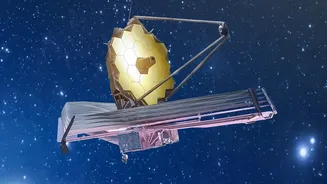
Scientists have announced a significant breakthrough in the search for worlds beyond our own. Using the powerful capabilities of the James Webb Space Telescope, they have detected what appears to be a substantial atmosphere surrounding a 'super-earth'
known as 55 Cancri e. Located 41 light-years away, this isn't just any planet; it's a rocky world larger than Earth, making the discovery of its gaseous envelope a first-of-its-kind achievement that could reshape our search for habitable planets. While previous observations hinted at an atmosphere, the data was inconclusive. Now, JWST's precision has provided the strongest evidence to date, pushing the frontiers of exoplanet characterisation.
What is a Super-Earth?
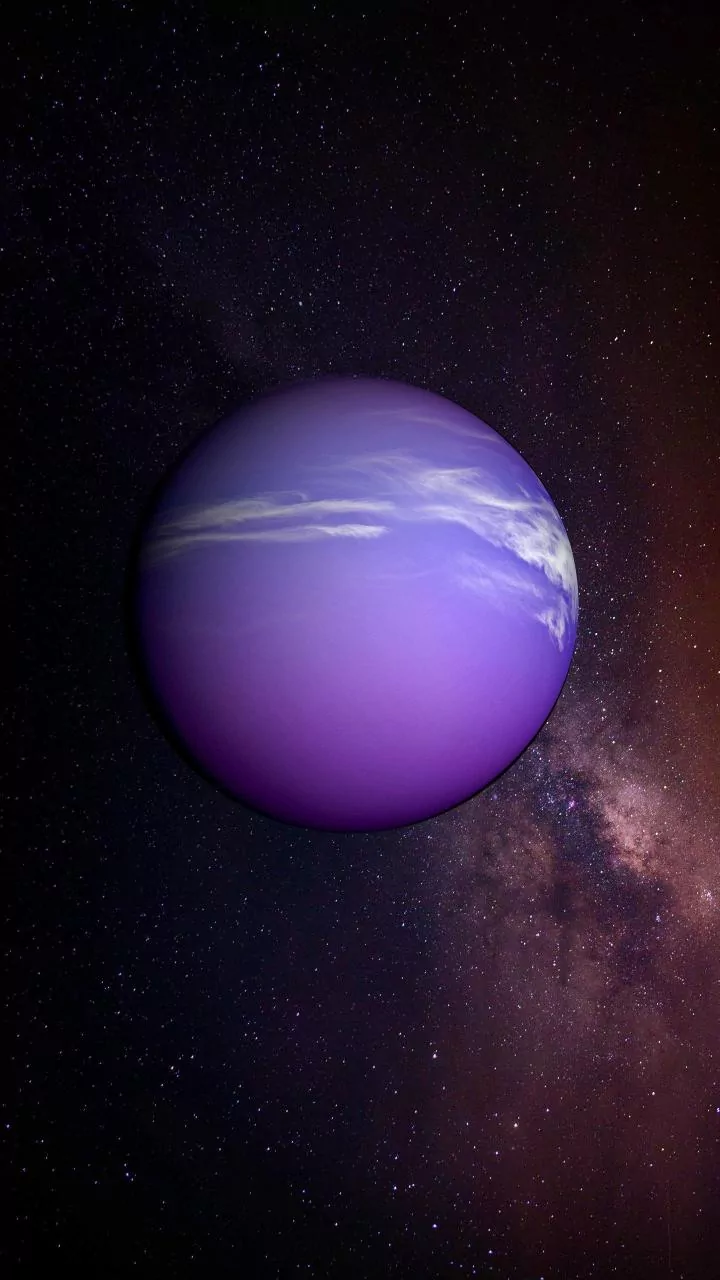
The term 'super-earth' might sound like a bigger version of our own world, but it simply refers to a planet with a mass higher than Earth's but less than that of Neptune. These planets are surprisingly common in our galaxy, even though our solar system doesn't have one. They can be rocky, gaseous, or a combination of both. The planet at the centre of this discovery, 55 Cancri e, is about twice Earth's diameter and has a higher density. However, describing it as 'rocky' can be misleading. It orbits its star so closely—completing a full year in just 18 hours—that its surface is likely a molten ocean of magma, with temperatures soaring to around 2,800 degrees Fahrenheit on its dayside.
How Webb Saw the Unseen
Detecting an atmosphere 41 light-years away is an immense technical challenge. JWST achieved this using a technique called transit and emission spectroscopy. As 55 Cancri e passed behind its star in what's known as a 'secondary eclipse', the telescope measured the system's total light. By subtracting the light of the star alone from the combined light of the star and planet, astronomers could isolate the faint glow emitted by the planet itself. This light contains the chemical fingerprints of the molecules in its atmosphere. Different gases absorb and emit light at specific infrared wavelengths, and Webb’s sensitive instruments can detect these signatures, allowing scientists to decipher the atmosphere's composition.
Water Vapour, CO, or CO2?
The headline claim of water vapour requires careful context. While initial Webb observations of another rocky planet, GJ 486 b, showed hints of water vapour, scientists were cautious, noting the signal could have come from cool spots on the host star itself. For 55 Cancri e, the data strongly suggests a secondary atmosphere rich in volatiles like carbon monoxide and carbon dioxide. These gases are thought to be bubbling up from the planet-wide magma ocean, constantly replenishing the atmosphere. This finding rules out earlier theories that the planet was either bare or had only a thin shroud of vaporized rock. Though not a sign of habitability due to the extreme heat, it proves a rocky world in a harsh stellar environment can maintain a significant gaseous envelope.
A New Chapter in Exoplanet Science
This discovery is more than just an inventory of a distant world; it's a monumental proof of concept. The ability to detect and analyze the atmosphere of a rocky exoplanet is a crucial step toward one day finding a truly Earth-like world. It demonstrates that JWST has the power to characterize worlds far smaller than the gas giants that have dominated atmospheric studies until now. Understanding how this super-hot, super-earth can sustain an atmosphere provides vital clues about the early conditions of terrestrial planets in our own solar system, including Earth, Venus, and Mars, which were also once covered in magma. Each discovery brings us closer to answering the profound question of whether we are alone in the universe.