





The Rise of the People's Telescope
Citizen science is the collaborative effort between the public and professional scientists. It involves everyday individuals contributing to scientific research, often by collecting and helping to analyse large volumes of data. This has become a powerful
tool across many fields, from tracking biodiversity to mapping weather patterns. In astronomy, where datasets from modern telescopes are astronomically large, citizen scientists play a crucial role. Projects like Galaxy Zoo ask volunteers to classify galaxies, a task where the human eye can still outperform algorithms in spotting unusual formations. This democratisation of science bridges the gap between expert and enthusiast, fostering a shared sense of discovery and a deeper public appreciation for scientific work.
Evidence from the Himalayas
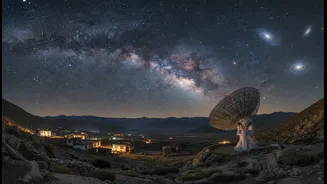
While large, organised citizen astronomy groups are more common in other parts of India, the seeds are being sown in Sikkim. The state’s universities are becoming hubs for astronomical interest; SRM University Sikkim, for instance, hosted an international symposium on relativistic astrophysics, bringing leading minds to the region. More directly, students from Sikkim are getting involved in national citizen science initiatives. One notable example is Pranim Limboo, an MSc student from SRM University, who contributed to the RAD@home collaboratory, a project that uses citizen scientists to analyse radio astronomy data. Limboo's involvement, sifting through telescope data from the Himalayas, highlights the real-world contributions that can be made, proving that you don’t need to be at a major observatory to participate in meaningful research. This is the evidence: small, individual actions that connect Sikkim to the larger fabric of global scientific discovery.
A Universe of Opportunity
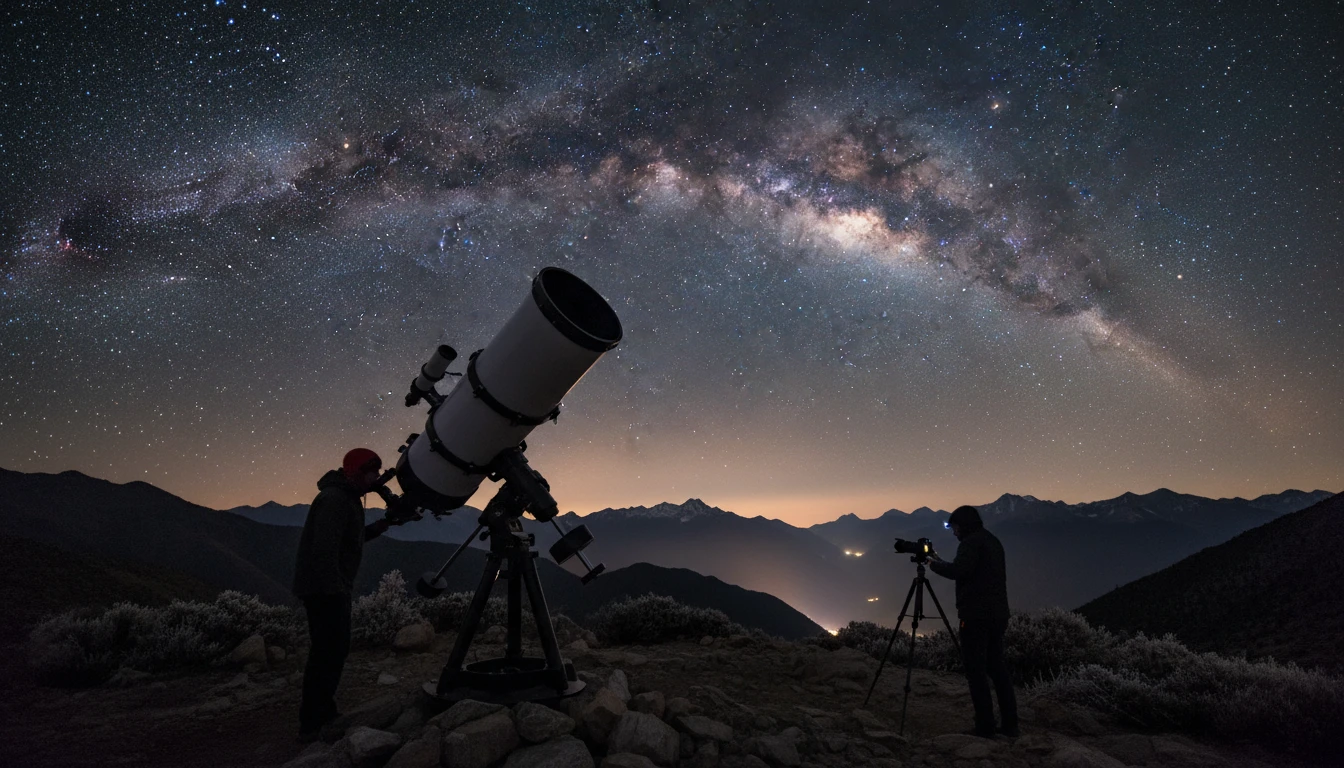
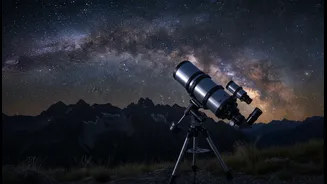
Sikkim's pristine, high-altitude landscapes offer some of the clearest night skies in India, creating a massive opportunity for astrotourism. This niche form of tourism, where travellers seek out dark sky locations for stargazing, is a growing global trend. Developing astrotourism can create sustainable income for rural communities, turning their dark skies from a perceived liability into a valuable asset. Beyond tourism, fostering a local astronomy culture can have profound educational benefits. Engaging students and the public through stargazing events, workshops, and school programmes can build scientific temperament and inspire the next generation of scientists and engineers. It also helps preserve a cultural heritage connected to the stars and raises awareness about the growing problem of light pollution, which threatens our view of the cosmos.
The Limits Under the Stars
Despite the immense potential, significant challenges remain. The very weather that makes Sikkim lush and green—the monsoon—blacks out the sky for months, creating a major obstacle for consistent observation. Rapid development, while necessary, brings with it the threat of increased light pollution, which can quickly erase the natural advantage of dark skies. Furthermore, citizen science initiatives require organisation, funding, and expertise. Building a sustainable programme involves more than just buying a few telescopes; it requires training for volunteers to ensure data quality, sustained engagement to prevent projects from fizzling out, and strong partnerships with professional scientific institutions. In India, citizen science is still a growing field, often facing financial constraints and a lack of institutional support from major academic bodies. For Sikkim to truly capitalise on its astronomical potential, it will need to navigate these hurdles by creating a supportive ecosystem for its budding stargazers.