




The Supermarket Maze
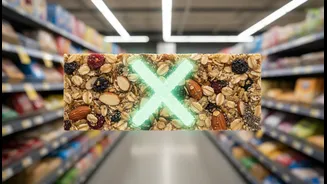
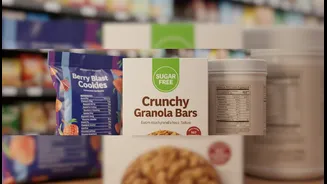
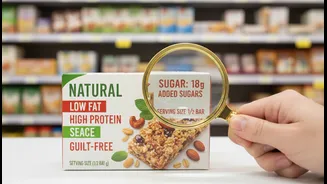
Walking down a supermarket aisle can feel like a pop quiz you didn't study for. Packages boast of being 'all-natural', 'fortified with vitamins', or 'made with whole grains'. These claims are designed to make you feel good about your purchase, but they
often mask high levels of sugar, salt, and unhealthy fats. Research consistently shows that food marketing heavily influences our preferences and choices, particularly for children, pushing us towards products that are energy-dense but poor in nutrients. This aggressive marketing of unhealthy foods is a global concern, linked to rising rates of obesity and other noncommunicable diseases. It creates a confusing environment where choosing genuinely healthy food becomes a difficult task.
What is the WHO's Framework?
To combat misleading marketing, the WHO has developed a scientific tool called a Nutrient Profile Model (NPM). Think of it as a clear, objective system for classifying foods based on their nutritional content. Instead of relying on flashy front-of-pack promises, the model looks at the hard data: the amount of fats, sugars, and salt a product contains. The primary goal is to help governments create policies that restrict the marketing of unhealthy foods, especially to children, who are most vulnerable to these persuasive tactics. The WHO has developed specific models for different parts of the world, including one for the South-East Asia Region, which includes India.
How the Model Works
The framework isn't about creating a single 'good' or 'bad' list. Instead, it sets specific thresholds for nutrients of concern per 100 grams or 100 ml of a food product. These nutrients are typically saturated fats, trans-fatty acids, added sugars, and sodium (salt). Foods are categorised—like beverages, cereals, dairy, or ready-made meals—and specific nutrient limits are applied to each category. If a product exceeds the threshold for one or more of these nutrients, it is classified as a food high in fat, sugar, or salt (HFSS). This classification can then be used by regulators to decide if that product should be advertised to children or be subject to other policies like front-of-package warning labels.
From 'Health Halos' to Hard Facts
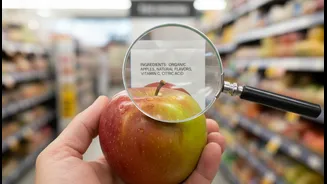
This framework helps dismantle the 'health halo' that marketers create. A fruit juice, for example, might be marketed as a source of Vitamin C. But the WHO's model would look past that and check its free sugar content. If it exceeds the threshold, the product would be identified as high in sugar, regardless of its vitamin claims. Similarly, a breakfast cereal might claim to be made with whole grains, but the model forces a look at its sugar and sodium levels. The system discourages the idea that adding a single positive nutrient can cancel out an excess of unhealthy ones. It provides a consistent, science-based method to separate genuine nutritional quality from clever marketing.
Using the Principles in India
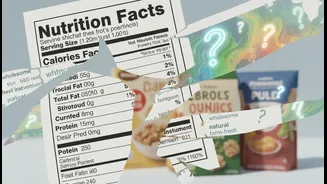
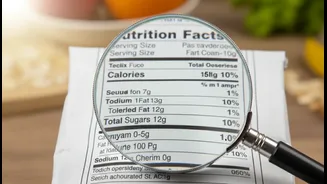
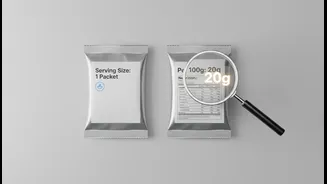
While you may not see a WHO rating on products in your local store just yet, you can still use the core principles of the framework to become a smarter shopper. The key is to ignore the loud claims on the front and turn the package over to the nutritional information panel. Look specifically at the values for sugar, sodium, and saturated fat per 100g. This gives you a standard way to compare different products. For instance, when choosing between two brands of biscuits or savoury snacks, compare their sodium and saturated fat content per 100g to see which is the healthier option. The WHO's model for South-East Asia has been tested and found to be highly appropriate for the Indian market, and it could be a key tool for future regulations like front-of-package labelling by the Food Safety and Standards Authority of India (FSSAI).