

Your Pre-Monsoon Vehicle Check
The single best travel decision is made before you even leave the house. A vehicle that is unprepared for the monsoon is a breakdown waiting to happen. Start with the essentials. Check your tyres for adequate tread depth; anything below 3mm is risky on slick,
wet roads. Ensure your brakes are in top condition, as wet roads significantly increase stopping distances. Test all your lights—headlights, taillights, and indicators—as visibility is crucial for seeing and being seen in a downpour. Finally, replace your wiper blades if they leave streaks. A clear windscreen is your first line of defense against the rain.
Plan Your Journey with Technology
Don't step out blind. Before you start your journey, check reliable weather sources. The India Meteorological Department's (IMD) 'MAUSAM' app provides localised forecasts and warnings. For flood-specific alerts, the National Disaster Management Authority's (NDMA) 'SACHET' and the Central Water Commission's 'FloodWatch' apps offer real-time data on water levels and potential flooding. Once you have a weather update, consult real-time traffic apps. Google Maps is a popular choice for live traffic conditions, but also consider made-for-India apps like Intents Go, which provides alerts for waterlogging and potholes. Some city municipalities, like Gurugram's 'WaterWatch' app, offer citizen-reported waterlogging information. Following your local traffic police on social media can also provide immediate updates on road closures.
Safe Driving on Wet Roads
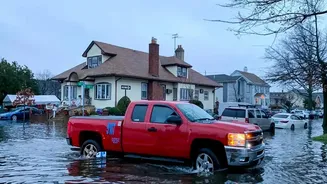
Once on the road, adjust your driving style for the conditions. The most important rule is to slow down. Reduce your speed and double the usual following distance from the vehicle in front to give yourself more time to brake. Keep your headlights on a low beam to improve your visibility to others without dazzling oncoming traffic. Avoid the common mistake of using hazard lights while driving, as this can confuse other drivers who won't be able to see your turn indicators. Be especially wary of puddles. You never know how deep they are or if they are hiding a damaging pothole. Driving through deep water can cause your car to stall and can lead to expensive engine damage.
What to Do If You Get Stuck
If your car stalls in a waterlogged area, the most important thing to do is not to try and restart the engine. Attempting to do so can cause water to be pulled further into the engine, a condition known as hydrolock, which can lead to catastrophic failure. If it is safe to do so, exit your vehicle. If the water is rising, unlock the doors and lower a window to ensure you have an escape route, as power windows may fail. If the water is moving quickly or is too deep to exit safely, stay in your car with your hazard lights on, climb onto the roof if necessary, and call for emergency assistance. Your safety is more important than the vehicle.
Consider Alternatives, Including Staying Put
Sometimes, the best travel decision is not to travel at all. If the forecast predicts exceptionally heavy rain and official warnings are in place, evaluate if your journey is truly essential. Many organisations in India are now more flexible with remote work arrangements during severe weather. If you must travel, consider public transport. Elevated metro systems are often the most reliable option during heavy downpours as they are not affected by street-level flooding. Intercity buses can also be a viable alternative to self-driving, allowing you to avoid the stress of navigating treacherous roads.