





The Growing Junkyard Overhead
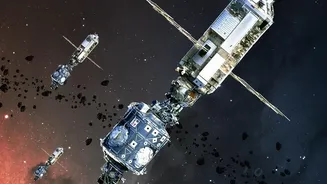
Low Earth Orbit (LEO) is getting dangerously cluttered. Decades of space activity have left behind a trail of defunct satellites, spent rocket stages, and millions of smaller fragments. It's estimated there are over a million objects larger than a centimetre
orbiting Earth. While they may seem small, these objects travel at speeds exceeding 27,000 kilometres per hour. At that velocity, even a paint chip can inflict catastrophic damage on an active satellite, potentially triggering a chain reaction of collisions known as the Kessler Syndrome. For India, the stakes are incredibly high. ISRO has had to perform an increasing number of Collision Avoidance Manoeuvres (CAMs) to protect its space assets, with the number rising dramatically in recent years. Each manoeuvre consumes precious fuel, shortening a satellite's operational lifespan.
India's Vital Eyes in the Sky
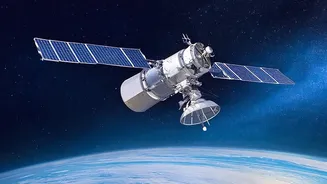
India's fleet of Earth-observation satellites, including the Cartosat, Resourcesat, and RISAT series, are the nation's eyes in the sky. They provide indispensable data for agriculture, urban planning, disaster management, border surveillance, and climate monitoring. Protecting this multi-crore rupee infrastructure is not just a technical challenge but a matter of national importance. Many of these satellites were launched over a decade ago and have limited fuel remaining for evasive actions, making them particularly vulnerable. The rising number of collision alerts—tens of thousands each year for ISRO—underscores the urgent need for a more sustainable and autonomous solution to safeguard these critical assets.
A Smart Shield: The Rise of AI and New Thrusters
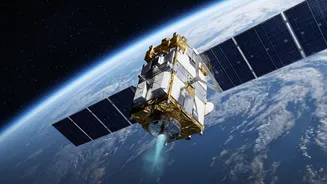
The solution lies in making satellites smarter and more agile. This is where Artificial Intelligence and advanced propulsion systems come in. Indian space-tech startups are at the forefront of this innovation. Companies like Digantara are developing sophisticated AI-powered software for Space Situational Awareness (SSA), which involves tracking objects and predicting their paths to assess collision risks in real-time. This software can analyse vast amounts of data to identify potential threats far more efficiently than human operators. Paired with next-generation thrusters, like the Hall-effect thrusters being developed by Bengaluru-based Bellatrix Aerospace, this creates a powerful autonomous defence system. These electric propulsion systems are highly efficient, offering precise, gentle pushes that are ideal for fine-tuning a satellite's orbit to dodge debris without wasting large amounts of fuel.
How Autonomous Protection Works
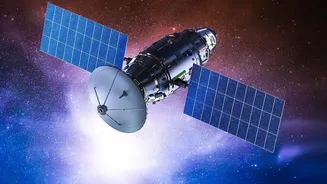
Instead of waiting for a warning from ground control, a satellite equipped with this new technology can largely fend for itself. The process involves several steps. First, AI-driven SSA systems, both on the ground and potentially on the satellite itself, constantly monitor the orbital environment. When the AI predicts a high probability of a close approach with a piece of debris, it calculates the most efficient avoidance manoeuvre. This information is then relayed to the satellite's advanced propulsion system. A Hall-effect thruster, for example, can then execute a very precise, low-thrust burn for a specific duration to slightly alter the satellite's trajectory, nudging it safely out of the debris's path. This autonomous capability reduces the reliance on ground stations, saves crucial fuel, and allows for much faster reaction times, which is critical when dealing with fast-moving threats.
Pioneering a Sustainable Future in Space
This shift towards autonomous collision avoidance marks a significant step in India’s space journey. It aligns with ISRO's goal of achieving debris-free space missions by 2030. By developing and adopting these technologies, India is not only protecting its own valuable assets but also positioning itself as a responsible leader in the global space community. Initiatives like ISRO's Project NETRA aim to build a comprehensive early-warning system, and the work of startups like Bellatrix, Digantara, and Aule Space—which is developing robotic servicing craft—are creating a robust domestic ecosystem for space safety. The integration of AI with efficient thrusters is about more than just defence; it's about ensuring the long-term sustainability of space operations for future generations.